


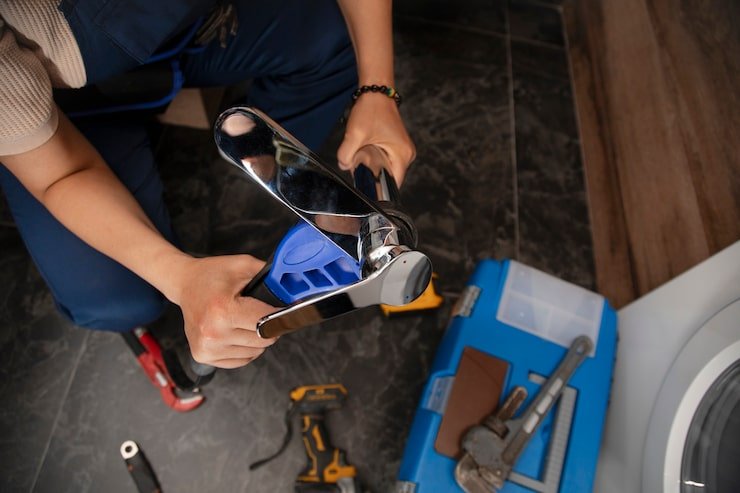
The “I Can Fix That” Moment of Regret
We’ve all had it. You’re standing in front of the hardware store aisle, staring at a wall of shiny wrenches and plastic pipes, thinking, “How hard can it be? I’ve seen a three-minute video on this.” You head home, full of confidence, only to realize forty minutes later that you’re soaked, your floor is a lake, and you have no idea where that extra washer was supposed to go.
There’s a certain pride in being a handy homeowner. I get it. I love fixing things too. But there’s a very thin line between a successful Saturday project and a $5,000 emergency bill. The debate of DIY Plumbing Fixes vs. Professional Services isn’t about being capable; it’s about being smart with your biggest investment—your home.
Look, I’m not here to tell you that you can’t pick up a plunger. Honestly, there are plenty of things you should handle yourself. But knowing where your expertise ends and a potential disaster begins is the real skill. Let’s walk through the “plumbing reality check” together, so you can decide when to grab the toolbox and when to grab the phone.
If you’re already in over your head, don’t sweat it—you can always contact us to bail you out. We’ve seen it all, and we won’t judge the half-disassembled sink.
1. The Stubborn Drain: Plunger or Pro?
Drains are the most common DIY battleground. Usually, a slow sink or a grumpy toilet just needs a little mechanical encouragement. If a simple cup plunger or a bit of baking soda and vinegar does the trick, you’ve won. You’re the hero of the house.
But here’s the thing: if you find yourself plunging the same drain every three days, you aren’t fixing a problem; you’re just annoying it. Recurring clogs often mean there’s something deeper—like tree roots or a collapsed line—that a rubber plunger just can’t touch. In those cases, professional drain cleaning services are the only way to get a permanent fix.
The Real-World Scenario: I once visited a homeowner who had used so much chemical drain cleaner trying to DIY a clog that it actually started eating through their older metal pipes. What should have been a simple snaking job turned into a full pipe replacement.
Pro Tip: If the water is backing up in the tub when you flush the toilet, put the plunger down. That’s a main line issue, and you’re just going to make a mess.
2. The Leaky Faucet: A Washers Game
A dripping faucet is like a tiny, rhythmic torture device. Drip. Drip. Drip. Most of the time, this is a DIY dream. Usually, it’s just a worn-out O-ring or a cartridge that needs replacing. If you can find the model number and follow a tutorial, you can usually wrap this up in an hour.
However, if you take the faucet apart and see heavy corrosion or if the leak is coming from inside the wall, stop. Working with valves that are seized or pipes that are brittle can lead to a “snap” that turns a drip into a geyser. If you aren’t comfortable shutting off the main water line, call for faucet repair and installation.
The Real-World Scenario: A friend tried to replace a “simple” shower handle and accidentally twisted the copper pipe behind the tile. He had to call a pro to cut a hole in the bedroom wall just to fix the pipe he’d mangled.
3. The Garbage Disposal: Hand vs. Motor
Disposals are finicky creatures. If yours is humming but not spinning, you can often “un-jam” it yourself using the hex wrench that came with the unit (it goes in the hole at the bottom). It’s a classic DIY win that takes thirty seconds.
But if the unit is leaking from the bottom of the motor housing or if it’s smelling like an electrical fire? That motor is shot. Replacing a unit involves electrical wiring and a lot of awkward positioning under the sink. If you aren’t 100% sure about the wiring, it’s safer to let professional garbage disposal services handle the heavy lifting.
The Real-World Scenario: I’ve seen people try to “force” a disposal to turn using a broom handle, only to have the handle shatter and the motor burn out completely. Sometimes, “gentle” is the only way to go.
4. Water Heater Woes: The Danger Zone
This is where the DIY Plumbing Fixes vs. Professional Services debate gets serious. You can absolutely flush your own water heater to get rid of sediment—in fact, I encourage it! It’s great maintenance.
But if your water heater is leaking from the tank, making loud “popping” noises, or if the pilot light won’t stay lit? This is a “call the experts” situation. We’re talking about high pressure, high heat, and—in many cases—gas lines. One mistake here can lead to more than just a wet floor; it can be dangerous. For anything beyond a simple flush, always opt for water heater services.
The Real-World Scenario: Think of your water heater like a heart. You can eat right and exercise (maintenance), but you wouldn’t try to perform your own bypass surgery. Don’t take risks with high-pressure tanks.
5. The Mystery Wet Spot (Slab Leaks)
If you walk across your kitchen floor and notice a “warm spot” on the tile, or if your water bill suddenly doubles, you’ve got a ghost in the machine. Specifically, a leak under your concrete slab. There is zero DIY fix for this.
You need high-tech leak detection and repair equipment. Trying to find a leak by randomly jackhammering your floor is a nightmare you don’t want. Pros use acoustic equipment and sewer camera inspections to find the exact pinhole without destroying your home.
The Real-World Scenario: I’ve seen homeowners dig up half their front yard looking for a leak that ended up being right under their refrigerator. Modern tech finds it in minutes.
DIY vs. Pro: The Decision Table
| Task | DIY-ability | Risk Level | When to Call the Pro |
| Clogged Sink | High | Low | If it keeps coming back or affects multiple rooms. |
| Running Toilet | High | Low | If the “guts” of the toilet are totally corroded. |
| Leaky Pipe | Medium | Medium | If the pipe is behind a wall or under a floor. |
| Water Heater | Low | High | If there’s a leak, gas smell, or no hot water at all. |
| Sewer Backup | None | Extreme | Immediately. Don’t touch it. |
Key Takeaways for Your Home
- Respect the Main Valve: Before you start any DIY project, make sure you know exactly how to turn off the water to the whole house.
- Don’t Force It: If a nut won’t turn or a handle won’t budge, “more muscle” is usually the wrong answer.
- Smell Matters: If you smell gas or raw sewage, stop what you’re doing and call a pro immediately.
- Invest in Maintenance: Most big repairs can be avoided with a yearly maintenance plan. It’s the ultimate “anti-DIY” insurance.
Knowing Your Limits is Your Superpower
At the end of the day, being a homeowner is about balance. I love it when a client tells me they tried a few things before calling us—it shows they care about their home! But the real “pro move” is knowing when a project has moved from “fun weekend task” to “potential catastrophe.”
The whole point of DIY Plumbing Fixes vs. Professional Services isn’t to discourage you from trying. It’s to make sure you’re taking care of your home in the way that makes the most sense long-term. Sometimes, that means getting your hands dirty. Other times, it means sitting back with a coffee while a team from Redemption Plumbing handles the headache for you.
If you’re currently staring at a pile of pipes and wondering if you made a mistake, take a breath. It happens to the best of us. Give us a shout, and we’ll get things back in order before the sun goes down.


Comments are closed