


Why a Little Weekend Effort Saves a Lot of Stress
There is nothing quite like that sinking feeling when you step onto a soggy carpet or see a brown spot forming on your ceiling. Honestly, most of us take our plumbing for granted until it stops working. We expect the water to be hot, the drains to be clear, and the toilets to flush every single time. But here in Bradenton, between the hard water minerals and the salt air, our pipes actually take a bit of a beating.
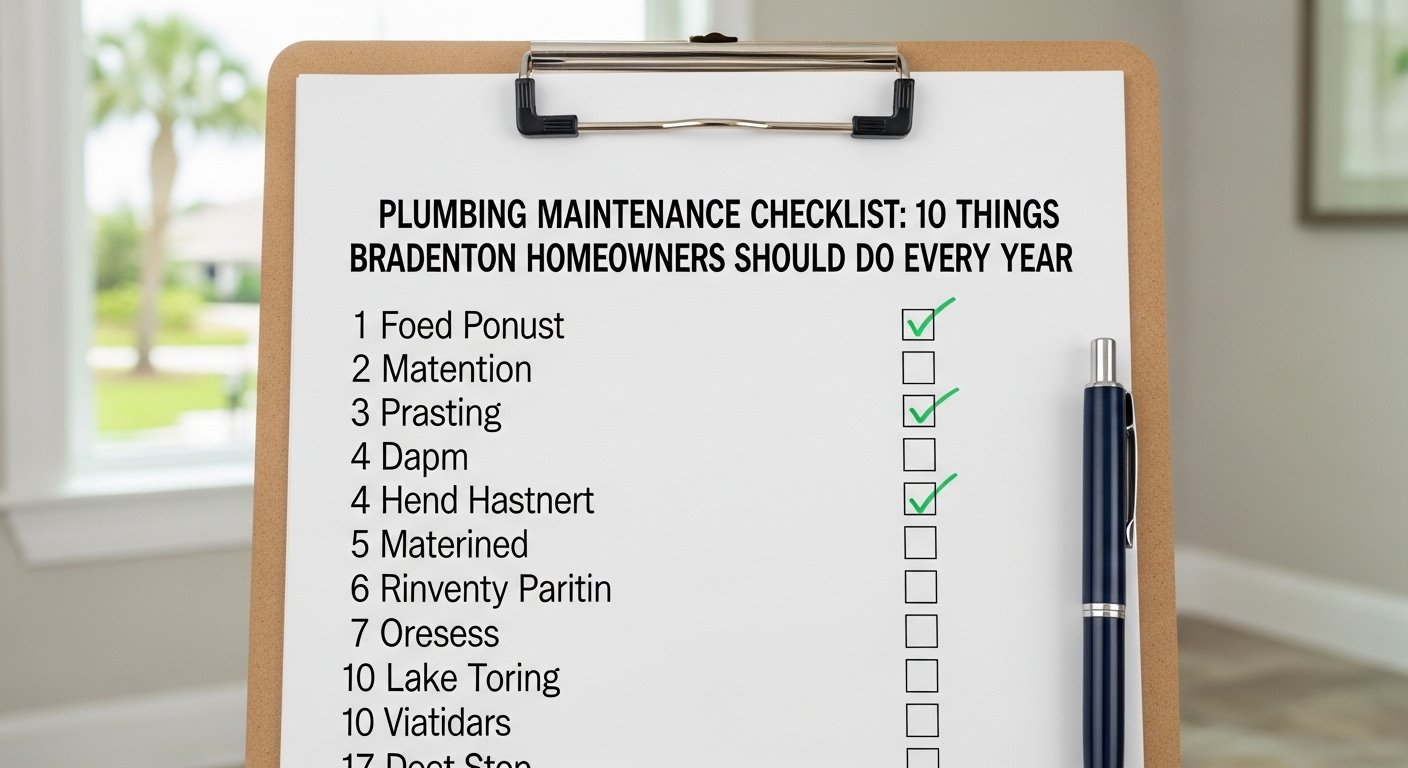
That is why a Plumbing Maintenance Checklist 10 Things Bradenton Homeowners Should Do Every Year is more than just a chore list; it is an insurance policy for your peace of mind. Taking one Saturday a year to walk through your house can be the difference between a $50 part and a $5,000 restoration bill. If you find something during your walkthrough that looks a bit scary, you can always reach out for leak detection and repair in Bradenton to get a pro on the job.
What You Need Before You Start
You do not need a truck full of tools for this. Just a few basics:
- A good flashlight (to see into dark corners under the sink)
- A bucket and a garden hose
- Food coloring (for the toilet test)
- A pair of pliers
- Your phone to take photos of anything that looks suspicious
Step-by-Step Annual Walkthrough
1. Flush the Water Heater
This is the big one. Our Florida water is full of sediment. Over a year, these minerals settle at the bottom of your tank, making it work harder and eventually rotting it from the inside out. Connect a hose to the drain valve, run it outside, and let it drain until the water looks clear. If your water heater is already making knocking noises, it might be time for professional water heater services in Bradenton Florida.
2. Check Every Sink for Slow Drains
Go to every sink and let the water run for a full minute. If it starts to pool, you have a clog starting. Catching a hair clog in the bathroom sink now is much better than dealing with a total backup during a dinner party. For the stubborn stuff, you might need drain cleaning services to clear the path.
3. Perform the Toilet Dye Test
Drop some food coloring into the tank (not the bowl). Wait about 20 minutes. If the water in the bowl changes color without you flushing, your flapper is leaking. It is a $5 fix that saves hundreds on your water bill.
4. Inspect Under Every Cabinet
Grab that flashlight. Look for dampness, mold, or “puckering” on the bottom of the cabinet floor. Look specifically at the shut-off valves and the P-traps. If you see white crusty buildup, that is a sign of a slow, “ghost” leak.
5. Test Your Main Shut-Off Valve
Find your main water valve (usually near the street or where the line enters the house). Turn it off and then back on. You need to know this valve actually works before you have a pipe burst. If it is stuck, do not force it; call a pro to replace it.
6. Examine the Washing Machine Hoses
Look at the hoses behind your washer. If they are rubber and more than five years old, or if you see any “blisters” or bubbles in the line, replace them with braided stainless steel. A burst washer hose is one of the leading causes of home floods.
7. Scrutinize the Garbage Disposal
Look for leaks under the unit and use a flashlight to check for corrosion on the bottom. If it smells, grind up some ice cubes and lemon peels to clear out the gunk. For bigger issues, check out our garbage disposal services.
8. Clean Faucet Aerators
Unscrew the little screens at the tip of your faucets. Soak them in white vinegar to dissolve the calcium buildup. You will be surprised at how much your water pressure improves.
9. Check Your Outdoor Spigots
Turn on your garden hoses and look for leaks at the handle. Also, check the siding around the spigot for dampness, which could mean the pipe inside the wall is cracked.
10. Inspect the Sewer Cleanout
Locate your sewer cleanout in the yard. Make sure the cap is on tight and not cracked. This prevents debris (and critters) from getting into your main sewer line.
Troubleshooting Common Finds
- Water is still cloudy after flushing the heater: You might have heavy scale buildup. You may need to flush it a second time or have a plumber perform a deep clean.
- The main valve won’t budge: Spray it with a bit of WD-40 and wait, but never use a wrench to force it. Breaking that handle off can lead to a very wet afternoon.
- Food coloring shows a leak but the flapper looks fine: The “seat” where the flapper rests might be corroded. Scrub it gently with a non-scratch pad.
Expert Tips for Better Results
Look, I have been doing this a long time, and the best advice I can give you is to listen. At night, when the house is quiet, walk around. If you hear a faint hiss or a random “click” from your pipes, that is your house telling you something is wrong. Also, keep a log of when you do these checks. It is a great selling point if you ever decide to list your home in Manatee County.
Summary and Next Steps
By following this checklist, you are taking control of your home. You are preventing mold, saving water, and making sure your appliances last as long as possible.
If you finished your checklist and found a few things that made you go “uh oh,” do not panic. We are available 24/7 to help you get things back to normal.
Comments are closed