


Signs Your Bradenton FL Septic System Is Failing (And What To Do)
There’s a moment — and you’ll know it if you’ve had it — where something smells off in your backyard. Not just “needs mowing” off. More like… wrong. Deeply wrong. And somewhere in the back of your mind, a little voice whispers: please don’t let it be the septic.
If you’re a homeowner in Bradenton, that moment deserves your full attention. Because a failing septic system doesn’t fix itself, and the longer you wait, the messier — and more expensive — the situation gets.
Here’s the good news: your system will almost always tell you something’s wrong before it fully gives out. You just have to know what to listen for. So let’s walk through the real warning signs, what’s probably causing them, and what you should actually do about it.
First, a Quick Reality Check on Septic Systems
Your septic system is doing something kind of remarkable every single day. Wastewater from your home flows into the tank, where solids settle and liquids get pushed out into a drain field, where the soil does the final filtering. It’s a quiet, underground workhorse.
But it’s not invincible. And in Bradenton specifically, Florida’s high water table, sandy soils, and heavy rainfall patterns create a particular set of challenges. Systems here can get stressed in ways that homeowners up north never have to think about.
The septic systems in Bradenton and the surrounding areas face unique pressures — from seasonal flooding to tree root intrusion to the simple fact that Florida homes tend to run their water hard year-round. Understanding that context helps you take the signs seriously.
The Warning Signs: What Your System Is Trying to Tell You
Slow Drains That Aren’t Just a Clog
We’ve all dealt with a slow sink drain. Usually it’s hair or soap scum and it clears up with a little drain cleaner or a quick snake.
But here’s the thing — when your septic system is struggling, you’ll notice multiple drains moving slowly at the same time. Bathroom sink, shower, laundry. All sluggish. That’s your system telling you the tank is either full, the outlet baffle is compromised, or the drain field is starting to fail.
Don’t dismiss this as a “plumbing quirk.” Multiple slow drains together is a pattern worth investigating.
That Smell — Inside or Outside
If you’re catching a sewage smell inside your home (near toilets, drains, or even in the basement), that’s not something to air out and forget. It usually means gases are backing up through your plumbing because the system is too full or partially blocked.
Outside, a persistent rotten egg or sewage odor near your tank or drain field is even more telling. Healthy systems don’t smell. If yours does, something is breaking down that shouldn’t be.
Wet or Unusually Green Patches in Your Yard
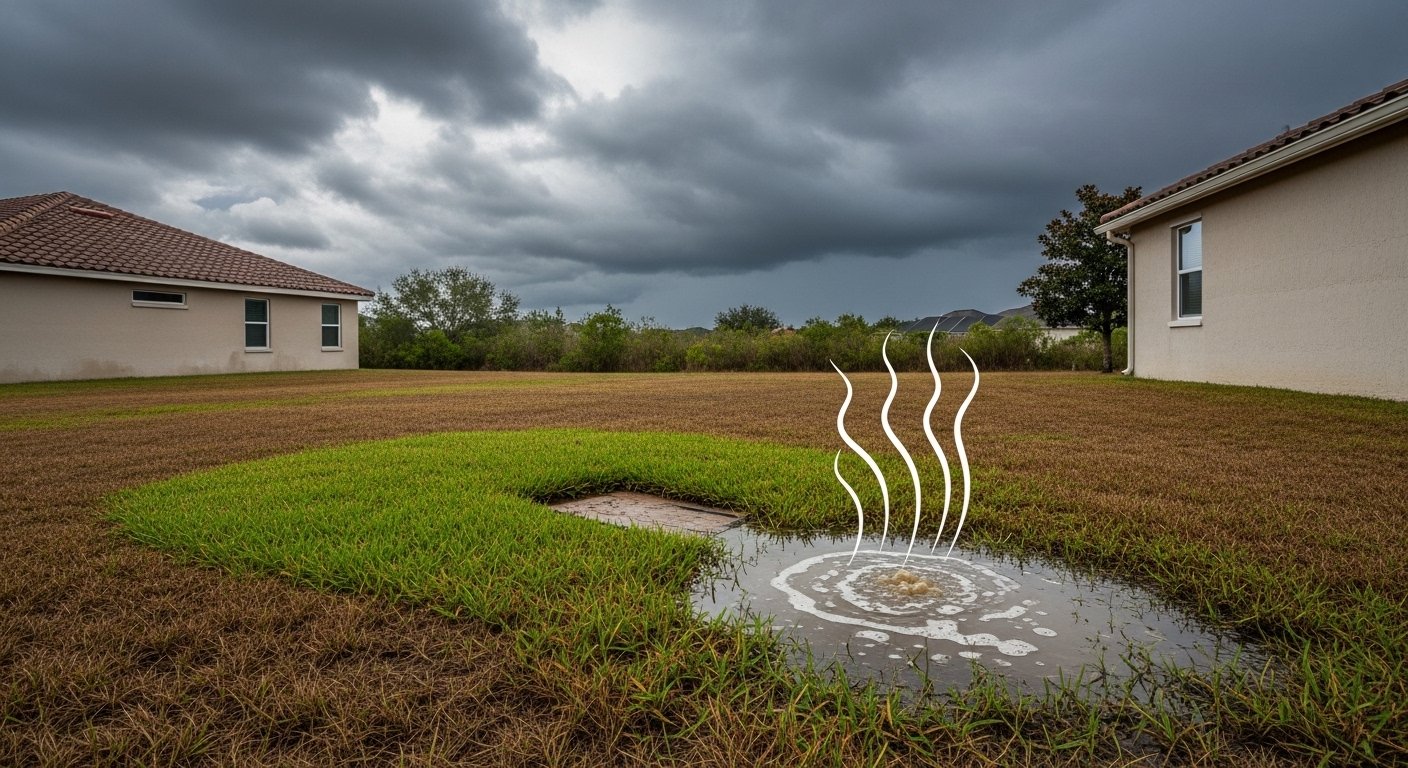
This one is easy to miss if you’re not looking for it. Walk your yard after a dry stretch. If there’s a section that’s soggy, squishy underfoot, or suspiciously lush and green compared to the rest — especially over where your drain field sits — that’s almost certainly effluent coming to the surface.
Your drain field is supposed to distribute liquid underground. When it’s failing, that liquid has nowhere to go but up. In Bradenton’s warm climate, that grass will grow thick over it, which can actually make it harder to notice until the problem is advanced.
Gurgling Sounds from Toilets or Drains
You flush the toilet and hear a strange gurgling from a nearby sink. Or your drains make a bubbling sound even when nothing’s running. These sounds happen when air is being displaced in a system that’s backed up or under pressure.
It’s easy to write off as “just the pipes.” Don’t. Gurgling that comes and goes — especially after heavy use or heavy rain — is the system struggling to keep up.
Sewage Backup in the Lowest Fixtures
This is the big one. If raw sewage backs up into your shower, tub, or lowest floor toilet, your system has moved past “warning” and into “emergency.” This means the tank is full and there’s nowhere for new wastewater to go except back up into your home.
If this happens, stop using water in your home immediately and call a professional. This isn’t a DIY situation.
Comparing the Causes: What’s Actually Going Wrong?
Here’s where it gets interesting — not all failing septic systems are failing for the same reason. And the fix depends entirely on the cause. Let me walk through the most common culprits.
Option 1: The Tank Just Needs Pumping
What it looks like: Slow drains, gurgling, maybe some odor. The system has been in use for 3-5+ years without pumping.
The reality: This is the best-case scenario. Septic tanks need regular pumping to remove the accumulated solids. In Florida, where systems often work harder due to year-round use, most tanks need pumping every 3-5 years depending on household size. A lot of homeowners just… forget. Or didn’t know.
Pros of this cause: Cheapest and simplest fix. A pump-out takes a few hours and puts the system back on track.
Cons: If you’ve been ignoring it long enough, those solids may have pushed out into the drain field and caused secondary damage.
What to do: Schedule a pump-out and inspection with a licensed septic service provider in Bradenton as soon as possible.
Option 2: Drain Field Failure
What it looks like: Wet patches in the yard, sewage surfacing, drains that are slow even after pumping.
The reality: This is more serious. The drain field — the network of perforated pipes and soil that filters and disperses liquid — can fail from overuse, soil saturation, root intrusion, or solids pushing through from an overfull tank. In Bradenton, high water table issues can make drain fields particularly vulnerable during rainy season.
Pros of catching it early: Partial drain field failure can sometimes be addressed with targeted repairs or field rejuvenation treatments.
Cons: Full drain field replacement is expensive — often $5,000–$15,000 or more depending on property layout and soil conditions. And in some cases, the original drain field location may need to move entirely.
What to do: Get a full system inspection, including a camera inspection of the lines if possible. Don’t wait on this one.
Option 3: Tank Damage or Structural Issues
What it looks like: Sudden backup, visible ground depression near the tank, unusually wet soil right around the tank (not the drain field).
The reality: Concrete tanks can crack over time. Baffles (the internal components that direct flow) can corrode or collapse. Lids can fail. These are less common but more urgent when they happen.
Pros: Often repairable without full replacement if caught early.
Cons: Tank collapses or severely compromised tanks may require full replacement.
What to do: If you suspect structural damage, don’t let anyone walk over the tank area. Call a professional immediately for an assessment.
Option 4: Root Intrusion
What it looks like: Recurring clogs, slow drains that keep coming back, tree roots visible in or near your cleanout.
The reality: Florida’s aggressive tree root systems love septic lines. They find the tiniest crack or joint and work their way in. Left unchecked, they’ll block flow, crack pipes, and compromise the drain field.
Pros: If caught before major damage, hydro jetting or mechanical root cutting can clear the intrusion.
Cons: If roots have been growing for years, pipe sections may need replacement, and nearby trees may need removal.
What to do: A camera inspection will tell you exactly what you’re dealing with.
Side-by-Side: Quick Comparison of Common Failure Causes
| Cause | Warning Signs | Urgency | Estimated Cost | DIY Possible? |
|---|---|---|---|---|
| Tank needs pumping | Slow drains, odor, gurgling | Medium | $300–$600 | No |
| Drain field failure | Wet yard, surfacing effluent | High | $5,000–$15,000+ | No |
| Tank damage | Backup, depression, wet soil near tank | Very High | $1,000–$8,000+ | No |
| Root intrusion | Recurring clogs, camera shows roots | Medium-High | $500–$3,000+ | No |
None of these are DIY fixes. Septic systems involve raw sewage and complex underground infrastructure — you need a licensed professional.
Expert Recommendations: Who Needs What?
If you haven’t pumped in 3+ years and you’re seeing minor symptoms: Schedule a pump-out and inspection now. This is maintenance, not emergency. The sooner you do it, the better your chances of catching a small problem before it becomes a big one.
If you’re seeing wet patches in the yard or sewage odors outside: Get a full system inspection with a professional who can assess the drain field. This is beyond routine maintenance.
If you’re experiencing sewage backup into your home: Stop using water. Call a septic professional today. This is an emergency.
If you’re buying a home in Bradenton with a septic system: Always, always get a septic inspection before closing. Don’t skip it. The cost of the inspection is nothing compared to inheriting a failing system.
Decision Framework: How to Know What Step to Take Next
Here’s a simple way to think through it:
- When did you last have the tank pumped? If you don’t know or it’s been more than 5 years, start there.
- Are you seeing symptoms in one spot or everywhere? One slow drain = probably a clog. Multiple drains + odors = likely a system issue.
- Is anything happening outside? Green patches, wet spots, smells outside = the system is actively failing in the drain field.
- Is sewage backing up? Emergency. Call now.
If you’re still not sure where you fall, the honest answer is: get an inspection. A qualified septic professional in Bradenton can tell you in a single visit exactly what’s happening and what it’ll take to fix it. The inspection itself is a small investment compared to the cost of guessing wrong.
FAQ: The Questions We Hear Most
How often should I pump my septic tank in Bradenton? Every 3–5 years is the general rule, but it depends on household size and usage. A family of four in active daily use should lean toward 3 years. Get it inspected at pumping time so you’re not flying blind between visits.
Can heavy Florida rain damage my septic system? Yes, actually. Heavy rain can saturate the soil around your drain field, temporarily preventing it from absorbing effluent properly. If your system backs up or shows symptoms after a big storm, that’s worth noting — it may indicate your drain field is already under stress and can’t handle the extra load.
What should I never flush or put down the drain with a septic system? Wipes (even “flushable” ones), feminine hygiene products, grease, medications, harsh chemical cleaners, and excessive garbage disposal use. These either don’t break down or kill the beneficial bacteria your tank relies on.
Is it safe to plant over my drain field? Grass is fine. Trees and shrubs with aggressive root systems — no. Keep them well away from the drain field and tank.
How much does a full septic replacement cost in Bradenton? It varies significantly based on property size, soil conditions, and the type of system required. But for a full drain field replacement, you’re typically looking at $8,000–$20,000. That’s why early intervention matters so much.
The Bottom Line
Your septic system is quiet and easy to forget about — right up until it isn’t. The signs it sends when something’s wrong are real and specific. Slow drains, strange odors, wet patches in the yard, gurgling sounds… these aren’t random. They’re your system asking for help.
The homeowners who handle this well are the ones who don’t wait for a crisis to pay attention. They pump on schedule. They know where their tank and drain field are. They call someone when they notice something off.
If any of this sounds familiar — if you’re sitting there thinking “that wet patch has been there for a while actually” — now’s the time to act. Reach out to a trusted septic service team in Bradenton and get eyes on your system before a manageable problem becomes an expensive one.
You’ll sleep better knowing what you’re working with. And your yard will thank you.


Comments are closed