


TanIntroduction
Look, we’ve all been there. You’re halfway through a relaxing shower, maybe singing a bit of 80s rock, and suddenly—bam. The water turns into an Arctic blast. Your old tank heater just gave up the ghost, or it simply can’t keep up with the family’s needs anymore. It’s frustrating, right?
In Sarasota, where we’re constantly dealing with heat, humidity, and the occasional houseguest who stays a week too long, having reliable hot water isn’t just a luxury; it’s a necessity. That’s why so many people are looking into mastering tankless water heater installations in Sarasota. These little “on-demand” units are game-changers, but I’ll be honest with you—they aren’t just a “plug and play” situation. There’s a bit of an art to getting it right.
If you’re tired of that big, rusty metal drum taking up space in your garage and you’re ready for endless hot water, you’re in the right place. Let’s walk through what it actually takes to get one of these systems running perfectly in your home. And hey, if you ever feel like this is a bit much for a Saturday DIY project, you can always check out our water heater services in Sarasota, FL to see how the pros handle it.
5 Essentials for Mastering Tankless Water Heater Installations
1. Sizing It Right (It’s Not Just About Square Footage)
Most people think they need a specific unit because they have a “three-bedroom house.” But honestly? The house size doesn’t matter nearly as much as how many things you want to run at once. Tankless heaters are rated by “gallons per minute” (GPM).
Think about it this way: if you’ve got two teenagers showering while the dishwasher is running and you’re trying to wash a load of whites, you’re going to need a lot of GPM. In Florida, our “groundwater” (the water coming into your house from the pipes) is actually pretty warm compared to, say, Minnesota. This is great news because the heater doesn’t have to work as hard to get it to 120 degrees.
Real-World Scenario: Imagine a family in Siesta Key with a master suite and two guest baths. If they choose a unit that only handles 3 GPM, they’ll have “endless” hot water, but only for one shower at a time. The second someone turns on a kitchen faucet, that shower becomes a lukewarm drizzle. You want a unit that can handle your peak demand, usually around 5-7 GPM for a standard Sarasota home.
Pro Tip: Count your fixtures before you buy. A shower is roughly 1.5 to 2.5 GPM, and a kitchen sink is about 1.5. Add them up based on what might be running simultaneously!
2. The Great Gas vs. Electric Debate
This is where things get a little “messy” in the decision-making process. Most tankless enthusiasts swear by gas (propane or natural gas). Why? Because gas units generally have a higher flow rate and can heat water faster. However, in many parts of Sarasota, we don’t have natural gas lines running to every neighborhood.
If you go electric, it’s a simpler install in some ways, but it puts a massive load on your electrical panel. I’ve seen homeowners buy a top-of-the-line electric tankless unit only to realize their 150-amp panel can’t handle the 3 or 4 dedicated double-pole breakers the heater needs. That “simple” upgrade just turned into a $2,000 electrical panel overhaul.
Real-World Scenario: I once saw a homeowner in Osprey try to swap a 40-gallon electric tank for an electric tankless. They didn’t realize the tankless needed #6 gauge wire and three 40-amp breakers. Their existing setup only had one 30-amp circuit. We ended up helping them navigate the electrical requirements to make it work safely.
Insight: Gas is usually more powerful, but electric is more common for Sarasota retrofits. Just make sure your electrical panel is ready for the “party.”
3. Proper Venting is Non-Negotiable
If you decide on a gas unit, venting is the one place you absolutely cannot cut corners. These units burn a lot of fuel quickly, which means they produce a lot of exhaust. You can’t just use the old vent from your water tank. Tankless units usually require specialized Category III or IV stainless steel or PVC venting, depending on whether it’s a condensing or non-condensing model.
And here’s the thing—if you vent it wrong, you’re not just risking the unit’s lifespan; you’re risking carbon monoxide buildup in your home. That’s why local Sarasota codes are so strict about how and where these units vent. They need to be a certain distance from windows and doors to keep that air fresh.
Real-World Scenario: A DIYer once tried to vent a power-vented tankless unit through a chimney. The acidic condensate from the exhaust started eating away at the mortar in just a few months. We had to come in and run a proper dedicated vent through the sidewall. It’s much cheaper to do it right the first time!
4. Dealing with Sarasota’s Hard Water
We love our Florida sunshine, but our water? It’s “hard.” It’s full of minerals like calcium and magnesium. In a traditional tank, those minerals just sit at the bottom. In a tankless unit, they can scale up the heat exchanger—the very heart of the machine.
When you’re mastering tankless water heater installations in Sarasota, you have to think about maintenance. If you don’t have a water softener or an at-home scale inhibitor, that “20-year” lifespan of the unit might get cut down to 5. You’ll need to flush the unit with white vinegar once a year to keep those internal copper or stainless steel pipes clear.
Real-World Scenario: I’ve seen units in Venice that were completely clogged within three years because the owners didn’t know about flushing. The unit would throw an “Error Code” and shut down right when they needed it most. Adding a simple scale-prevention filter during installation saves so much headache later.
Pro Tip: If you aren’t ready to flush it yourself, look for units with “service valves” pre-installed. It makes the annual vinegar flush a 30-minute job instead of a three-hour ordeal.
5. Location, Location, Location
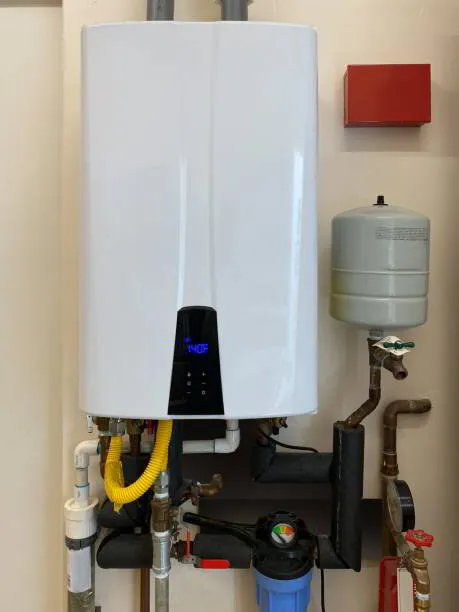
One of the coolest things about tankless is that you can put them almost anywhere. They’re about the size of a suitcase. You can mount them on an exterior wall (very popular in Florida), in a closet, or even in the attic.
But—and there’s always a “but”—you need to think about the “wait for hot water.” If you put the heater on the far left side of your house and your master bath is on the far right, you’re still going to wait two minutes for that water to travel through the pipes. The heater is fast, but it isn’t magic. It doesn’t move the water through the pipes any faster than your old tank did.
Real-World Scenario: In some larger Sarasota homes, we actually recommend “point-of-use” units or a small recirculation pump. This ensures that the moment you turn that knob, the hot water is there. It’s all about creating that “luxury” feel without the waste.
Comparison: Tank vs. Tankless
| Feature | Traditional Tank | Tankless (On-Demand) |
| Space | Takes up 9-12 sq. ft. | Mounts on wall (Small) |
| Hot Water Supply | Limited to tank size | Endless (within GPM) |
| Lifespan | 8-12 years | 20+ years (with care) |
| Upfront Cost | Lower | Higher |
| Energy Use | Constant (Heats 24/7) | Only when water flows |
Key Takeaways
- Audit your usage: Don’t buy based on price; buy based on how many showers you run at once.
- Check your power: Ensure your gas line or electrical panel can handle the massive surge of energy these units require.
- Venting is life: Never compromise on the exhaust setup for gas units.
- Sarasota water is tough: Budget for a water softener or at least an annual flush to protect your investment.
- Pro-install pays off: Between permits, codes, and technical specs, having a professional team can save you from a “DIY disaster.”
Conclusion
Switching to a tankless system is one of those upgrades that honestly makes you wonder why you didn’t do it sooner. No more “who used all the hot water?” arguments. No more worrying about a 50-gallon tank leaking and flooding your garage while you’re on vacation.
But, as we’ve talked about, mastering tankless water heater installations in Sarasota requires a bit of planning. It’s about more than just the unit; it’s about the infrastructure behind it. If you’re feeling a bit overwhelmed by the GPMs, the venting codes, or the thought of flushing a heat exchanger, don’t sweat it.
We live and breathe this stuff every day. Whether you just want some advice or you’re ready to make the switch, we’re here to help. You can reach out to us at Redemption Plumbing Services for a hand. Let’s get you that endless hot water you deserve.


Comments are closed