


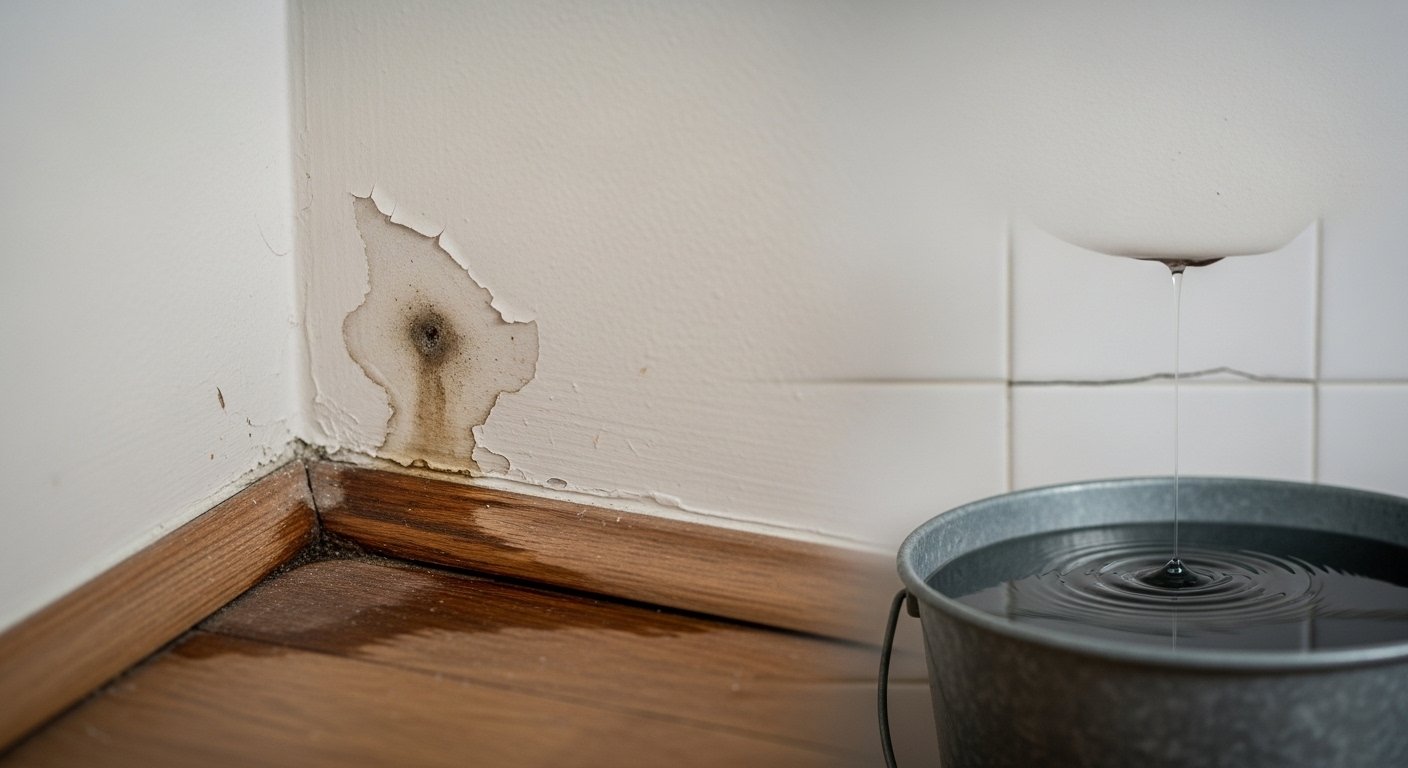
How to Spot a Hidden Water Leak Before It Becomes a Costly Disaster
We’ve all had that moment of minor heart failure when opening the monthly utility bill. You look at the number, look at your family, and ask, “Who has been running a car wash in the backyard?” But when everyone swears they’ve been taking five-minute showers, that’s when the real worry sets in.
The truth is, some of the most destructive forces in your home are completely silent. A pipe pinhole behind a drywall, a slab leak under your feet, or a tiny drip in the crawlspace—these aren’t just wasting water; they’re rotting your studs and inviting mold to move in rent-free. Honestly, it’s a race against time. The longer you wait, the more “zeroes” get added to the repair bill.
If you’re already seeing a wet spot on the ceiling, you probably need our emergency plumbing services right now. But if you’re just playing detective because of a weird smell or a high bill, let’s walk through the different ways to catch these “ghost leaks” before they wreck your home.
Overview of Your Leak Detection Options
When it comes to finding water that doesn’t want to be found, you generally have three ways to play it. You can be the DIY detective, you can install smart tech to do the watching for you, or you can call in the pros with the “superpowers” (aka specialized gear).
- The DIY Physical Audit: Using your senses and the water meter.
- Smart Leak Detectors: Continuous electronic monitoring.
- Professional Acoustic & Thermal Detection: Expert-led “high-tech” search.
Detailed Comparison: Finding the Source
1. The DIY Physical Audit
This is where every homeowner should start. It’s free, it’s fast, and it’s surprisingly effective for catching the “low-hanging fruit” of leaks.
- Key Features: You check the water meter, perform toilet dye tests, and look for “telltale” signs like peeling paint or musty odors.
- Pros: Zero cost. You can do it right now. It helps you rule out obvious issues like a running toilet.
- Cons: It can’t find leaks deep inside walls or under concrete slabs. You might see the result of the leak (the wet spot) but not the actual source.
- Best Use Case: Routine monthly checks or when you first suspect the bill is too high.
- Cost Considerations: Free, other than a few minutes of your time.
2. Smart Leak Detectors
Think of these like a smoke alarm, but for your pipes. These devices sit near appliances or even inline with your main water pipe to monitor flow and moisture.
- Key Features: Sensors placed under sinks or near water heaters. Some “smart” main-valve versions can even shut off your water automatically if they sense a burst pipe.
- Pros: 24/7 peace of mind. Great for catching dishwasher plumbing leaks before they warp your cabinets.
- Cons: Can be prone to false alarms. Battery-operated sensors need maintenance. The high-end shut-off valves require professional installation.
- Best Use Case: Homeowners who travel often or those with older plumbing systems.
- Cost Considerations: $50 for basic sensors to $800+ for whole-home shut-off systems.
3. Professional Acoustic & Thermal Detection
This is the “gold standard.” When you know there’s a leak (the meter is spinning) but the house looks bone dry, it’s time for the big guns.
- Key Features: Plumbers use ultra-sensitive microphones to hear water hissing through a crack or thermal imaging cameras to “see” temperature changes behind walls.
- Pros: Pinpoint accuracy. It prevents the “guess and check” method of tearing down three walls to find one drip. Crucial for slab leak repair.
- Cons: Requires a service call fee.
- Best Use Case: When the water meter is moving but you have no visible signs of water.
- Cost Considerations: Mid-range service fee, but it saves thousands in unnecessary demolition.
Side-by-Side Comparison
| Feature | DIY Audit | Smart Detectors | Professional Detection |
| Accuracy | Low to Moderate | Moderate | High |
| Ease of Use | Simple | Set and forget | Hands-off (Hire a pro) |
| Detects Slab Leaks? | Rarely | No (unless inline) | Yes |
| Initial Cost | $0 | $50 – $800 | Service Fee |
| Primary Benefit | Saves money on service calls | Immediate notification | Saves your home from “guess-work” demo |
Expert Recommendations: Which Should You Use?
Look, I’ve seen homeowners try to be “too DIY” and end up with a mold colony that cost $10k to remediate. On the flip side, you don’t need a pro to tell you your toilet flapper is leaking. Here is how I’d play it:
- Routine Maintenance: Stick to the DIY Audit. Every time you change your A/C filter, check under your sinks and peek at your water meter while no one is using water.
- The “Traveler” Strategy: If you leave your Florida home for the summer, Smart Detectors are a non-negotiable. An unattended leak for three months isn’t a repair; it’s a total remodel.
- The “Emergency” Strategy: If your water meter is spinning like a top and you’ve checked all the toilets, stop. Don’t start cutting holes in the drywall. Call for professional leak detection.
Decision Framework: “Do I Have a Hidden Leak?”
Ask yourself these four questions. If you answer “Yes” to more than two, you have a problem.
- Is the Water Meter moving? Turn off every tap and the icemaker. Check the meter. If the little triangle or dial is moving, water is going somewhere.
- Are there “Warm” spots on the floor? If you have a slab foundation and one area of the tile feels warm to your feet, that’s a classic sign of a hot water line leaking under the concrete.
- Is the “Musty” smell getting stronger? If you clean and clean but that damp basement/closet smell won’t go away, there is active moisture somewhere.
- Is your Water Heater running constantly? If you hear the heater kicking on when no one is using hot water, you might have a hidden leak on the hot water side.
FAQ: Frequently Asked Questions
Q: Can a tiny drip really cost that much?
A: Think about it this way: a leak the size of a pinhead can waste 300,000 gallons a year. At average utility rates, that’s thousands of dollars literally flushed away.
Q: Will food coloring really find a toilet leak?
A: Yes! Put a few drops of dark food coloring in the tank. Wait 20 minutes without flushing. If color shows up in the bowl, your flapper is leaking. It’s the easiest toilet repair check there is.
Q: I found a damp spot on my wall. What now?
A: Mark the edges of the dampness with a pencil and check back in two hours. If it’s growing, shut off your main water valve immediately.
Q: Do I need a permit for leak repair?
A: It depends on the scale. For a simple pipe repair, usually no. If we have to jackhammer a slab or replace a main line, your plumber will handle the necessary city permits.
Conclusion: Trust Your Gut (And Your Meter)
Water leaks are like unwanted houseguests—the longer they stay, the more damage they do and the harder they are to get rid of. Honestly, the most important tool you have isn’t a wrench or a high-tech camera; it’s your own awareness.
Don’t ignore the high bill. Don’t ignore the weird “squishy” feeling under the carpet. Catching a leak early is the difference between a quick afternoon fix and a month-long battle with an insurance adjuster. Take ten minutes today to check your meter. You’ll sleep a whole lot better tonight knowing your home is dry.
If you’ve done the checks and something still feels “off,” we’d love to help you find the answer. Whether you need a simple fix or a sewer camera inspection to see what’s happening deeper down, we’ve got your back.


Comments are closed