


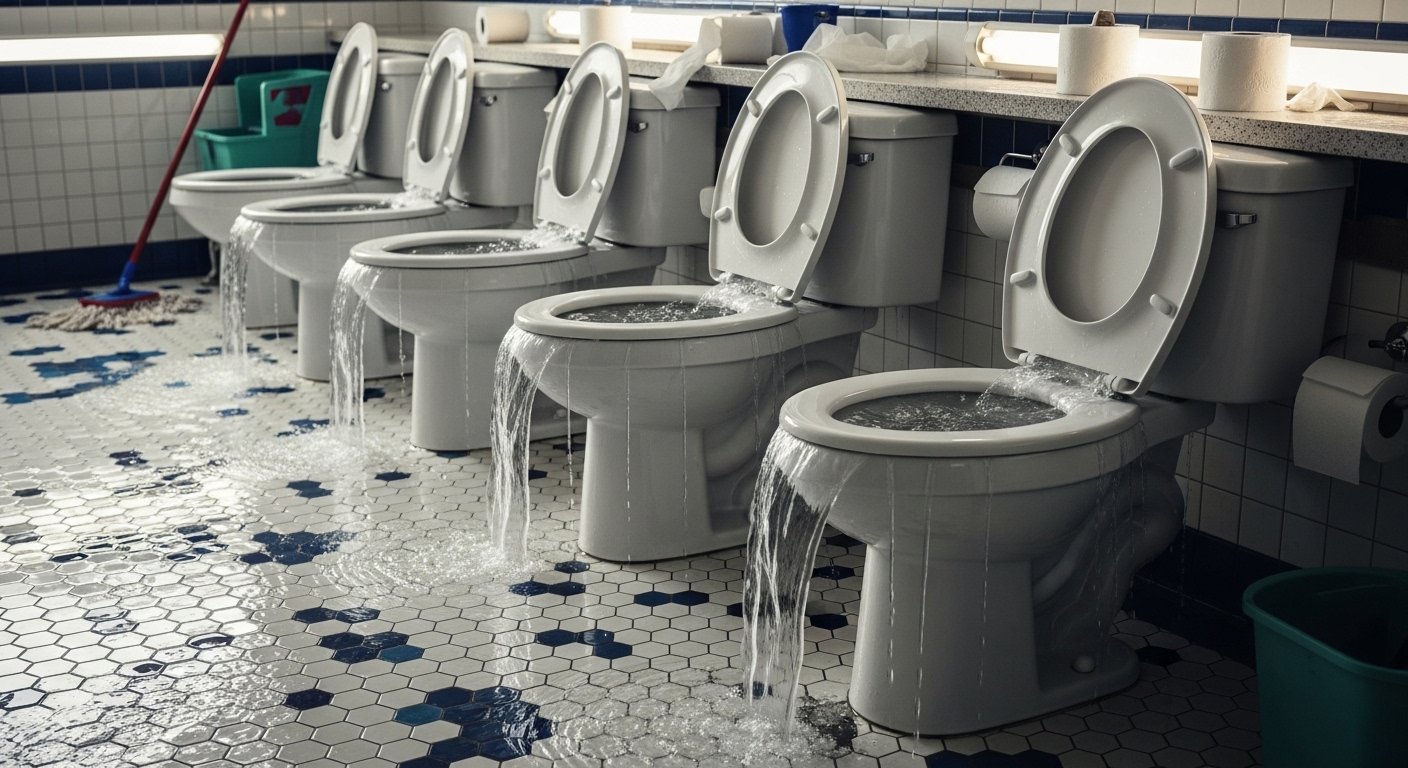
You hear it. That constant hissing sound is coming from the bathroom. Or maybe you jiggle the handle every time you flush because that’s just what you do now. It’s become part of the routine, hasn’t it?
Here’s the thing most people don’t realize about a running toilet – it’s literally flushing money down the drain. We’re not talking about a few cents. A toilet that runs constantly can waste 200 gallons of water a day. In Bradenton, where water and sewer costs add up fast, that’s an extra $50 to $100 on your monthly bill. Every single month.
And yeah, maybe you’ve been meaning to fix it. But it seems like one of those things that can wait. The toilet still flushes, right? Everything works. It’s just… running a little.
Except it’s not waiting. It’s costing you money right now, today, and it’s probably going to get worse before it gets better.
If you’re dealing with a running toilet and you’re tired of messing with it, Redemption Plumbing Services can fix it for you. We’re available 24/7 at (941) 541-7473 – licensed, insured (CFC1431820), and located right here at 3101 16th Avenue West in Bradenton. Sometimes it’s just easier to call someone who knows what they’re doing.
Why Running Toilets Cost More Than You Think
Most people hear “running toilet” and think it’s a minor annoyance. Background noise. Something you get used to.
But let’s do the math on what it’s actually costing you.
A normal toilet uses about 1.6 gallons per flush. When your toilet’s running constantly, it’s like flushing every few minutes, all day, all night. That adds up to hundreds of gallons every single day that you’re paying for but not using.
Your water bill in Bradenton covers both the water coming in and the wastewater going out. So you’re paying twice for that wasted water – once to bring it to your house, and again to send it to the sewer system.
And here in Florida, we’re supposed to be conserving water. Running toilets are the opposite of that. You’re wasting a resource you’re also paying a premium for.
Beyond the money, a running toilet usually means something’s wearing out. And the longer you wait to fix it, the more likely that small problem becomes a bigger one. A worn flapper can turn into a corroded flush valve. A loose fill valve can start leaking at the connections. What starts as a $20 repair becomes a $200 repair because you waited.
What’s Actually Causing Your Toilet to Run
There are really only a few things that make toilets run constantly, and most of them are pretty simple. The problem is figuring out which one you’ve got.
The flapper’s worn out. This is the most common cause. The flapper is that rubber piece at the bottom of the tank that lifts when you flush and then drops back down to seal the tank. Over time, it gets hard, warped, or covered in mineral deposits from our Bradenton water. When it doesn’t seal properly, water constantly leaks from the tank into the bowl, and the fill valve keeps running to replace it.
You can test this yourself. Add a few drops of food coloring to the tank water. Wait 15 minutes without flushing. If the color shows up in the bowl, your flapper’s leaking.
The fill valve won’t shut off. The fill valve controls the water coming into the tank. When it’s working right, it fills the tank to the right level and stops. When it’s failing, it keeps running because it can’t detect the proper water level or the shutoff mechanism is worn out.
You’ll usually hear this as a constant hissing sound. Sometimes you can see water trickling into the overflow tube in the center of the tank.
The float’s out of adjustment. The float is what tells the fill valve when to shut off. If it’s set too high, water overflows into that overflow tube, and the fill valve keeps running to maintain the level. If the float arm is bent or the float itself is waterlogged, the same problem.
The chain’s too long or too short. The chain connects the flush handle to the flapper. If it’s too long, it gets caught under the flapper and prevents it from sealing. If it’s too short, it holds the flapper open slightly. Either way, water leaks and the toilet runs.
There’s mineral buildup. Our water in Bradenton has minerals that build up on everything over time. They can prevent the flapper from sealing, clog the fill valve, or interfere with the float mechanism. Sometimes the parts aren’t actually broken – they’re just gunked up.
Fixing It Yourself vs Calling Someone
Look, I’m not going to tell you never to DIY your plumbing. Some toilet fixes are genuinely simple – replacing a flapper takes about five minutes and costs $5 if you know what you’re doing.
But here’s what I’ve seen happen more times than I can count. Someone watches a YouTube video, heads to the hardware store, buys what they think they need, gets home, and realizes their toilet’s a different model or the problem’s not what they thought or they’re missing a tool, or the new part doesn’t quite fit right.
Three trips to the store later, they’ve spent their whole Saturday afternoon, and they’re frustrated,d and the toilet’s still running, and now they’re calling us anyway.
If you’re handy and you’ve got time, sure, give it a shot. Turn off the water supply to the toilet (there’s a valve behind it near the floor), flush to empty the tank, and replace the flapper. That solves probably 70% of running toilet issues.
But if you’re not sure what you’re doing, or you don’t have time to mess with it, or you’ve already tried and it didn’t work, just call a plumber. We do this all day, every day. We’ve got the parts on the truck, we know what we’re looking for, and we can fix it in the time it would take you to drive to the store.
Plus, sometimes what looks like a running toilet is actually a sign of a bigger problem. A crack in the tank, a corroded flush valve assembly, water pressure issues – these aren’t things you want to discover halfway through a DIY repair.
What We Actually Do When We Fix Running Toilets
When you call us for a running toilet, here’s what happens.
We show up (usually the same day, often within a couple of hours, depending on our schedule). We look at what you’ve got going on. We test the flapper, check the fill valve, look at the overflow tube, and examine the flush mechanism.
Most of the time, we can tell you exactly what’s wrong within about two minutes. We’ve seen thousands of toilets. We know the patterns.
Then we explain what needs to be done and what it’ll cost before we do anything. No surprises. If you want to proceed, we fix it right there. If you want to think about it, that’s fine too.
For a straightforward repair – replacing a flapper, adjusting a float, swapping out a fill valve – we’re usually done in 15-30 minutes. For something more complex, maybe an hour.
We test everything before we leave. Flush it a few times, make sure the water level’s right, make sure it’s not running, make sure it’s not leaking. We clean up any mess, and we’re out of your way.
And honestly, the peace of mind is worth something. You know it’s fixed, right? You know it’s not going to fail again next week, and you can stop thinking about it.
Preventing Future Problems
Once you’ve got your running toilet fixed, here’s how to keep it from happening again anytime soon.
Clean your toilet tank occasionally. I know, nobody wants to do this. But once a year, turn off the water, flush to empty it, and wipe down the inside of the tank. Get rid of mineral buildup, check that all the parts are moving freely, make sure nothing’s corroded.
Don’t use those drop-in tank tablets. The ones that turn your water blue or claim to clean your toilet with every flush? They’re slowly destroying the rubber components in your tank. The chemicals break down the flapper and other seals, which leads to… running toilets.
Replace flappers proactively. They’re cheap. Like $5. If your toilet’s more than 5-7 years old and you’ve never replaced the flapper, just do it. Don’t wait for it to fail.
Pay attention to changes. If your toilet starts making new noises, or you have to jiggle the handle more than you used to, or you notice the water level seems weird, don’t ignore it. That’s your early warning that something’s wearing out.
Get your water tested if you’re having recurring issues. If you’re replacing flappers every year or your fill valves keep failing, you might have water quality issues that are accelerating wear. A water softener or filtration system might actually save you money in the long run.
Contact Redemption Plumbing in Bradenton for Running Toilet Repairs
Look, running toilets are one of those problems that seem minor until you realize how much they’re actually costing you. Not just in water bills, but in wear and tear on your plumbing system, and in the mental space they take up every time you hear that sound.
You don’t have to live with it. And you don’t have to spend your weekend becoming a toilet repair expert unless you want to.
We’re at Redemption Plumbing Services, 3101 16th Avenue West, Bradenton, Florida 34205. Call us at (941) 541-7473 or email Getgreatservice@redplbg.com and we’ll get your toilet sorted out.
We’re available 24/7 because we know plumbing problems don’t wait for business hours. We’re licensed (CFC1431820), insured, and we’ve been fixing plumbing issues throughout Bradenton for years.
Stop jiggling that handle. Stop listening to that hissing sound. Stop watching your water bill go up month after month.
Let’s fix it and be done with it.


Comments are closed