


The Saturday Morning Sink Disaster
Imagine this: It’s a typical humid Saturday morning. You’ve just finished a nice breakfast, and you’re standing at the kitchen sink, ready to rinse off the plates. You flip the faucet, and instead of that satisfying whoosh of water disappearing down the drain, you get… nothing. Or worse, a rising pool of murky, gray water that smells faintly of yesterday’s dinner.
I remember helping a neighbor with exactly this. They were frantic because they had a family BBQ starting in four hours. The humidity was already at 90%, the house felt sticky, and now the kitchen was basically out of commission. It wasn’t just a clog; it was a total momentum killer.
We eventually got it cleared, but the look on their face—that pure “why now?” frustration—is something every homeowner knows. It’s that sinking feeling (pun intended) that your day just got a lot more expensive and a lot messier.
If you’re currently staring at a sink that won’t budge, you might need a pro for drain cleaning services in Bradenton right now. But if you want to make sure that “Saturday Morning Disaster” never happens to you again, let’s talk about why Florida makes our drains so grumpy and how to keep them happy.
Why Florida Drains Are “Different”
You might think a pipe is a pipe, regardless of where you live. But honestly? Living in Florida adds a layer of complexity to your plumbing that folks in drier climates just don’t deal with.
The Humidity Factor
Here’s something most people don’t realize: humidity affects what happens inside your pipes, not just your hair frizz levels. In high-humidity environments, organic matter—like food scraps or hair—doesn’t dry out. It stays moist, which sounds gross because it is. This moisture creates a perfect breeding ground for “biofilm,” a slimy coating that acts like glue for every other piece of debris passing through.
The A/C Connection
In Florida, our air conditioners are the MVPs of the house. But did you know your A/C drain line usually ties into your home’s main drainage system? If your A/C isn’t maintained, it can send algae and “white slime” into your pipes, contributing to those stubborn blockages. It’s all connected.
How to Prevent Clogged Drains: The Core Principles
Preventing clogs isn’t about some secret magic trick. It’s about changing a few small habits that make a massive difference over time. Think of it like brushing your teeth—you do it so you don’t end up with a root canal later.
1. The Kitchen: Your Drain’s Natural Enemy
I’m going to be blunt: your garbage disposal is not a trash can. I know the commercials make it seem like it can grind up a whole turkey, but please, don’t try it.
- No F.O.G. (Fats, Oils, Grease): This is the golden rule. When grease is warm, it’s liquid. The second it hits your pipes and cools down, it turns into a solid, waxy brick.
- Starchy Saboteurs: Pasta, rice, and potato peels. They expand in water. They turn into a sticky paste that is a nightmare to clear.
- Fibrous Foes: Celery, onion skins, and coffee grounds. These act like a net, catching other bits of food until the pipe is choked off.
If your disposal is already acting up, you might want to look into garbage disposal services before the whole sink backs up.
2. The Bathroom: The Hair Highway
Hair is the leading cause of bathroom clogs. It’s long, it’s strong, and it loves to wrap around the pop-up stopper in your sink or the drain assembly in your shower.
- Use Mesh Strainers: Honestly, these are $5 at the hardware store and will save you $500 in plumbing bills. They catch the hair before it ever enters the pipe.
- Brush Before You Wash: It sounds simple, but brushing your hair before getting in the shower significantly reduces the “shed” that ends up in the drain.
3. The Laundry Room: Lint and Soap Scum
Your washing machine pushes out a lot of water very quickly. If your washing machine plumbing isn’t up to par, the lint from your clothes can settle in the pipes and create a felt-like plug.
Expert Insights: What the Pros Wish You Knew
I’ve spent enough time around plumbers to know they have some strong opinions on how people treat their pipes. Here’s the “insider” scoop:
The Chemical Drain Cleaner Myth Look, I know those colorful bottles at the grocery store look tempting. But stop. Just stop. Those chemicals are incredibly caustic. They generate heat to “melt” the clog, which can actually warp PVC pipes or eat through older metal ones. Most of the time, they just sit on top of the clog, creating a toxic soup that makes it dangerous for a plumber to work on later.
The “Flushable” Lie I’ve said it before, and I’ll say it until I’m blue in the face: “Flushable” wipes are a lie. They don’t break down like toilet paper. They stay intact and snag on any tiny imperfection in your sewer line. If you use them, put them in the trash. Your toilet repair bill will thank you.
The Power of Hot Water One of the easiest things you can do? Once a week, boil a big pot of water and pour it down your kitchen and bathroom drains. It helps melt away any minor soap scum or fat buildup before it becomes a problem. It’s free, it’s easy, and it actually works.
Practical Steps You Can Take Today
Ready to be a drain-pro? Here is your weekly/monthly checklist:
- Weekly: Flush kitchen and bathroom drains with a gallon of very hot (not quite boiling for PVC) water.
- Monthly: Clean your sink stoppers. Pull them out and wipe off that “gunk” (biofilm) that accumulates. It’s gross, but it prevents the smell and the slow-down.
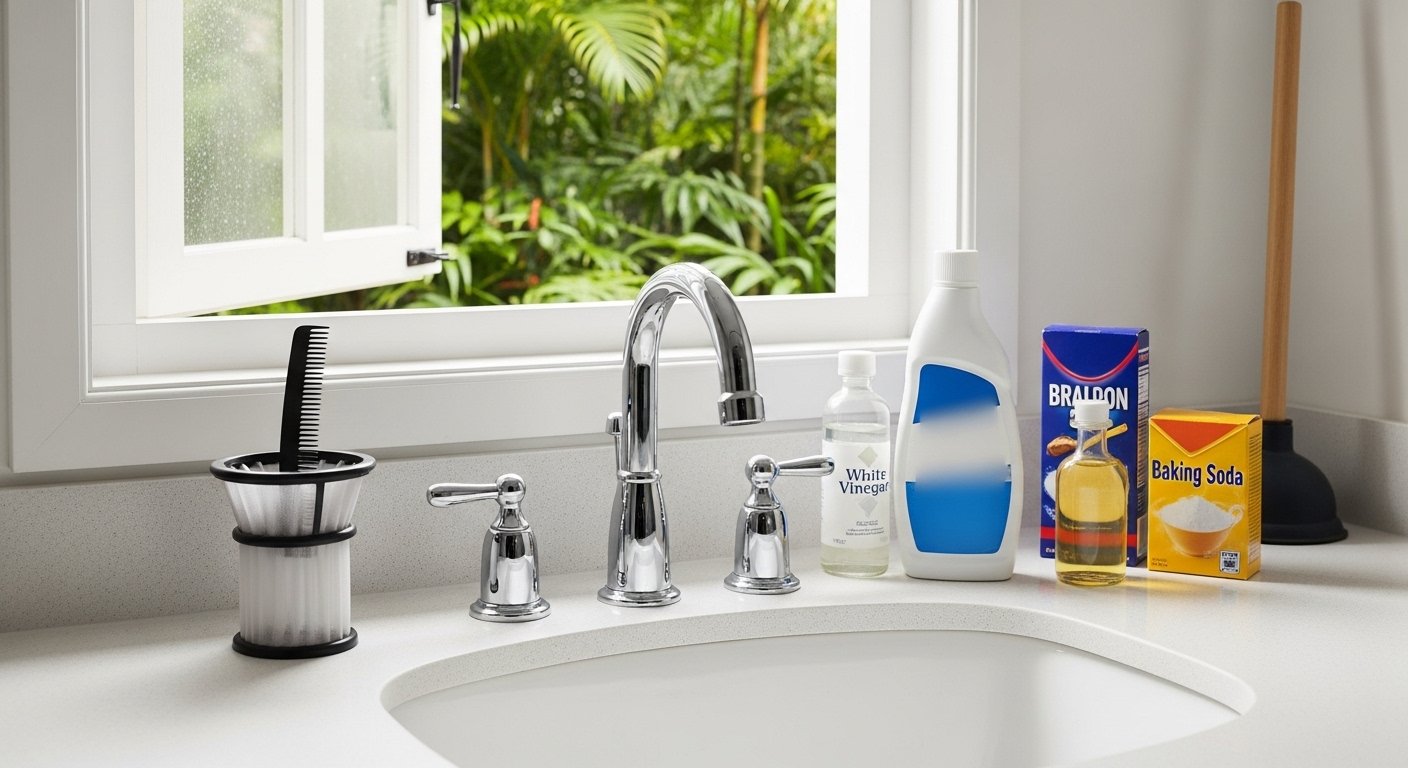
- Monthly: Use a mixture of baking soda and vinegar. Put half a cup of baking soda down the drain, followed by half a cup of vinegar. Let it fizz for 15 minutes, then flush with hot water. It’s a gentle way to keep things fresh.
- Quarterly: Check your A/C condensate line. If you see standing water in the pan, your drain is starting to clog.
FAQ: Quick Answers for Busy People
Q: My sink is draining slow, can I just plunge it? A: Usually, yes! A plunger creates pressure that can dislodge a soft clog. Just make sure you cover the “overflow” hole in the sink with a wet rag to get a good seal.
Q: Why does my drain smell like rotten eggs? A: In Florida, this is often “p-trap evaporation.” If a guest bathroom isn’t used often, the water in the trap dries out, letting sewer gases in. Run the water for 30 seconds, and the smell should go away. If it doesn’t, you might have a venting issue.
Q: Are those “zip-it” plastic hair removers safe? A: They are great for bathroom sinks! Just be gentle so you don’t snap the plastic off inside the pipe.
Q: How often should I get my drains professionally cleaned? A: For most homes, a professional “maintenance” cleaning every 2-3 years is a great idea to prevent the big disasters.
Conclusion: Keep the Flow Going
Remember my neighbor and the BBQ disaster? The moral of that story isn’t just that they got the sink fixed. It’s that they realized they’d been treating their kitchen sink like a wood chipper for three years.
Knowing how to prevent clogged drains isn’t about being perfect; it’s about being mindful. Our Florida homes work hard for us, especially with the heat and humidity. A little bit of care goes a long way in making sure your Saturday mornings are spent at the grill, not staring at a sink full of dirty water.
If things have moved past the “DIY” stage and you’re worried about a bigger issue, don’t wait for the flood. Check out our pipe repair services or give us a call. We’d much rather help you with a quick fix now than a total replacement later.


Comments are closed