


The Hidden Stress of “What’s That Smell?”
You know that feeling when you walk into the bathroom, or maybe just step out onto the patio, and catch a whiff of something that definitely shouldn’t be there? It’s not the trash. It’s not the dog. It’s that deep, earthy, slightly sweet but mostly metallic scent of… well, sewage.
Honestly, it’s enough to make your stomach drop.
As a homeowner, your mind immediately goes to the worst-case scenario. You start picturing backhoes tearing up your pristine lawn, thousands of dollars literally going down the drain, and the absolute chaos of not being able to flush your toilets for a week. It’s stressful. It’s messy. And frankly, it’s one of those things we all hope will just “go away” if we ignore it long enough.
But here’s the thing: your sewer line is actually pretty communicative. It doesn’t just fail out of nowhere; it sends out little S.O.S. signals long before the disaster happens. If you catch the signs your sewer line needs repair early, you can usually avoid the “yard-destroyed-by-machinery” nightmare.
If you’re already worried, don’t panic. We’ve seen it all, and we’re here to help you figure out if you’re dealing with a simple clog or something that needs a pro to step in. You can always check out our main sewer line services if you want to see what the fix actually looks like.
Why Sewer Issues Feel So Urgent (Because They Are)
Look, I get it. Nobody wants to spend their Saturday thinking about what happens under the foundation of their house. But your main sewer line is the MVP of your entire plumbing system. Everything—your morning shower, the dishwasher run after a big dinner, every single toilet flush—relies on that one single pipe to carry waste away from your life.
When that pipe cracks, sags, or gets invaded by thirsty tree roots, the “flow” of your daily life stops. Literally.
The Ripple Effect of a Bad Line
It’s not just about the inconvenience. A damaged sewer line can actually compromise the structural integrity of your home. If water is constantly leaking under your slab, it can wash away the soil that supports your house. Suddenly, you aren’t just looking at a plumbing bill; you’re looking at foundation repair.
And then there’s the health side of things. Sewage carries bacteria and pathogens that you definitely don’t want hanging around your basement or crawlspace. It sounds dramatic, but your sewer line is the barrier between your family and a lot of nasty stuff.
The Root of the Problem: Why Lines Fail
Why does this even happen? Most of us assume that pipes are these indestructible iron tunnels, but they’re actually quite vulnerable.
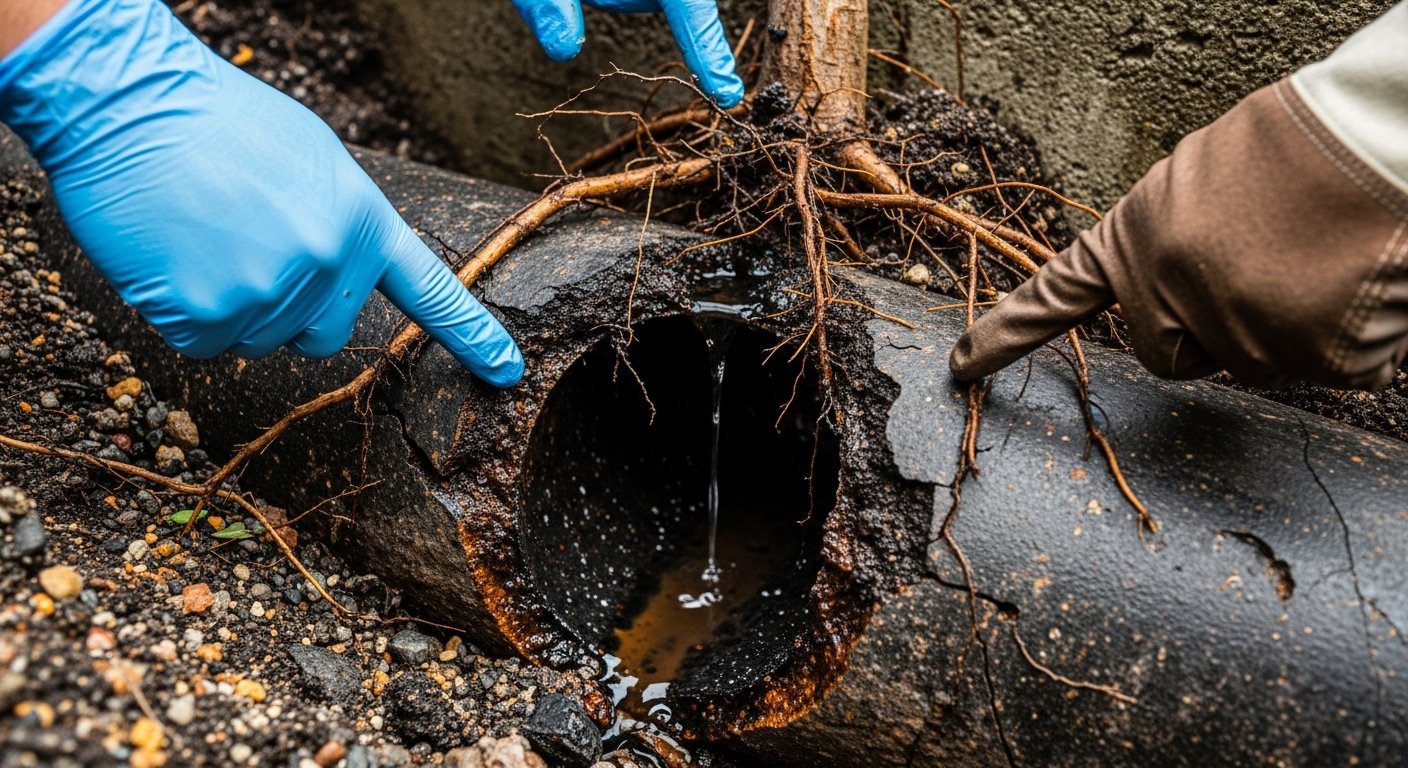
- Tree Roots: This is the big one. Trees love sewer lines. Why? Because they’re full of nutrient-rich water. Even a tiny pinhole leak or a loose joint is like an invitation for a root to crawl inside. Once they’re in, they grow, expand, and eventually act like a spiderweb that catches everything you flush.
- The “Bellied” Pipe: Sometimes the ground shifts. When the soil settles, a section of the pipe can sink, creating a “U” shape or a belly. Gravity stops working in your favor, and waste just sits there, eventually creating a massive backup.
- Old Age: If your home was built several decades ago, you might have clay or cast-iron pipes. They were great for their time, but they eventually corrode or get brittle and snap.
- The “Flushable” Lie: Don’t get me started on “flushable” wipes. They aren’t flushable. They don’t break down. They just sit in your sewer line and wait for other debris to join them until you have a solid wall of gunk.
7 Signs Your Sewer Line Needs Repair
Let’s get into the nitty-gritty. How do you know for sure? Here are the most common red flags I’ve seen in homes over the years.
1. The Multi-Drain Slowdown
If one sink is slow, it’s probably just a hair clog in the P-trap. No big deal. But if your kitchen sink, your bathtub, and your laundry line are all draining like they’re stuck in molasses? That’s a sewer line issue. The blockage is further down the line, affecting everything upstream.
2. Gurgling Toilets (The Ghost Flush)
You’re sitting in the living room and you hear a glug-glug-glug coming from the bathroom. You haven’t even used the water recently. What’s happening is air is being trapped by a blockage in the sewer line and bubbling back up through the water in your toilet. It’s like a warning growl from your plumbing.
3. The “Sewer Gas” Smell
A healthy plumbing system should be airtight (except for the vents on your roof). If you can smell raw sewage inside your home, a pipe has likely cracked or a seal has broken. Honestly, this is the sign people ignore the most, thinking it’s just “old house smell.” It isn’t.
4. Lush, Green Patches in the Yard
Is one part of your lawn looking suspiciously like a tropical rainforest while the rest of the grass is struggling? If you have a localized patch of vibrant, fast-growing grass, it’s likely being “fertilized” from below by a leaking sewer line.
5. Indentations in the Yard or Pavers
If a pipe is leaking significantly, it can wash away the dirt underneath your lawn or driveway. If you notice a random dip in the grass or a sinkhole starting to form, stop walking over it and call someone.
6. New Friends (Pests)
Rats and cockroaches live in sewers. If your sewer line has a crack, it’s like a highway entrance directly into your home. If you’ve suddenly got a pest problem that won’t go away, the entry point might be underground.
7. Sewage Backup
This is the “Stage 4” sign. You flush the toilet and it comes up in the shower. Or you run the washing machine and the floor drain in the basement starts overflowing. At this point, you don’t just have a “sign”—you have an emergency.
If you’re seeing these things, you might want to look into a sewer camera inspection. It’s basically an MRI for your pipes, and it saves so much guesswork.
Solutions: It’s Not Always a Disaster
Twenty years ago, a broken sewer line meant your yard was getting destroyed. Today? We have better options.
- Trenchless Pipe Repair: This is the “no-dig” solution. We can often pull a new liner through your old pipe or even burst the old one and pull a brand-new HDPE pipe into its place through tiny access points. It’s faster and saves your landscaping. You can read more about how trenchless pipe repair works here.
- Pipe Relining: Think of this like putting a “stent” in an artery. We coat the inside of your existing pipe with an epoxy that hardens, sealing all the cracks and holes without ever digging it up.
- Traditional Replacement: Sometimes, if the pipe has completely collapsed, we have to go the old-school route. But even then, modern equipment makes it a lot cleaner than it used to be.
Actionable Tips for Homeowners
Before you call in the cavalry, or even after you’ve had a repair, here’s how to keep things flowing:
- Throw the Wipes Away: I’ll say it again—even if the package says “sewer safe,” it’s lying. Put them in the trash can.
- Mind the Grease: Never pour cooking oil or bacon grease down the sink. It hardens into “fatbergs” in your sewer line.
- Know Your Cleanout: Find that white PVC pipe sticking out of the ground near your house. That’s your cleanout. Make sure it’s accessible so a plumber can get to it quickly in an emergency.
- Install a Backwater Valve: If you live in a low-lying area, this one-way valve prevents city sewage from backing up into your home during heavy rains.
- Watch Your Trees: If you’re planting new trees, keep them at least 10 feet away from where you think your sewer line is.
- Get an Annual Inspection: If you live in an older home, a quick camera check once a year can catch a $500 problem before it becomes a $10,000 one.
FAQs About Sewer Lines
How much does sewer line repair usually cost? Honestly, it varies wildly. A simple cleaning might be a few hundred bucks, while a full replacement can run into the thousands. The key is catching it before it collapses.
Will my homeowners insurance cover this? Most standard policies do not cover sewer line failure due to wear and tear or tree roots. You often need a specific “Sewer Lateral” rider. Check your policy today—it’s usually a very cheap add-on that saves you a fortune later.
Can I just use chemical drain cleaners to fix a backup? Please don’t. Those chemicals are incredibly harsh and can actually eat through older pipes, making a small leak much worse. Plus, they rarely reach the main sewer line in a high enough concentration to do anything useful.
How long does a sewer line repair take? With trenchless technology, we can often finish the whole job in a single day. Traditional digging can take 3-5 days depending on the depth and length of the pipe.
Final Thoughts: Don’t Wait for the Swamp
I know it’s tempting to ignore that gurgling toilet or that weird smell in the yard. We’re all busy, and nobody wants to deal with “pipe drama.”
But your home is likely your biggest investment. A sewer line issue is a direct threat to that investment. If you’re seeing the signs your sewer line needs repair, take a deep breath and deal with it now. Usually, the “fix” in your head is much scarier than the actual solution.
If you’re in the Bradenton area and things are starting to feel a bit… backed up, we’d love to help you clear things out. You can reach out for drain cleaning services or a full inspection anytime. Let’s get your home back to normal so you can stop worrying about what’s under your feet and get back to enjoying your life.


Comments are closed