


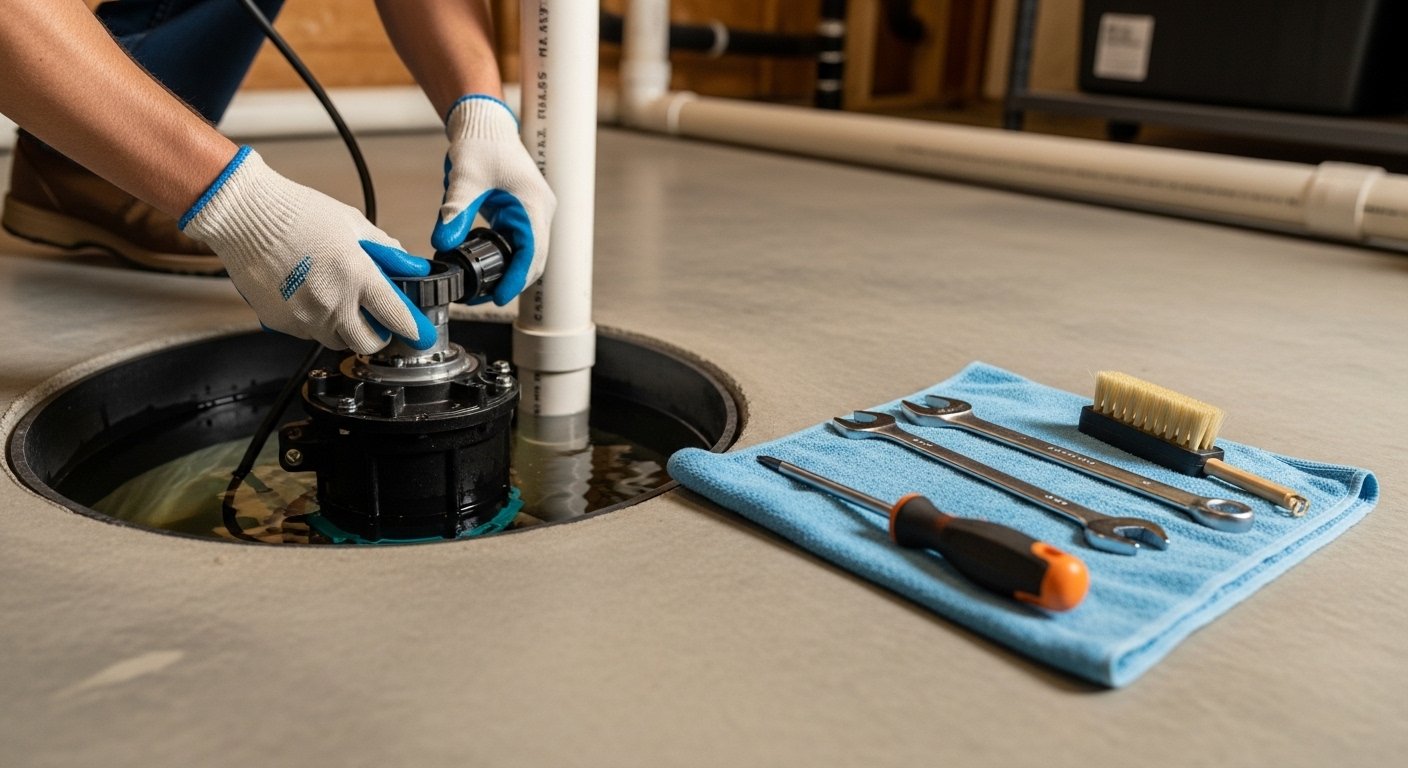
You probably don’t think about your sump pump until the moment it stops working. And that moment always seems to happen during the heaviest rain of the year.
Here in St. Petersburg and throughout Pinellas County, we get serious storms. The kind that dump inches of rain in hours. And if your sump pump isn’t ready for that… well, you’re going to find out real fast what a flooded basement or crawl space looks like.
The thing is, sump pumps need maintenance. They sit in water, they deal with debris, they run when conditions are harsh. Without regular care, they fail when you need them most. And discovering your sump pump doesn’t work while water’s rising around your furnace is not the time you want to be learning this lesson.
Proper sump pump maintenance isn’t complicated, but it matters. A lot. Let me walk you through exactly how to keep yours working so it’s there when the next storm hits.
If you’re dealing with a sump pump that’s already failed or you’re not comfortable doing maintenance yourself, Redemption Plumbing Services can help. We serve St. Petersburg and all of Pinellas County with 24/7 emergency plumbing services. Call (941) 541-7473 or email Getgreatservice@redplbg.com. We’re licensed (CFC1431820), insured, and we know Florida sump pumps inside and out.
What You Need Before You Start
Sump pump maintenance doesn’t require a bunch of specialized tools, but you’ll want to have these things handy:
- A bucket or large container
- Garden hose or large container of water
- Scrub brush or old toothbrush
- Wet/dry vacuum if you have one
- Flashlight
- Gloves
- Old towels or rags
- Paper and pen to note any issues
Time-wise, plan on 30-45 minutes for a thorough maintenance check. You can do this faster once you’re familiar with the process, but don’t rush the first time.
The best time to do this is before rainy season, which in St. Petersburg basically means late spring before summer storms start. But honestly, if you haven’t checked your sump pump in a while, right now is the best time regardless of what month it is.
Disconnect Power and Assess the Setup
Safety first. Before you touch anything, unplug the sump pump. If it’s hardwired, flip the breaker. You don’t want this thing kicking on while your hands are in the pit.
Now take a look at what you’ve got. Your sump pump sits in a pit (basically a hole) in your basement or crawl space. There’s a discharge pipe that carries water out and away from your house. There might be a battery backup system if you’re lucky enough to have one.
Check the basics. Is the pump sitting upright? Is the discharge pipe still connected properly? Any obvious damage or weird smells? You’re just getting familiar with the setup before you start working on it.
Clean the Sump Pit
The pit itself collects all kinds of stuff. Dirt, debris, gravel, sometimes even small toys or random objects that found their way down there. All of that can interfere with your pump’s operation.
Use your wet/dry vacuum or bucket to remove water from the pit. Get it as dry as you reasonably can. Then scoop out any debris, sediment, or junk that’s accumulated at the bottom.
Scrub the sides of the pit if they’re looking grimy. You want the float switch (that’s the thing that triggers the pump to turn on) to move freely, and crud on the pit walls can interfere with that.
Here in St. Petersburg, I see a lot of pits that accumulate sand and fine sediment from our soil. That stuff settles at the bottom and can eventually clog the pump intake. Get it out now before it causes problems.
Inspect and Clean the Pump Itself
With the pit clean, look at the pump. Check the intake screen or grate at the bottom. This is where water enters the pump, and it needs to be clear. Use your brush to clean off any debris, sediment, or buildup.
Check the float switch mechanism. This is critical – it’s what tells the pump when to turn on and off. Move it manually up and down. It should move smoothly without catching or sticking. If it’s gunked up, clean it gently.
Look at the impeller (the part inside that actually moves water) if you can access it. Some pumps let you remove a cover to check this. Clean out any debris wrapped around it.
Check all electrical connections you can see. Look for corrosion, loose wires, or damage. If anything looks sketchy, that’s something to have a professional address.
Test the Float Switch
The float switch is what makes your sump pump automatic. When water rises, the float rises with it, triggering the pump. When water drops, the float drops and the pump shuts off.
This needs to work perfectly. Here’s how to test it.
With the pump still unplugged, manually lift the float to its “on” position. It should move freely and click into place. Lower it back down. It should drop smoothly and click back to “off.”
If the float sticks, catches, or doesn’t move smoothly, there’s a problem. Sometimes you can fix this by cleaning around the mechanism. Sometimes the float switch is worn and needs replacement.
Test the Pump Operation
Now we’re going to actually run the pump to make sure it works. Plug it back in (or turn the breaker back on).
Pour water into the pit using your garden hose or buckets. Fill it slowly and watch the float. When the water reaches the trigger level, the float should rise and the pump should kick on automatically.
Listen to how it sounds. A healthy sump pump runs smoothly without grinding, screeching, or laboring. If yours sounds rough or struggles, something’s wrong.
Watch where the water goes. It should be pumped through the discharge pipe and ejected outside, away from your foundation. If water’s coming back, you’ve got a problem with the discharge line.
Let the pump run until it empties the pit and shuts off automatically. The entire cycle should be smooth – turn on when water reaches the right level, pump efficiently, shut off when water’s removed.
If everything works right, congratulations. Your pump’s operational. If something seems off, make a note of it and we’ll talk about troubleshooting in a minute.
Check the Discharge Pipe and Outlet
Follow the discharge pipe from your pump to where it exits your house. Check for:
- Cracks, leaks, or damage anywhere in the pipe
- Proper slope (water should flow downhill, not have spots where it can pool)
- Secure connections at joints
- A check valve that prevents water from flowing back into the pit
Go outside and find where the discharge pipe exits. Make sure it’s not blocked, kinked, or damaged. The outlet should be positioned to direct water away from your foundation – at least 10 feet away if possible.
In St. Petersburg, check that the discharge isn’t pointed toward a neighbor’s property or toward the street where it’ll cause drainage problems. Some HOAs or local codes have requirements about where you can discharge this water.
During heavy rains, some discharge lines can freeze in northern climates, but that’s obviously not our issue here in Florida. Our problem is more about making sure the outlet doesn’t get clogged with vegetation or debris.
Test the Backup System If You Have One
If you’ve got a battery backup sump pump, test it too. These are gold in Florida because we lose power during storms, which is exactly when you need your sump pump most.
Disconnect or turn off the primary pump. Add water to the pit. The backup should kick in automatically when the float reaches the trigger point.
Make sure the battery is charged and in good condition. Most backup systems have indicator lights that show battery status. If your battery’s more than 3-4 years old, consider replacing it proactively. Batteries don’t last forever.
Test the alarm if your system has one. This should sound if the backup engages, alerting you that your primary pump isn’t working.
Troubleshooting Common Sump Pump Problems
Pump runs but doesn’t move water: Check for a clogged impeller or blocked discharge pipe. Something’s preventing water from flowing where it needs to go.
Pump cycles on and off rapidly: The float switch might be stuck, or you could have a problem with the check valve allowing water to flow back into the pit.
Pump doesn’t turn on at all: Could be power (check the outlet and breaker), a failed float switch, or a burned-out motor. If it’s not obvious, call a professional.
Pump runs continuously: Float switch is probably stuck in the on position, or there’s an issue preventing the pump from lowering the water level.
Strange noises: Grinding usually means the impeller’s hitting debris or failing. Rattling might be loose parts. Neither is normal.
Visible rust or corrosion: Sump pumps in Florida don’t last forever. If yours is heavily corroded, it’s probably near end of life even if it’s still working.
Pro Tips for St. Petersburg Sump Pump Owners
Test your pump every couple months. Don’t wait for a storm to find out it’s not working. Pour a few buckets of water in the pit every 8-10 weeks just to make sure everything kicks on.
Mark your maintenance schedule. Put it on your calendar. “Check sump pump” in May and November. Make it routine so you don’t forget.
Know the signs of failure. Pumps usually give warning before they die completely. Louder operation, longer run times, cycling issues – these are your early warning system.
Consider upgrading if yours is old. Most sump pumps last 7-10 years. If yours is pushing that age and you’re having any issues, replace it proactively rather than waiting for it to fail during a storm.
Get a battery backup if you don’t have one. Power outages during severe weather are common in St. Petersburg. A backup pump is cheap insurance against a flooded basement.
Keep the area clear. Don’t store stuff right next to your sump pit. You need easy access for maintenance and potential emergency repairs.
When to Call a Professional
Some sump pump maintenance you can handle yourself. But there are times when you need a plumber.
Call for professional help if:
- The pump won’t run and you can’t figure out why
- You’re getting water in your basement despite the pump running
- The pump is making sounds that concern you
- You see obvious damage or heavy corrosion
- The float mechanism is broken and needs replacement
- You want to upgrade to a better pump or add a backup system
- You’re just not comfortable working with plumbing and electrical components
At Redemption Plumbing Services, we handle sump pump installation, repair, and maintenance throughout Pinellas County. We’re based in Bradenton but we serve St. Petersburg, Clearwater, Largo, and surrounding areas regularly.
Call (941) 541-7473 or reach out at Getgreatservice@redplbg.com. We’re available 24/7 for emergencies, so if your sump pump fails during a storm, we can help. Licensed (CFC1431820), insured, and experienced with Florida’s specific challenges.
Keeping Your Home Dry
Sump pump maintenance isn’t glamorous. Nobody’s excited to spend a Saturday morning cleaning out a pit in their crawl space. But it’s one of those things that pays off big when you need it.
A functioning sump pump is the difference between a dry basement and thousands of dollars in water damage. It’s what keeps your foundation solid, your belongings safe, and your stress level manageable during Florida’s intense rainy season.
Spend 30 minutes a couple times a year checking your system. Make sure it works before you need it to work. And if you find problems you can’t fix yourself, get professional help before the next storm hits.
Because discovering your sump pump doesn’t work while water’s rising is not a situation anyone wants to be in. Trust me on that one.
Test your pump this week. Mark your calendar for the next check. And keep our number handy just in case – (941) 541-7473). We’re here when you need us.


Comments are closed