


Do You Need a Sump Pump in Bradenton FL? A Honest Hurricane Season Guide
Every June, the same conversation starts making its rounds among Bradenton homeowners. Someone got water in their garage during a storm. A neighbor’s yard turned into a pond. A Facebook group blows up with photos of flooded driveways and the question: should I have a sump pump?
It’s a genuinely good question — and the answer isn’t always what people expect.
Bradenton doesn’t have basements. Most homes here sit on slabs. So when people hear “sump pump,” they sometimes assume it’s a product built for somewhere else — for Ohio, or Pennsylvania, for homes with below-grade living spaces. Not for Florida.
But here’s what a lot of homeowners don’t realize until they’re pulling wet furniture out of a storage room or watching water creep under a door: sump pumps absolutely have a place in Bradenton homes. You just need to understand which type, and whether your specific property actually needs one.
That’s what this guide is for.
What a Sump Pump Actually Does (And What It Doesn’t)
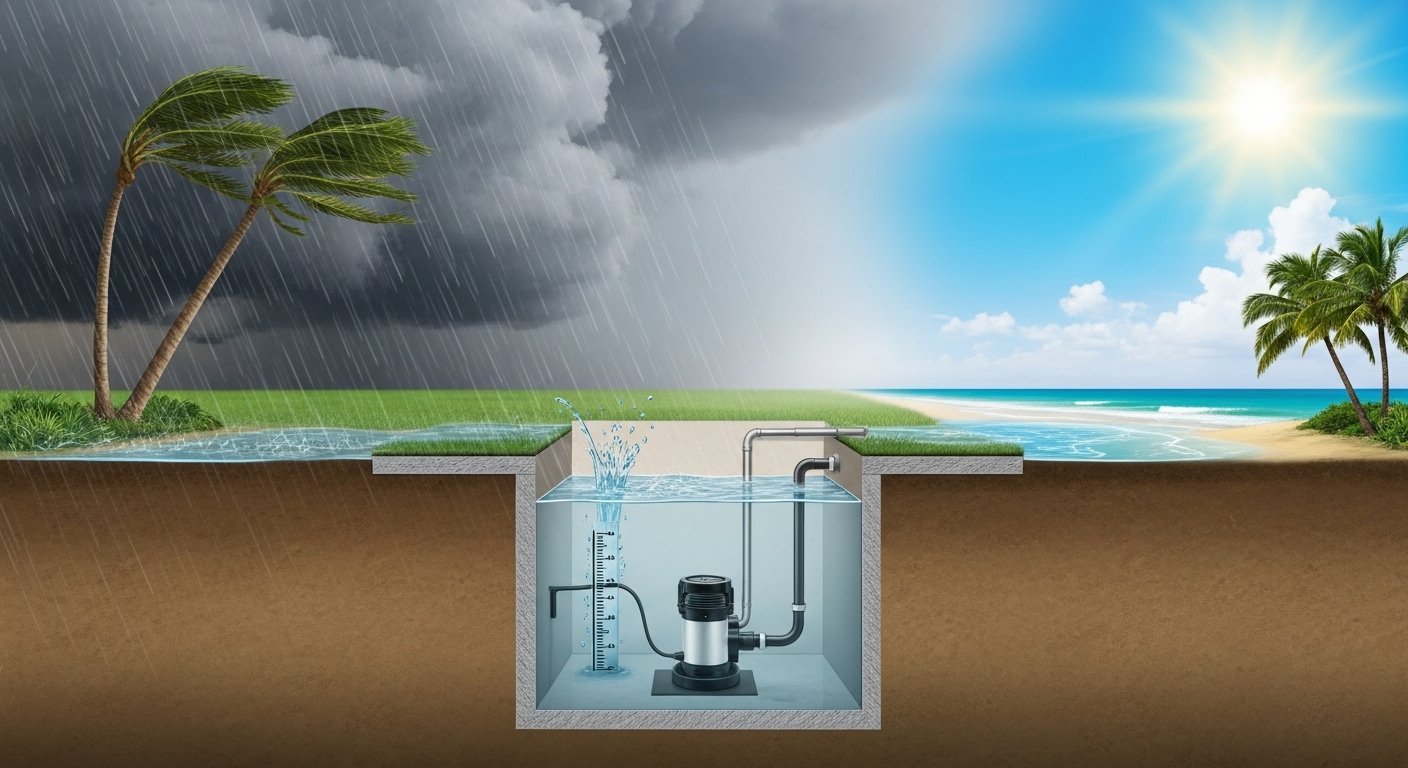
Let’s start simple. A sump pump sits in a pit — called a sump basin — and its one job is to collect water that accumulates around or under your home and pump it away before it can cause damage.
It doesn’t stop rain. It doesn’t fix poor drainage in your yard. It’s the last line of defense after water has already found its way to the low point of your property.
Think of it like a drain with a motor. Water pools in the basin, hits a trigger point, and the pump kicks on and sends it through a discharge pipe away from your foundation.
That’s it. Humble little machine. Incredibly valuable when you need it.
Does Your Bradenton Home Even Need One?
Honestly, not every home here does. But several factors push a property into “you really should have one” territory:
Low-lying yards. Southwest Florida is flat. Really flat. If your lot sits lower than the street, or lower than neighboring properties, rainwater has nowhere to go but toward your home. During a heavy storm — let alone a hurricane — that adds up fast.
A history of flooding. Have you ever seen standing water in your garage, around your foundation, or inside a Florida room or enclosed porch after heavy rain? That’s your house telling you something. It’s worth listening.
A crawl space. Some older Bradenton homes do have crawl spaces rather than full slabs. If yours does, a sump pump isn’t optional — it’s essential. Moisture under your home destroys wood framing, creates mold, and attracts pests. It’s not a “someday” problem.
Living near a water body or flood zone. Much of Bradenton is in or near FEMA flood zones. If your property is in Zone AE or X, you’re dealing with elevated risk during storm events. A sump pump is one layer of protection worth having.
French drains that aren’t cutting it alone. A lot of homes here have French drain systems — gravel-filled trenches that redirect groundwater. But during sustained heavy rain, they can get overwhelmed. Pairing a French drain with a sump pump gives your drainage system somewhere to actually send all that water.
If none of those apply to you — good house, good drainage, elevated lot, no flooding history — you might genuinely be fine without one. But if two or more of those hit home, keep reading.
The Two Main Types: Submersible vs. Pedestal
This is where Framework E earns its keep. If you’ve decided you want a sump pump, the first decision is which kind.
Submersible Sump Pumps
The pump motor sits inside the sump basin, fully submerged. The whole unit is sealed and sits underwater.
What’s good about them: They’re quieter. They handle higher volumes of water. They’re out of sight and out of the way. For homeowners who want something they don’t have to think about, submersible pumps are the go-to. They also tend to handle storm debris and dirty water better than pedestal models.
The honest downside: They’re more expensive upfront — typically $150 to $400+ for the pump itself — and because they sit in water constantly, the motor does wear faster over time. Repairs or replacements require working inside the pit, which is messier.
Best for: Homes with heavy flooding risk, higher water volumes during storms, or homeowners who want a set-it-and-forget-it system.
Pedestal Sump Pumps
The motor sits on a stand above the basin, and only the intake pipe goes into the pit. The motor stays dry.
What’s good about them: Cheaper upfront ($75-$200 range). Easier to service because the motor is accessible. The motor lasts longer because it’s not submerged. Simple to inspect.
The honest downside: Louder. Takes up more visible space. Not great for high-volume or rapid flooding situations. If your garage or storage room is going to see significant water, a pedestal pump may not keep pace.
Best for: Homes with lighter or occasional water intrusion, or as a secondary pump in a system.
Battery Backup Systems: The One You Actually Need for Hurricane Season
Here’s the thing people don’t always think about until it’s too late: during a hurricane, your power goes out. And that’s exactly when you need your sump pump most.
A battery backup sump pump is either a standalone unit or an addition to your primary pump that runs on a deep-cycle battery when the power fails. During Hurricane Ian, a lot of Southwest Florida homeowners with primary pumps had a hard lesson in this.
If you’re investing in a sump pump specifically for hurricane season — and in Bradenton, that’s basically the whole point — a battery backup isn’t optional. It’s the whole reason the system works when you actually need it. Redemption Plumbing’s sump pump services in Bradenton includes battery backup installation as part of complete system setups.
Side-by-Side: What Are You Actually Choosing Between?
| Submersible | Pedestal | Battery Backup Add-On | |
|---|---|---|---|
| Upfront cost | $150–$400+ | $75–$200 | $150–$300 |
| Noise level | Quiet | Louder | Quiet (DC motor) |
| Water volume handled | High | Moderate | Moderate |
| Works during power outage | No | No | Yes |
| Motor lifespan | 5–15 years | 25+ years | Battery: 3–5 years |
| Best for | Heavy flooding risk | Occasional water, budget | Hurricane season |
What Experts Actually Recommend for Bradenton Homes
After working in Southwest Florida plumbing for years, the pattern is pretty consistent:
For most Bradenton homes with a flooding concern, the smart setup is a submersible primary pump paired with a battery backup. That combination handles your everyday heavy-rain events and keeps running when a storm knocks out power.
Pedestal pumps are fine for low-risk situations — a storage room that occasionally gets a little damp, for example — but if you’re buying a sump pump because you’re worried about hurricane flooding, go with a submersible and add the backup.
And wherever you install it, the discharge line matters. A common mistake is routing the pump discharge too close to the house, or toward a neighbor’s property. The water needs to go somewhere it won’t come right back. A good sump pump installation in Bradenton includes thinking through where that water actually goes.
Helping You Decide: A Simple Framework
Ask yourself these four questions:
1. Has water ever entered my home or garage during a storm? If yes — you need a pump. This isn’t a question anymore.
2. Do I have a crawl space? If yes — you definitely need a pump. A submersible, with a battery backup.
3. Does my yard flood or hold water for hours after heavy rain? If yes — a sump pump alone may not solve everything, but it’s part of the answer. Pair it with improved drainage.
4. Am I mostly worried about hurricane season? Then make sure whatever you get has battery backup. The pump you can’t run during a power outage is the pump that fails when you need it most.
If you answered yes to any of those, the next step is having someone look at your property and recommend the right setup. Not a guess — an actual assessment. Redemption Plumbing offers sump pump consultations in Bradenton and can help you figure out whether you need a pump, which type, and where it should go.
Frequently Asked Questions
Do I need a permit to install a sump pump in Bradenton? For most residential sump pump installations, a permit isn’t required — but it depends on the scope of work and whether any electrical or drainage modifications are involved. A licensed plumber will know what applies to your specific situation.
How long does a sump pump last in Florida’s climate? Submersible pumps typically last 5–15 years depending on use and maintenance. Florida’s heat and humidity can be hard on motors that run frequently. Annual inspections and testing before hurricane season are a good habit.
Can I install a sump pump myself? The pump itself? Some homeowners do it. But the pit excavation, discharge routing, and electrical connection are where DIY gets complicated fast. Improper installation is a common reason pumps fail. Given that the whole point is protecting your home during a storm, it’s worth getting it done right.
What size sump pump do I need? Most residential homes in Florida do fine with a 1/3 or 1/2 horsepower pump. Larger homes or properties with significant water volume may need 3/4 HP or more. This is another reason to have a professional assess your situation — undersizing a pump defeats the purpose.
How much does sump pump installation cost in Bradenton? Installation typically runs $500–$1,500+ depending on whether a pit needs to be excavated, what type of pump you’re installing, and what drainage work is needed. Battery backup systems add to that cost but are well worth it for hurricane season.
The Short Answer
Not every Bradenton home needs a sump pump. But if your yard floods, your lot is low, you’ve had water intrusion before, or you’re genuinely worried about what a Category 3 does to your property — you probably do.
And if you’re going to install one, do it before June. Not in the middle of a storm watch when every plumber in the county is booked out.
If you want to talk through whether a sump pump makes sense for your specific home and property, Redemption Plumbing works with Bradenton homeowners on exactly this. No pressure — just a real conversation about what your home actually needs.


Comments are closed