


Meta Description: Got a toilet that runs constantly in Bradenton? Hard water mineral buildup is often the hidden cause. Here’s what’s really going on and how to fix it.
Why Your Toilet Won’t Stop Running in Bradenton (Hard Water Is Likely the Culprit)
Picture this: it’s 2 a.m., the house is dead quiet, and you can hear it — that low, steady hiss coming from the bathroom. You jiggle the handle. It stops. For about four minutes. Then it starts again.
If you’ve lived in Bradenton for any length of time, there’s a decent chance you know exactly what I’m talking about. And if you’ve been assuming it’s just a worn-out flapper or an aging toilet, you might be half right. But there’s a bigger story happening inside your tank — one that most homeowners here don’t hear about until they’ve replaced the same part three or four times and are still hearing that hiss at 2 a.m.
Hard water. That’s the part nobody mentions.
First, Why Toilets Run — The Short Version
Here’s what’s actually supposed to happen every time you flush. Water drains from the tank into the bowl, the flapper (that rubber seal at the bottom of the tank) closes, and the fill valve refills the tank. When it hits the right water level, a float shuts off the valve. Clean. Simple. Done.
A constantly running toilet usually means one of two things is broken: either the flapper isn’t sealing properly, or the fill valve isn’t shutting off. Water keeps trickling into the bowl or overflowing into the overflow tube, and the toilet never really “finishes” — it just keeps running, trying to maintain a water level it can’t hold.
Makes sense, right? So you go buy a $6 flapper at the hardware store, swap it out, and… problem solved. For a few months. Then it starts again.
That’s where Bradenton’s water comes in.
The Hard Water Problem Nobody Tells You About
Bradenton sits on Florida’s Gulf Coast, and the water here is genuinely hard. We’re talking high mineral content — calcium, magnesium, and a handful of other dissolved minerals that come along for the ride every time water moves through your plumbing.
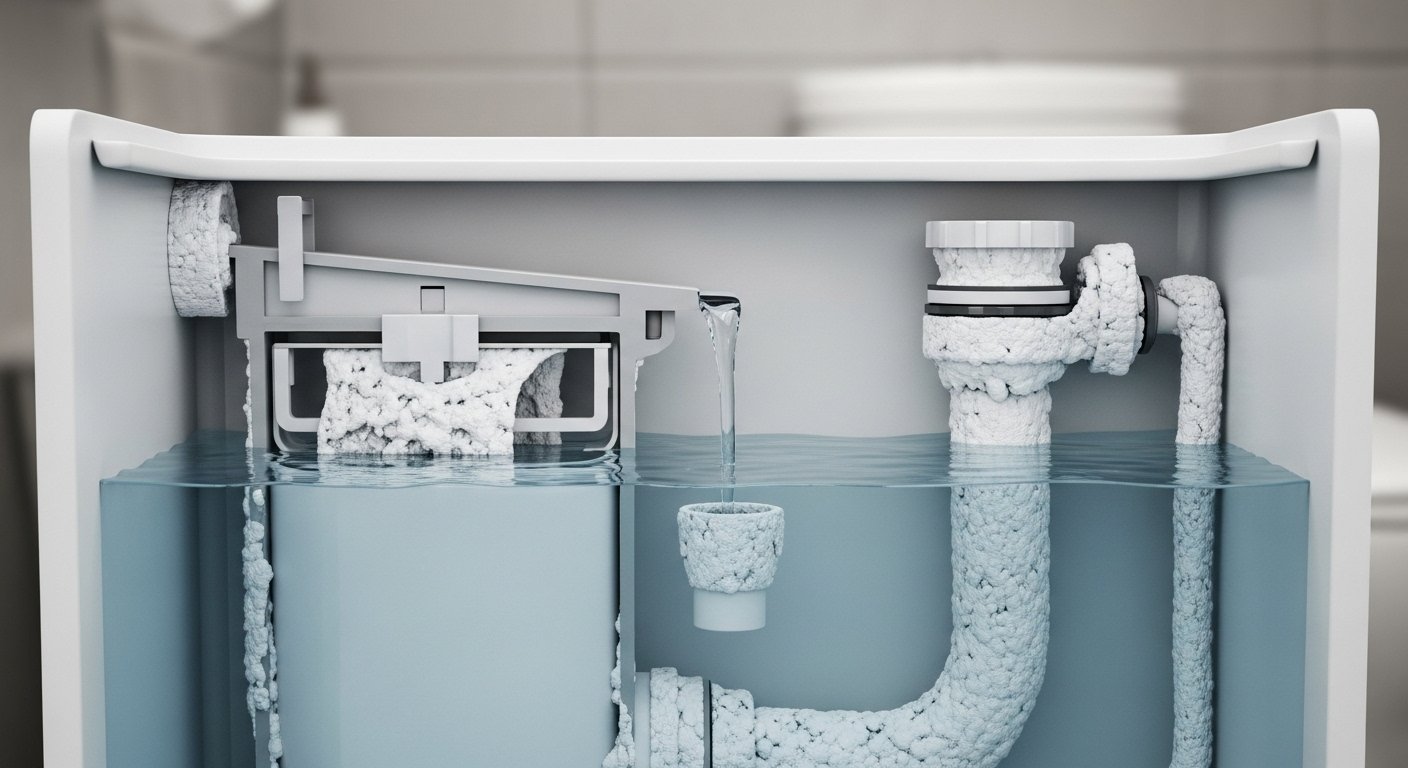
You’ve probably seen the evidence already: white, chalky buildup around your faucets, maybe a slightly crusty showerhead, or that film that shows up on glass after it dries. That’s mineral scale — and it builds up inside your toilet tank too, just where you can’t see it.
Here’s what that actually does:
It eats flappers fast. The rubber in toilet flappers degrades much quicker when it’s constantly exposed to hard, mineral-rich water. A flapper that might last five years in a soft-water city might give out in 12–18 months here.
It coats the flapper seat. Even if your flapper is fine, mineral scale can build up on the seat it’s supposed to seal against. An uneven surface means an imperfect seal. And an imperfect seal means… that hiss.
It clogs fill valves. This one catches people off guard. Fill valves have small openings and tight tolerances. Mineral deposits gradually restrict the flow or gum up the internal float mechanism — causing the valve to either fill too slowly, overshoot the water level, or never shut off cleanly.
So when you replace the flapper and the problem comes back six months later, it’s not because you bought a bad flapper. It’s because the underlying cause — mineral buildup — is still there doing its thing.
What to Look For (And Where to Look)
Pop the lid off your tank. Just set it aside somewhere safe — those things crack easily — and take a look around.
Do you see white or brownish crusty buildup on the walls of the tank? Around the base of the fill valve? On or around the flapper and its seat? If yes, hard water is almost certainly in the picture.
A few other things worth checking:
The flapper. Pull it up and look at the bottom. If it’s discolored, warped, or feels stiff instead of soft and pliable, it needs to go. Also run your finger around the flapper seat (the plastic ring it seals against). It should be smooth. If it feels rough or has visible scale buildup, that’s your culprit.
The fill valve. Watch it after a flush. It should fill the tank steadily and stop cleanly when the water hits the right level (usually about an inch below the top of the overflow tube). If it dribbles, surges, or keeps running after the tank is clearly full, the valve is likely compromised.
The float. On older toilets this is a ball on an arm; on newer ones it’s usually a cup that rides up the fill valve shaft. Either way, it should rise with the water level and trigger a clean shutoff. If it’s stuck or the water level keeps creeping up past the overflow tube, that’s a sign something’s off.
What You Can Actually Do About It
Alright, practical stuff. Here’s what actually helps in a hard-water situation.
Replace the flapper — but get the right one. Not all flappers are equal. Look for ones marketed as “hard water resistant” or made from chloramine-resistant rubber. They cost a few dollars more and genuinely last longer. When you’re in there, clean the flapper seat with a little white vinegar on a rag before you install the new one. Gets the scale off and gives you a better seal.
Descale the tank. This sounds more involved than it is. A cup of white vinegar poured into the tank (not the bowl) and left overnight will dissolve a lot of mineral buildup. Do this a few times a year and you’ll extend the life of every component in there. Some people use a toilet tank cleaning tablet — just make sure it’s one that’s safe for rubber parts, because some of those blue ones are hard on flappers.
Consider replacing the fill valve. If yours is older than five years or showing obvious scale damage, replacement is usually worth it. New fill valves are cheap (around $10–15) and the install is pretty DIY-friendly. Again, look for models rated for hard water or with easy-clean diaphragms.
Think about a whole-home water softener. This is the bigger-picture fix. A water softener removes the minerals before they ever reach your fixtures, which means less buildup everywhere — not just the toilet, but your water heater, dishwasher, faucets, and shower. It’s a real investment upfront, but it stops the cycle of constant part replacement. Worth at least getting a quote if you’re dealing with this repeatedly.
If you’d rather skip the DIY and have someone take a look at what’s actually going on in there, a quick toilet repair visit can save you a lot of guessing — and a lot of $6 flappers that solve the problem for four months at a time.
When to Call a Plumber (Honest Answer)
Most running toilet issues are genuinely fixable by a homeowner with a few tools and a willingness to get their hands a little wet. But there are situations where it makes sense to bring in a pro.
If you’ve replaced the flapper and the fill valve and it’s still running — there might be a crack in the overflow tube, an issue with the flush valve seat that needs grinding or replacement, or occasionally a more structural problem with the toilet itself.
If your water pressure is unusually high, that can also cause constant running and won’t be fixed by any tank parts. A plumber can check this pretty quickly.
And honestly? If you’ve been chasing this problem for more than a year, replaced parts twice, and you’re still hearing that 2 a.m. hiss — it might just be time to have someone look at the whole picture. Sometimes it’s faster and cheaper to get it diagnosed properly than to keep guessing.
Our team at Redemption Plumbing has seen a lot of Bradenton toilets. Hard water is genuinely one of the most common culprits we run into, and it’s also one of the most consistently overlooked. If you want a second set of eyes on your toilet, we’re happy to help.
FAQ: Running Toilets & Hard Water in Bradenton
How do I know if hard water is causing my toilet to run? The clearest signs are white or brown mineral deposits inside the tank, a flapper that looks stiff or discolored, or a fill valve that doesn’t shut off cleanly. If you’ve replaced parts and the problem keeps coming back, hard water is a strong suspect.
Can I fix a running toilet myself? Usually, yes. Replacing a flapper or fill valve is a manageable DIY project. The main tools you need are your hands, maybe a sponge to empty the tank, and a trip to the hardware store. Just make sure you’re buying parts rated for hard water if that’s your situation.
How often should I replace toilet parts in a hard water area? More often than you’d think. Plan on inspecting your flapper and fill valve every year or two. Doing a vinegar treatment on the tank a few times a year helps slow down the mineral buildup and extends part life.
Will a water softener really help? It genuinely does — not just for the toilet, but for every water-using appliance in your home. If you’re dealing with scale buildup in multiple places, it’s worth looking into. The upfront cost is offset over time by fewer repairs and longer-lasting fixtures.
What if I replace everything and it still runs? At that point, it’s worth getting a professional diagnosis. The problem might be water pressure, a cracked component, or something that’s harder to spot without experience. A professional toilet inspection can save you from chasing the same issue for another year.
The Bottom Line
That constant running sound isn’t just annoying — it’s also costing you money. A running toilet can waste anywhere from 200 to over 6,000 gallons per day depending on the severity of the leak. That adds up fast on a water bill.
And here in Bradenton, with water that’s genuinely hard, the usual band-aid fix of swapping a flapper often doesn’t stick. The minerals keep coming back, keep degrading the rubber, keep building scale on the seat, and the problem cycles right back around.
So if you’re dealing with this: start with the flapper and the fill valve. Clean the scale while you’re in there. Look into hard-water-resistant parts. And if you want to stop the cycle for good, think about whether a water softener makes sense for your home.
Or just give us a call. We know Bradenton plumbing, and we’ve fixed more running toilets than we can count. That 2 a.m. hiss? It doesn’t have to be your problem anymore.

Comments are closed