


Why Bradenton FL Hard Water Kills Water Heaters Early (And What To Do)
A family in south Bradenton replaced their water heater three times in eleven years.
Three times. The same house. They assumed they kept getting unlucky with bad units, or maybe their water pressure was doing something weird. Nobody told them the truth until the third plumber showed up, cracked open the old tank before hauling it away, and said: “Look at this.” Inside was a layer of hardened mineral scale so thick it had essentially turned the bottom third of the tank into concrete.
That’s not bad luck. That’s Bradenton water doing exactly what Bradenton water does.
If you live here, this story probably sounds at least a little familiar — not necessarily that dramatic, but you’ve noticed the white crust around your faucets, the filmy residue on your shower glass, the way your soap doesn’t quite lather the way it should. That’s hard water. And while most people treat it as a cosmetic annoyance, what it’s quietly doing to your water heater is a completely different story.
Let’s talk about what’s actually happening, why it matters more than most people realize, and — most importantly — what you can do about it. If you already know your water heater is struggling and want help now, our water heater services in Bradenton, Florida are a good starting point. But if you want to understand the problem first, keep reading. It’s worth it.
First, What Makes Bradenton Water So Hard?
Florida’s water comes primarily from the Floridan Aquifer — one of the most productive aquifer systems in the world, and also one that runs through enormous deposits of limestone and dolomite. As groundwater moves through that rock, it picks up calcium and magnesium minerals. By the time it reaches your tap, it’s carrying a significant mineral load.
Bradenton and the surrounding Manatee County area consistently measure hard to very hard water — typically in the range of 150–300 milligrams per liter (mg/L), or roughly 8–17 grains per gallon. For context, water is considered “hard” above 7 grains per gallon. Bradenton often runs well above that threshold.
That’s not unusual for Florida, but it does put local homeowners in a different situation than someone in, say, the Pacific Northwest, where water is naturally soft. The advice you read online about water heater maintenance — written generically for a national audience — often undersells how aggressively hard water affects equipment in places like this.
What Hard Water Actually Does Inside Your Water Heater
Here’s where it gets interesting. And honestly, a little alarming once you see it.
When hard water gets heated, something happens: the calcium and magnesium minerals that were dissolved in the water precipitate out. They fall out of solution. And they land on the hottest surfaces inside your tank — primarily the heating elements (in electric units) and the bottom of the tank (in gas units, where the burner heats from below).
Over time, this builds up into what plumbers call scale — a hard, chalky, whitish mineral crust that coats surfaces and accumulates at the bottom of the tank.
Think about what that does.
In a gas water heater, the burner has to work harder and longer to push heat through that insulating layer of scale to actually heat the water. The tank runs hotter, runs longer, and burns more gas to do the same job it used to do easily. The metal at the bottom of the tank — designed to operate at certain temperatures — is now exposed to higher sustained heat because the scale traps it. That accelerates corrosion. And corrosion, eventually, means leaks.
In an electric water heater, it’s even more direct. Heating elements get coated and encrusted with scale. When that happens, they overheat, burn out faster, and fail earlier than they should. Replacing a heating element is a $150–$300 repair. Doing it repeatedly because the underlying hard water problem isn’t addressed is just throwing money away.
And at the bottom of all of this — literally — is sediment. As scale builds up and occasionally breaks off, it settles at the bottom of the tank. That sediment does several things: it reduces usable tank capacity, it creates a layer between the water and the heat source, and it makes that rumbling or popping sound you’ve probably heard at some point. That sound is water getting trapped under sediment and essentially boiling against the tank floor. It’s not dangerous, but it’s a sign the tank is working way too hard.
How Much Lifespan Are We Actually Talking About?
A quality water heater — well-maintained, in an area with average water quality — should last 10–15 years. Tank units on the shorter end, tankless units often 20 years or more.
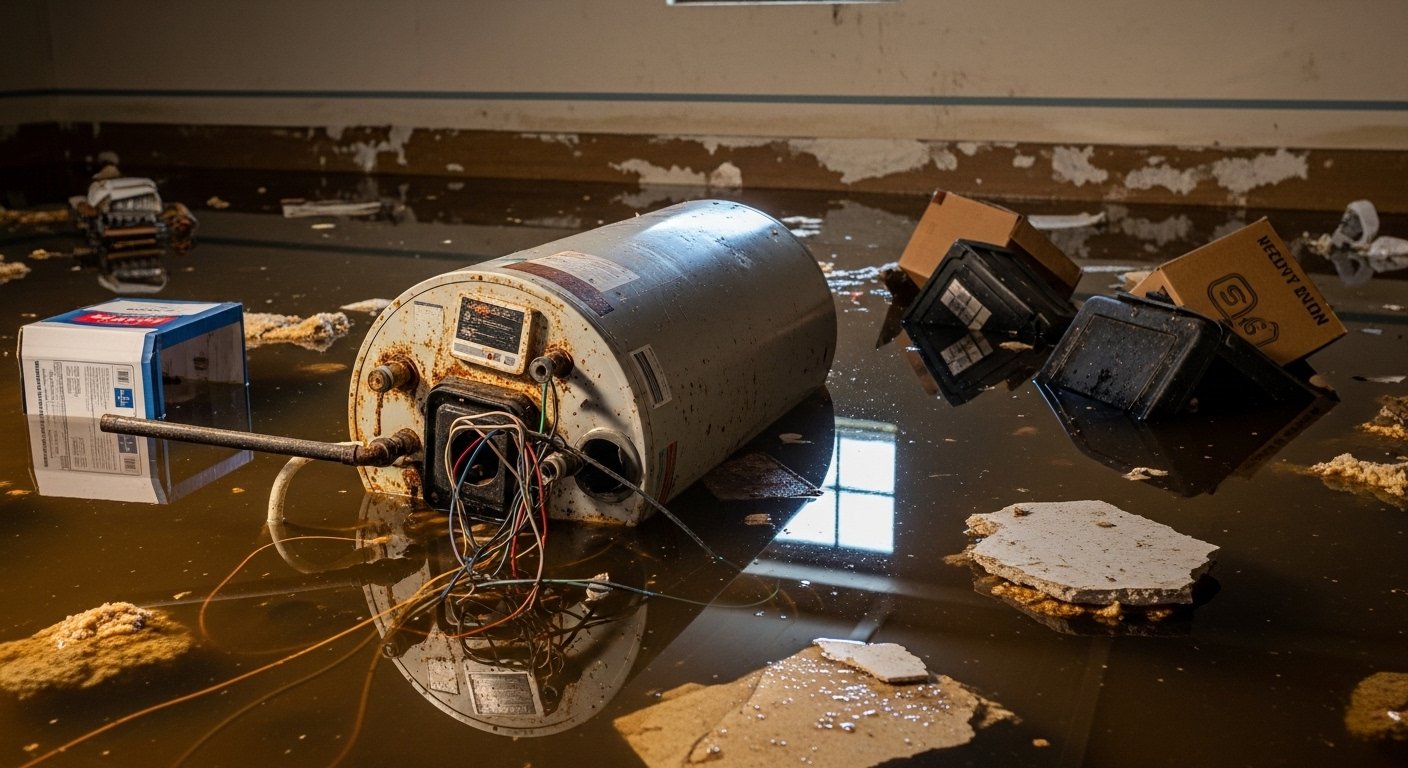
In Bradenton, with untreated hard water and no regular maintenance? I’ve seen units fail in 6–8 years. That’s not rare here. And by “fail,” I don’t just mean less efficient — I mean tank failure, leaks, the kind of thing that leaves water on your utility room floor at 11pm.
The math on this is pretty stark. If you’re replacing a water heater every 7 years instead of every 12, that’s potentially one extra replacement in a 20-year window — easily $1,000–$2,000 in equipment and labor you didn’t need to spend, on top of the elevated energy bills the whole time the unit was scaling up.
Expert Insights: What We See On the Ground in Bradenton
We’ve been doing water heater work in Bradenton, Florida long enough to notice patterns. A few things stand out:
Most homeowners don’t flush their water heaters. The standard recommendation is to flush the tank annually — drain it partially to clear out sediment. Most people have never done this, and many didn’t know it was a thing. In soft-water areas, skipping a year or two might not matter much. Here, it really does.
The thermostat setting makes a difference. Many water heaters ship set to 140°F. At that temperature, mineral precipitation happens faster. Dropping the thermostat to 120°F (which is also the recommended safe temperature to prevent scalding) slows scale buildup and reduces energy use. It’s a free adjustment that most people never make.
Anode rods get forgotten. Every tank water heater has a sacrificial anode rod — usually magnesium or aluminum — that’s designed to corrode instead of the tank. It needs replacing every 3–5 years. In hard water conditions, it depletes faster. A depleted anode rod means the tank itself starts corroding. This is probably the single most overlooked maintenance item on water heaters, and it’s also one of the cheapest to address proactively.
Tankless units aren’t immune. People sometimes switch to tankless thinking it solves the hard water problem. It doesn’t. Scale still builds up — in the heat exchanger and on the water inlet filter screen. Tankless units actually need descaling service periodically, and skipping it voids most manufacturer warranties. The maintenance is different, not absent.
What You Can Actually Do About It
Okay, here’s the practical part. Because knowing all this is interesting, but it only matters if it changes what you do.
Get Your Water Tested
If you’re not sure how hard your water actually is, test it. Basic water hardness test kits are available at hardware stores for under $20. Knowing your actual grains-per-gallon number helps you understand how aggressive your maintenance needs to be and whether a water softener makes economic sense for your situation.
Flush the Tank Annually
This one’s DIY-able if you’re comfortable with it. Connect a hose to the drain valve at the bottom of your water heater, run it to a floor drain or outside, shut off the cold water inlet, and open the valve. Let it drain until the water runs clear (or at least noticeably cleaner). This clears out accumulated sediment.
Fair warning: if your tank hasn’t been flushed in many years and there’s significant buildup, the drain valve can be stiff, corroded, or it might not close properly afterward. If that’s your situation, calling a plumber to do it (and check the valve condition while they’re at it) is smart.
Check and Replace the Anode Rod
This one’s a bit more involved — you need to locate the rod (usually under a plastic cap on top of the heater, or accessible through the hot water outlet), use a socket wrench to remove it, and inspect it. If it’s less than half an inch in diameter or heavily coated in white calcium deposits, it’s done. A new anode rod costs $20–$50 in parts; a plumber can replace it in under an hour.
If you want to go further, there are powered anode rods (also called electronic or impressed current anodes) that don’t deplete and work well in hard water conditions. They cost more upfront but don’t need replacing.
Set Your Thermostat to 120°F
Simple. Most water heater thermostats are adjustable — on gas units, there’s usually a dial on the front of the thermostat assembly. Electric units have panels you remove to access the thermostats (there are usually two). If you’re not comfortable adjusting it yourself, ask your plumber to do it during any service visit. It takes about five minutes.
Consider a Water Softener
This is the upstream solution. A whole-home water softener treats water before it enters any of your plumbing — water heater, dishwasher, washing machine, showers. Ion-exchange softeners replace calcium and magnesium with sodium, dramatically reducing hardness.
The cost is real: installation typically runs $1,000–$3,000 depending on the system and your home’s setup. But spread across the extended lifespan of your water heater, reduced appliance wear, lower energy bills, and less soap/detergent needed… the math often works out, especially in a place like Bradenton where the hardness is consistently high.
This is worth a real conversation with a plumber who knows local water conditions. Not every home needs a full softener system, and it’s not the right answer for everyone — but for families who’ve been chewing through appliances and dealing with persistent scale issues, it often ends up being the most impactful thing they can do.
Frequently Asked Questions
How do I know if hard water is already affecting my water heater? The clearest signs are a rumbling or popping sound when the heater runs (sediment), water that takes longer to heat up than it used to, noticeably higher gas or electric bills, and — if your unit is older — rust-colored water. A plumber can also inspect the anode rod and do a flush to assess the level of buildup.
Can I reverse the damage that’s already happened? Partially. Flushing the tank removes sediment. Replacing the anode rod restores corrosion protection. Descaling (for tankless units) removes scale from heat exchangers. But if there’s already significant corrosion on the tank walls or the tank has been operating with a depleted anode for years, the internal damage isn’t reversible. At that point, replacement may be the more cost-effective path.
Will a water filter help? Standard sediment filters don’t remove dissolved minerals — they only capture particulates. To actually reduce water hardness, you need either a water softener (ion exchange) or a template-assisted crystallization (TAC) system (also called a salt-free conditioner). These are different technologies with different tradeoffs; a water treatment specialist can walk you through what makes sense for your home.
How often should a plumber service my water heater in Bradenton specifically? Given local water conditions, once a year is reasonable — flush, anode rod inspection, thermostat check, pressure relief valve test. It’s a 1–2 hour service call that costs far less than the problems it prevents. Think of it like an oil change for your car: you don’t wait until something breaks.
Does a tankless water heater handle hard water better? Not inherently. Tankless units don’t accumulate sediment the same way, but the heat exchanger is very sensitive to scale and typically needs descaling every 1–2 years in hard water areas. The advantage of tankless is longevity and efficiency — but only if maintained properly.
The Bottom Line
That family who replaced their water heater three times? By the time the third plumber explained what was happening, they’d spent roughly $4,500 on equipment and labor over 11 years. A water softener and basic annual maintenance could have kept a single unit running for most of that same period at a fraction of the cost.
That’s the real story with Bradenton hard water. It’s not dramatic. It’s slow, quiet, and cumulative — and it’s happening right now inside your water heater if you haven’t taken steps to address it.
The good news is that once you understand the problem, the solutions aren’t complicated. Flush the tank. Check the anode rod. Adjust the thermostat. And if hard water has been a persistent issue in your home, have a real conversation about water treatment.
If you want a professional to take a look at where your water heater stands right now — assess the sediment, the anode rod, the overall condition — our team is here for that. No pressure, just honest information about what’s actually going on with your system.
Reach out about our water heater services in Bradenton, Florida and let’s make sure your water heater isn’t quietly becoming the next expensive surprise.
Because it doesn’t have to be.


Comments are closed