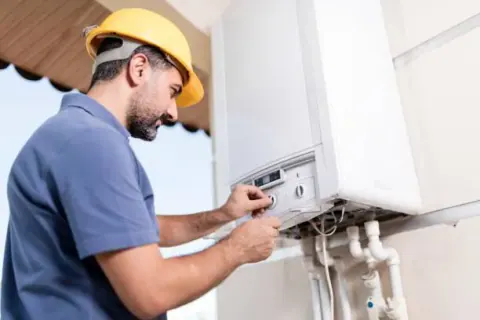
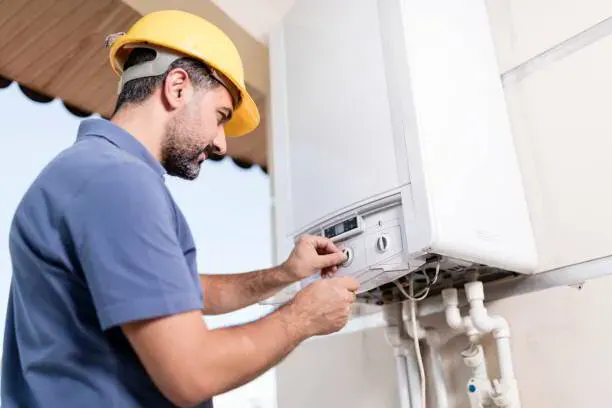
A home without hot water is an inconvenience. A restaurant, salon, gym, clinic or apartment building without hot water may not be able to operate at all. Dishes cannot be sanitized, guests cannot shower, tenants start calling. Commercial water heater repair in Sarasota is about diagnosing the problem quickly, restoring service safely and then making a clear decision about whether the equipment has a future.
This guide walks business owners and property managers through why commercial heaters fail, what to check before help arrives, and how to plan so a single failure does not become a closed door.
Why commercial water heaters work so much harder
Commercial units often cycle all day, with heavy draws during peak hours and recovery demands that a residential heater never sees. Many run at higher temperatures for dishwashing or sanitation. That combination accelerates every wear process, and Sarasota-area hard water adds scale on top.
The result is that components fail sooner, sediment builds faster, and small problems such as a sticking relief valve or a weak igniter show up as real business disruptions.
Different businesses feel this in different ways. A restaurant needs high-temperature water for dishwashing and sanitation. A salon or spa needs steady, comfortable temperatures across many stations at once. Hotels, vacation rentals and apartment buildings face morning and evening peaks when many guests or tenants shower at the same time. Each pattern stresses equipment differently, and a good diagnosis takes that usage into account rather than treating every commercial heater the same.
The most common commercial water heater failures
- Scale and sediment buildup in tanks and tankless heat exchangers, reducing output and causing overheating, noise and error codes.
- Failed heating elements or thermostats in electric units, often accelerated by scale.
- Gas ignition and flame-sensing problems, including igniters, flame sensors, gas valves and venting faults that trigger safety shutdowns.
- Temperature and pressure relief valve leaks caused by scale, high pressure or excessive temperature settings.
- Tank corrosion once the anode protection is spent, leading to leaks from the tank body.
- Undersized equipment that cannot keep up after a business has grown or changed its menu or services.
What to do in the first few minutes
Before calling, a few safe checks can save time and help the technician arrive prepared:
- If the unit is leaking, close the cold water supply valve to the heater and, for electric units, switch off its breaker. For gas units, turn the control to off or pilot.
- Note any error codes or indicator lights, and take a photo of the data plate with the model and serial number.
- Check whether the problem is no hot water, not enough hot water or water that is too hot. Each points to different causes.
- For gas equipment, confirm other gas appliances are working. If you smell gas, evacuate and call your gas provider from outside first.
Water that is suddenly much hotter than normal, or a relief valve discharging hot water or steam, is a safety concern. Shut the heater down and call for help right away rather than waiting it out.
Repair or replace: making the call for a business
For a business, the decision is about reliability as much as cost. A repair makes sense when the tank or heat exchanger is sound and the failed part is a component such as an element, thermostat, igniter or valve. Replacement starts to make more sense when:
- The tank is leaking from the body or bottom seam.
- The unit has needed several repairs and downtime is becoming a pattern.
- Output no longer meets peak demand.
- Scale damage to a tankless heat exchanger is advanced.
When replacement is on the table, it is also the right moment to reconsider the setup. Some businesses benefit from two smaller units instead of one large one, so a single failure does not mean zero hot water. Others benefit from tankless systems sized for their peak flow. Our guide to tankless brands for Florida hard water covers the scale-protection features that matter here. Financing is available for qualifying larger projects.
Maintenance that prevents most commercial failures
A scheduled maintenance plan is the most effective way to protect hot water in a commercial building. At a minimum, it should include:
- Regular flushing of tank units and descaling of tankless units, more often for high-use equipment.
- Periodic anode rod inspection on tank heaters.
- Annual testing of relief valves and checks of expansion control and supply pressure.
- Inspection of venting, gas connections and combustion air for gas equipment.
- A log of every service visit, error code and repair.
For the bigger picture, our commercial plumbing maintenance checklist folds water heater care into a full building routine.
Keep the manufacturer manuals, installation date and a record of every service visit in one place. When a heater fails, that history helps a technician separate a one-time component fault from a pattern that calls for a different solution.
Commercial water heater repair in Sarasota with Redemption Plumbing
Redemption Plumbing serves commercial clients including restaurants, offices, retail spaces, multi-unit properties and property managers in Sarasota and Manatee counties. We service, repair and install tank and tankless water heaters from all major brands, and our emergency line at (941) 541-7473 is answered 24/7.
Every job starts with a free phone estimate. On site, we confirm the diagnosis and give you upfront pricing approved before work begins, with no hidden fees and warranty coverage on parts and labor. Learn more about our commercial plumbing services, our water heater repair and installation work, or the Sarasota water heater services overview on our blog.