When the garbage disposal stops grinding, the kitchen grinds to a halt with it. Before you buy a new unit, it helps to know that some disposal problems are simple to fix and others mean the unit has reached the end of its life. Making the right call on garbage disposal repair vs. replacement in Bradenton comes down to the symptom, the age of the unit and where the failure is.
This guide covers safe checks you can try first, problems a plumber can usually repair, and five factors that point toward replacement.
Safe Checks to Try First
Always switch off the disposal and unplug it, or turn off its breaker, before reaching anywhere near it. Never put your hand inside the grinding chamber.
- Press the reset button. Most units have a small red button on the bottom. If the motor overheated, it trips this button. Wait a few minutes, press it, restore power and try again.
- Check the breaker or GFCI outlet. A tripped breaker or outlet looks exactly like a dead disposal.
- Free a jam from below. Many units have a hex socket in the center of the bottom. With the power off, turn it back and forth with the wrench that came with the unit or a matching hex key to loosen a stuck flywheel.
- Remove debris with tongs. With power off, use tongs to pull out anything lodged in the chamber, such as a bottle cap or fruit pit.
If the disposal hums but does not spin, turn it off immediately. Running a jammed motor can burn it out, turning a simple jam into a replacement.
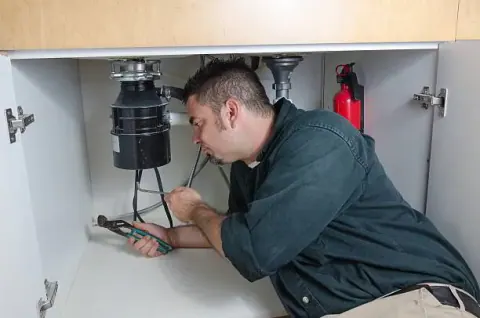
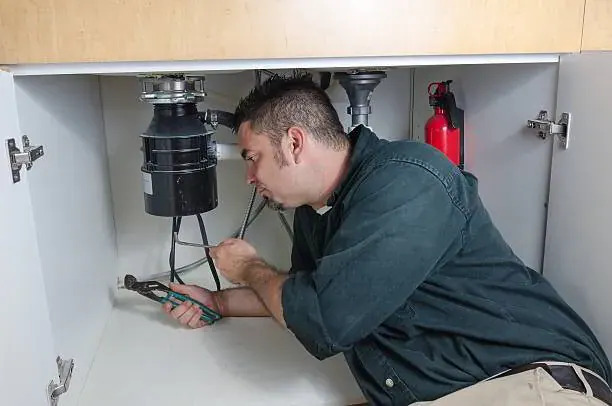
If none of these steps bring the disposal back, stop there. Taking the unit off the sink, opening the housing or working on the wiring is best left to a professional, since disposals combine water, electricity and sharp parts in a tight space.
Problems That Are Usually Repairable
If the quick checks do not solve it, a plumber can often fix these without replacing the unit:
- Leaks at the sink flange, where the disposal meets the sink. Resealing or replacing the flange often stops the drip.
- Leaks at the dishwasher inlet or drain connection on the side of the unit, typically a loose clamp or worn gasket.
- A slow-draining sink caused by a clog in the drain line below the disposal rather than in the unit itself.
- A disposal that trips the reset often because of a wiring or switch issue rather than the motor.
- Persistent jams from a foreign object stuck where the homeowner cannot safely reach it.
Five Factors That Point to Replacement
Repair is not always worth it. Consider a new unit when one or more of these apply:
- Leaks from the bottom of the unit. Water dripping from the body itself usually means internal seals have failed or the housing has corroded. That is generally not repairable.
- Age. A disposal that has been in service for many years and is showing several problems at once is often near the end of its useful life.
- A burned-out motor. If the unit does not hum or turn even with power confirmed, the motor may have failed.
- Repeated jams and dull grinding despite normal use, suggesting worn grinding components.
- Rust and corrosion on the housing or mounting hardware, which is common under humid Florida sinks.
Why Disposals Wear Out Faster in Bradenton
Two local factors shorten disposal life. First, hard water leaves mineral deposits on internal parts and seals, which accelerates wear. Second, the space under a kitchen sink stays humid in our climate, encouraging corrosion on the motor housing, electrical connections and mounting ring.
Unit size and quality matter too. Lighter-duty disposals in a busy kitchen tend to struggle sooner. Our article on the best garbage disposals for Bradenton's hard water covers features worth looking for if you do replace.
Vacation rentals and seasonal homes see their own version of this problem. A disposal that sits unused for months can seize up as residue hardens inside, then struggle when guests arrive and run it hard.
What Replacement Involves
A replacement typically includes removing the old unit, checking the sink flange and drain connections, mounting the new disposal, reconnecting the dishwasher drain if present, and testing for leaks and proper drainage. The plumber also checks whether the existing drain trap and line are in good shape, since a new disposal will not fix a clog farther down.
If the drain itself is a recurring problem, drain cleaning may be needed alongside the new unit. For a full kitchen refresh, our guide to bundling dishwasher, disposal and sink work explains how to plan it.
When choosing a replacement, match the unit to how your household cooks. A larger family that cooks daily benefits from a more robust motor and grinding system, while a light-use kitchen can do well with a simpler model. Ask your plumber to confirm that the new unit fits the space under your sink and works with your dishwasher connection.
Helping Your Disposal Last
- Run cold water before, during and for a short time after grinding.
- Avoid fibrous foods, grease, bones, coffee grounds and large amounts of starchy food.
- Grind small amounts at a time rather than a full sink of scraps.
- Clean the splash guard regularly to reduce odors.
Get a Straight Answer
If you are not sure whether to repair or replace, call Redemption Plumbing at (941) 541-7473. We provide free phone estimates, inspect the unit and connections, and explain your options and price before any work starts. Learn more on our garbage disposal services page.