The kitchen sink, garbage disposal and dishwasher share one small cabinet and one drain. Change any one of them and you affect the other two. That is why many homeowners planning a kitchen plumbing bundle in Bradenton, FL choose to replace all three at once, especially during a countertop or cabinet update.
This guide explains when bundling makes sense, what has to line up under the sink, the order the work should happen in and how our local hard water factors in. It is a planning checklist, not a sales pitch, so you can walk into any estimate knowing the right questions.
When Bundling the Three Makes Sense
Replacing everything at once is not always necessary. It tends to make the most sense when:
- You are replacing the countertop, which means the sink has to come out anyway.
- The sink bowl depth or layout is changing, which changes the drain height for everything else.
- The disposal and dishwasher are both older and showing wear, so one is likely to fail soon after the other.
- The existing under-sink drain has been patched repeatedly or has a slow, gurgling trap.
- You want to change the setup, such as moving from a single to a double bowl or adding a disposal where there was none.
If only one appliance has failed and the rest is in good shape, a single replacement is perfectly reasonable. Our guide on repairing or replacing a disposal can help with that call.
Five Things That Have to Line Up Under the Sink
1. Drain height and trap position
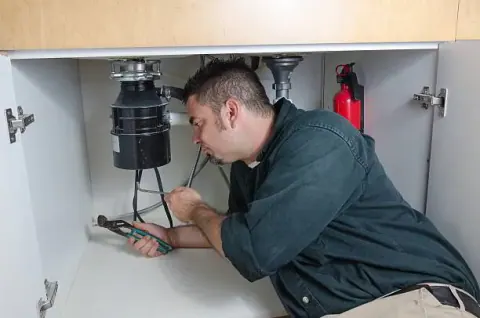
Deeper sink bowls lower the disposal outlet. If it ends up below the wall drain, water and food sit in the line and clog it. Planning the trap height before buying a deep sink avoids this common problem.
2. The dishwasher drain connection
The dishwasher hose usually connects to the disposal inlet or a branch tailpiece. It needs a high loop or an air gap so dirty sink water cannot flow back into the dishwasher. On a new disposal, the knockout plug for the dishwasher inlet must be removed, a step that is easy to miss.
3. Supply lines and shutoffs
The faucet and dishwasher both need a water supply, typically through a dual-outlet shutoff or separate valves. Old valves that are seized or weeping should be replaced while the cabinet is empty.
4. Electrical access
Disposals and dishwashers need power, often from an outlet or junction under the sink. Check that it is in a sensible place and keep water connections and electrical connections clearly separated.
5. Cabinet space
A larger disposal, a double-bowl sink and a water filter can crowd a cabinet quickly. Measure the space before buying so everything fits with room to service it later.
Before buying anything, take a photo of the inside of your sink cabinet and measure from the cabinet floor to the center of the wall drain. Share both with your plumber. Those two details answer most compatibility questions in minutes.
A sixth item worth checking is the vent. Kitchen drains need air to flow properly, and a sink that gurgles or drains slowly even after the trap is cleaned may have a venting problem. If the new layout moves the drain, the plumber should confirm the venting still works with it.
The Right Order of Work
- Shut off water and power, disconnect and remove the old dishwasher, disposal and sink.
- Inspect the wall drain, supply stubs and valves, and replace anything corroded or seized.
- Set the new sink and faucet, with the countertop installer if the counter is being replaced.
- Mount the disposal and build the new drain assembly at the correct height.
- Install the dishwasher, connect its supply and drain with a proper high loop or air gap, and level it.
- Run water through everything, run the disposal and a dishwasher cycle, and check every joint for leaks.
Timing matters too. Coordinate the plumbing visit with your countertop installer so the sink is set and sealed before the disposal and drain are built. If the counter is staying, the plumber can usually do everything in one trip. Plan for the kitchen to be without water for part of the day, and clear the sink cabinet completely before the visit so work can start right away.
Choose your fixtures before scheduling and share the model numbers, so compatibility questions such as disposal size, sink depth and dishwasher hookup type are answered ahead of time.
How Bradenton's Hard Water Fits In
Our area's mineral-heavy water leaves scale in faucet aerators, dishwasher spray arms, disposal chambers and drain traps. When you are choosing new fixtures, favor faucets with easily replaced cartridges and aerators, and plan on cleaning the dishwasher filter regularly.
Coastal humidity also corrodes metal fittings and old steel clamps under sinks. A bundled replacement is a good moment to upgrade to corrosion-resistant connectors throughout the cabinet. For more on how minerals affect faucets, see our hard water faucet guide.
Getting an Accurate Quote
A good estimate for a kitchen bundle covers removal of the old units, any valve or drain corrections, installation of each component and a full leak test. Ask what happens if the wall drain or supply stubs turn out to be in poor condition once the cabinet is open.
Redemption Plumbing handles kitchen plumbing, disposal installation and dishwasher hookups as one coordinated job, so there is one plan and one point of contact. Call (941) 541-7473 for a free phone estimate with upfront pricing, and ask about financing if the project is part of a larger remodel.