Knowing how to shut off water in a plumbing emergency is the single most useful plumbing skill a homeowner can have. A burst supply line can release a startling amount of water in minutes, and the damage depends far more on how quickly the water stops than on how quickly help arrives.
Work from the smallest valve outward: shut off the fixture if you can, the whole house if you cannot, and the meter only as a last resort. Here is how to find and operate each one, and what to do immediately afterward.
Level 1: Fixture Shutoff Valves
If water is coming from a single sink, toilet or appliance, close the valve that feeds just that fixture. The rest of the house keeps working, which matters if it is late at night.
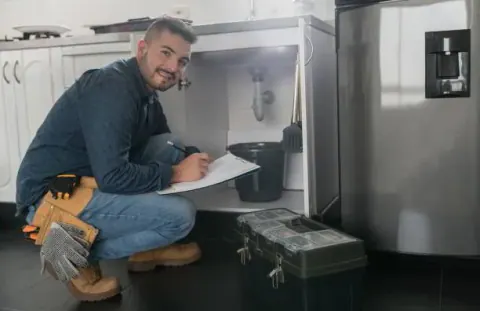
- Sinks: look in the cabinet underneath for one or two small valves on the pipes coming out of the wall.
- Toilets: the valve is usually on the wall or floor behind the toilet, low on the left side.
- Washing machine: two valves, hot and cold, typically in a box on the wall behind the machine.
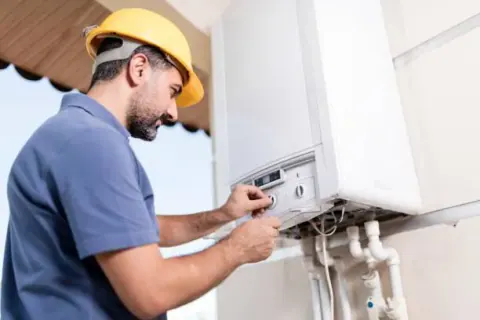
- Water heater: a valve on the cold-water inlet pipe at the top of the tank.
- Dishwasher and ice maker: often under the kitchen sink, sometimes behind the refrigerator.
Turn oval handles clockwise until they stop. Quarter-turn valves close when the lever sits across the pipe. If a valve will not turn by hand, do not force it with a wrench; move to the main shutoff instead.
Level 2: The Main House Shutoff
If the leak is in a wall, a ceiling or anywhere you cannot isolate, close the main shutoff valve. It controls all the water entering the house. In Florida homes it is commonly found:
- On an exterior wall, often on the side of the house facing the street, where the supply pipe rises out of the ground.
- In the garage, near the water heater or where the line enters the slab.
- In a utility closet or laundry room in some condos and newer homes.
- In a condo building, sometimes in a hallway closet or mechanical room shared with neighbors; ask your association where yours is.
Many main valves are gate valves with a round wheel, which take several clockwise turns, or ball valves with a lever, which take a quarter turn. After closing it, open a faucet on the lowest floor to confirm the flow stops and to drain some pressure from the lines.
Find your main shutoff today, while nothing is wrong. Clear plants and debris from around it, test that it turns, and tie a bright tag on it. Show everyone in the household, including teenagers and house sitters.
Level 3: The Meter Box
If the main valve is broken, buried or impossible to find, water can be stopped at the meter, usually in a box near the street or sidewalk. The utility's curb stop valve is inside. Turning it often requires a curb key, a long T-handled tool sold at hardware stores.
Be careful: the meter box belongs to the utility, the valve can be stiff or fragile, and some utilities prefer that homeowners call them first. Use it only when you have no other way to stop serious flooding, and turn it gently. If you already own a curb key, keep it with the tag on your main valve.
Right After the Water Is Off
Stopping the water is step one. These next steps protect the house and the people in it:
- Water heater: with the supply off, the heater is not refilling. On an electric unit, switch off its breaker so the elements cannot run dry. On a gas unit, set the control to pilot or vacation. Our guide on what to do while waiting for an emergency plumber covers this in more detail.
- Electricity: if water has reached outlets, cords or the panel area, stay clear and do not touch the panel while standing in water.
- Drain the lines: open a low faucet and a bathtub spout to empty water still in the pipes.
- Document: take photos and video of the damage and the failed part before cleanup.
- Start drying: remove standing water, pull rugs and run fans. Mold can begin to grow within a day or two, as our mold timeline article explains.
If you live in a condo or townhome, also find out whether your unit has its own shutoff or shares one with neighbors, and who to contact after hours. A leak in a shared building can affect the units below, so closing the right valve quickly matters even more.
When to Call and What to Tell Us
Once the flow is stopped, call (941) 541-7473. Our line is answered 24/7 for emergencies. It helps to tell us where the water came from, which valve you closed, whether the water heater is affected and whether any fixtures still need to work tonight.
Our emergency plumbing service can repair the failed line, replace a valve that would not close and get water back on safely. We give free phone estimates and confirm the price with you before work begins, even after hours.
Make Your Shutoffs Ready Before You Need Them
Many emergency calls are made worse by valves that have not been touched in years. Exercise each fixture valve and the main once or twice a year by closing and reopening it. If one is seized, leaks at the stem or does not fully stop the water, have it replaced before it matters. A working main shutoff is cheap insurance against an expensive night.