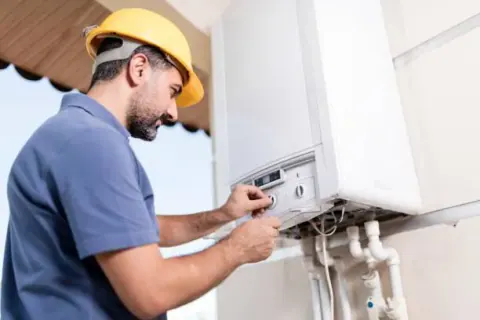
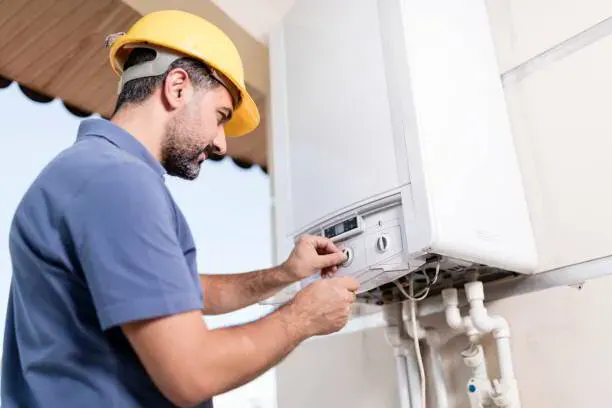
When a water heater fails or starts showing its age, many Bradenton homeowners wonder whether this is the moment to go tankless. The answer depends less on which technology is better in general and more on your house: its water, its electrical or gas supply, where the heater sits and how your household actually uses hot water. This guide looks at tankless vs tank water heaters in Bradenton through those local questions.
If you want a general explanation of how each type works first, read our companion article on tankless vs traditional water heaters. Here we assume you know the basics and want to make a decision for a home in Manatee County.
Question 1: How Will Bradenton's Hard Water Affect Each Option?
Hard water is the local factor that most often surprises people. Minerals in the water drop out as scale when heated. In a tank heater, that scale settles as sediment on the bottom, which causes rumbling, slower heating and eventually leaks. In a tankless unit, scale coats the narrow passages of the heat exchanger, which reduces flow and can trigger error codes.
Neither type is immune. The real difference is the maintenance routine. Tanks benefit from periodic flushing; tankless units need regular descaling with a pump and cleaning solution through service valves. If you choose tankless, make sure the installation includes those isolation valves so maintenance is simple. Our article on how hard water shortens water heater life in Bradenton explains the scale problem in more detail.
If you already have a water softener or plan to add one, mention it during your estimate. Treated water changes the maintenance schedule for both tank and tankless heaters.
Question 2: Can Your Home Supply the Energy a Tankless Unit Needs?
A tankless heater has to heat water instantly, so it needs a lot of energy for short bursts. That is where many Bradenton conversions get more involved than expected.
- Electric tankless units draw far more power while running than a tank does. Many homes need electrical panel capacity checked, and some need upgraded wiring or breakers.
- Gas tankless units need adequate gas line size and proper venting. Not every neighborhood or home has natural gas, and switching fuels adds scope.
- Tank heaters usually reuse the existing electrical circuit or gas line and vent, which is a big reason replacement is simpler.
On the plus side, our incoming water is warm compared with northern states, so a tankless unit has less temperature to make up for most of the year. That helps a properly sized unit keep up with demand.
Ask for both options to be priced with the same assumptions so the comparison is fair.
Question 3: How Does Your Household Use Hot Water?
Tankless heaters deliver a continuous supply, but only at a certain flow rate. Tanks deliver a burst of stored hot water, then need time to recover. Think about your busiest half hour of the day:
- Two showers running while the dishwasher fills favors a well-sized tankless unit or a larger tank.
- Long back-to-back showers for a big family favor tankless, since it does not run out.
- A retired couple with light, spread-out use may see little practical difference and might prefer the simpler tank.
- A large soaking tub can challenge both: a small tank may not fill it, and a small tankless unit may fill it slowly.
Question 4: Space, Location and Seasonal Living
Many Bradenton homes are slab-on-grade with the water heater in a garage, utility closet or laundry room. A wall-mounted tankless unit frees up floor space, which matters in a tight closet or a garage you would like to use for storage. Moving the heater to a new location, though, means new piping and possibly new venting or electrical, which adds cost.
Seasonal residents and owners of vacation rentals should think about standby. A tank keeps a full load of water hot while the house sits empty unless it is turned down or set to vacation mode. A tankless unit only heats when a tap opens. For a home that is occupied part of the year, that difference can tip the decision, as long as the unit is maintained on schedule.
Side-by-Side Summary for Bradenton Homes
- Upfront cost: tank is usually lower, especially as a like-for-like replacement; tankless often involves electrical, gas or venting changes.
- Operating cost: tankless avoids standby losses; tank costs depend on size, temperature setting and occupancy.
- Hard water care: tank needs flushing; tankless needs descaling. Skipping either shortens service life.
- Hot water supply: tank can run out during heavy use; tankless is continuous up to its flow limit.
- Space: tankless mounts on a wall; tank needs floor space and a drain pan where required.
How We Help You Decide
We service, repair and install both tank and tankless water heaters from all major brands, so our recommendation is not tied to selling one type. During an estimate we look at your current heater's location, venting, gas or electrical supply, water quality and how many people live in the home, then explain the scope for each option in plain terms.
Call (941) 541-7473 for a free phone estimate. Every price is upfront and approved before work begins, and financing is available for qualifying larger jobs such as a tankless conversion. If your current heater has already failed, our emergency water heater replacement team can get hot water back quickly, and you can plan a tankless upgrade for later if that makes more sense. For everything else, see our water heater services.