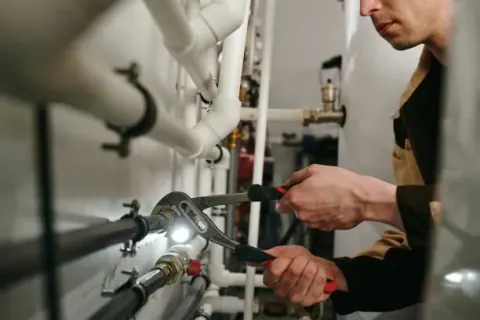
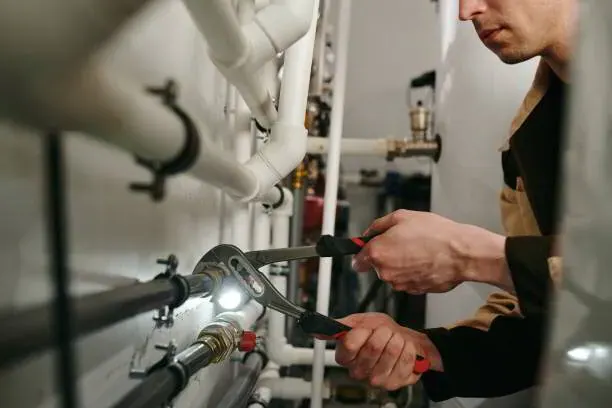
In a commercial building, the plumbing problem that causes the most disruption is rarely the one everyone can see. A dripping faucet gets fixed. The trouble comes from what is happening inside walls, under slabs and deep in drain lines, where damage builds quietly until a restroom closes, a kitchen floods or a tenant calls about a ceiling stain.
Effective commercial plumbing solutions start with finding those hidden issues while they are still small. This article covers the five most common out-of-sight threats in businesses and multi-unit buildings, the clues that give them away, and the tools that confirm them.
Threat 1: Concealed Supply Leaks
Pinhole leaks in supply lines inside walls, above drop ceilings or under a slab can run for a long time before anyone notices. By the time a stain appears, insulation, drywall and flooring may already be soaked, and mold can follow.
- A water bill that climbs without a change in operations
- Warm spots on a slab floor, which can point to a hot water line leak
- Musty odors in a closed room or storage area
- Low pressure at fixtures farthest from the main
Professional leak detection uses specialized equipment to pinpoint the source so only the necessary section of wall or floor is opened.
Multi-story buildings add another complication: water travels. A leak on an upper floor can show up as a stain several rooms or a full floor away from the actual source, which is why finding the source with proper equipment matters before anyone starts cutting into ceilings.
Threat 2: Grease and Scale Inside Drain Lines
Restaurants, cafes and any building with a break room send grease, food solids and soap down their drains every day. Combined with hard water scale, that residue steadily narrows the pipe. The line keeps working until a busy service or a holiday rush pushes it past its limit.
Snaking can reopen a line, but it often leaves the pipe walls coated. Hydro jetting scours the full diameter of the pipe, which is why it is a common choice for commercial kitchen lines on a maintenance schedule.
Ask your kitchen staff to report slow floor drains and sinks right away rather than working around them. A slow drain on a Tuesday afternoon is a quick service call; a full backup during Saturday dinner is a closed kitchen.
Threat 3: Deteriorating Main Sewer Lines
The main line connecting a building to the public sewer carries everything, and it is buried where no one checks it. Roots, shifted joints, sags and aging pipe can all cause repeated backups that seem random from inside the building.
A sewer camera inspection shows the line's real condition and the exact location of any defect. That turns guesswork into a plan: routine cleaning if the pipe is sound, or targeted repair if it is not. When repair is needed, trenchless methods can sometimes avoid digging up a parking lot or entryway.
Threat 4: Overworked Water Heaters
Commercial water heaters often run harder than residential units, and hard water speeds up sediment and scale buildup. A unit can lose capacity gradually, so staff adjust without realizing it until it fails outright. Rumbling noises, rusty water, longer recovery times and moisture around the base are early warnings. Our article on commercial water heater repair covers these signs in more depth.
Tracking the installation date and service history for every heater in the building turns this from a surprise into a planned expense. A failed unit on a busy morning in a restaurant or multi-unit building affects everyone at once, so replacing on schedule is usually far less disruptive.
Threat 5: Small Fixture Problems Multiplied
A single running toilet is a minor issue in a house. In an office or multi-unit building with dozens of fixtures, several running toilets, dripping faucets and worn valves add up to real water waste and wear. Because each one seems trivial, they are easy to ignore.
A routine fixture survey solves this. Walk every restroom and break room, flush each toilet, run each faucet and note anything that drips, runs or sticks. Batching small repairs into a single visit is usually more efficient than calling for each one as it fails.
Building a Plan to Find Problems Early
The goal is to move from reacting to emergencies toward catching problems on your schedule. A practical plan looks like this:
- Establish a baseline. Review water bills monthly so unusual increases stand out quickly.
- Walk the building on a regular schedule, checking restrooms, mechanical rooms, under sinks and ceilings for stains or drips.
- Camera any drain line that backs up more than once, rather than clearing it repeatedly.
- Put kitchen and high-use lines on a cleaning schedule matched to how quickly they build up.
- Track water heater age and service history, and plan replacements before failure.
- Keep a clear map of shutoff valves so staff can stop water fast in an emergency.
For a season-by-season version, see our commercial maintenance checklist for Bradenton businesses.
How Redemption Plumbing Helps Businesses
Redemption Plumbing works with restaurants, offices, retail spaces, multi-unit buildings and property managers. Our diagnostic tools include sewer cameras, leak detection equipment and hydro jetting, so we can find the cause before recommending a fix. We provide upfront pricing, get approval before work starts, and offer financing on qualifying larger projects.
Our emergency line is open 24/7 at (941) 541-7473. For planned inspections or maintenance, call during business hours or visit our commercial services page.