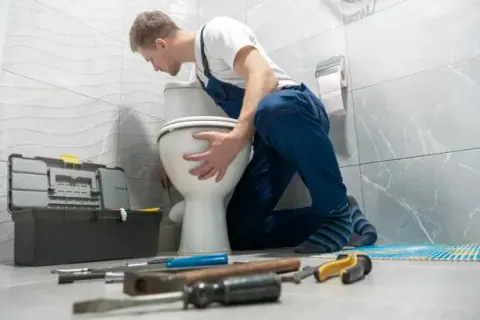
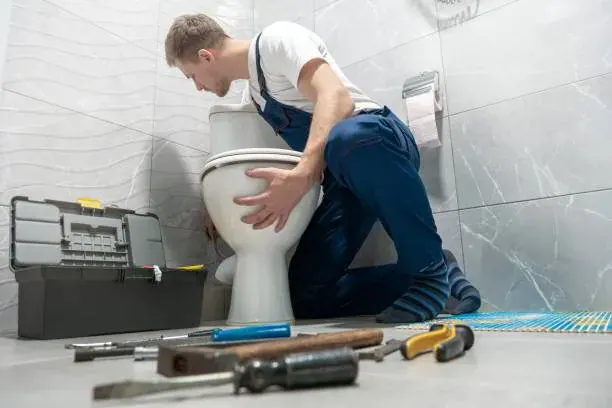
A running toilet is easy to ignore. The hiss fades into the background, the jiggle of the handle becomes a habit, and weeks go by. Meanwhile clean water is flowing straight from your supply into the sewer or septic system, all day and all night. The good news is that the cause is almost always inside the tank, and most fixes are inexpensive.
Below we cover how a toilet tank works, the five most common culprits, the real consequences of leaving it alone, and the point where a plumber is the better choice.
How a Toilet Tank Is Supposed to Work
Lift the tank lid and you will see two main assemblies. The flush valve sits at the bottom center: a rubber flapper (or a canister seal on some newer models) covers an opening into the bowl, with an overflow tube standing beside it. The fill valve sits on the left: it refills the tank after each flush and shuts off when a float rises to the right level.
When everything works, the flapper seals tight, the tank refills, the float shuts the water off and the toilet goes silent. A running toilet means one of those steps is failing.
The Five Usual Causes of a Running Toilet
- A worn or warped flapper. Rubber hardens, swells or gets coated with mineral deposits over time and no longer seals, so water seeps into the bowl and the fill valve keeps topping up the tank.
- A chain that is too short, too long or tangled. Too short and it holds the flapper slightly open; too long and it can get trapped under the flapper.
- A float set too high. If the water level rises above the top of the overflow tube, it spills down the tube continuously.
- A failing fill valve. Seals inside the valve wear out, so it never fully shuts off or it hisses and refills on its own.
- A damaged flush valve seat. If the surface the flapper seals against is cracked or rough with scale, even a new flapper will leak.
Hard water speeds up several of these. Scale roughens the flapper seat and gums up fill valve seals, which is why toilets in many Gulf Coast homes need tank parts more often. We cover that local angle in why toilets run constantly in Bradenton.
Find the Cause in Ten Minutes
You do not need tools to figure out which part is failing. Work through these checks in order:
- Look at the water level. If water is pouring into the overflow tube, the float or fill valve is the problem.
- Try the dye test. Add a few drops of food coloring to the tank and wait fifteen minutes without flushing. Color in the bowl means the flapper or valve seat is leaking.
- Watch the chain. Flush and see whether the chain catches or holds the flapper open.
- Listen. A toilet that refills by itself every so often without anyone flushing, often called a phantom flush, points to a slow flapper leak.
Before any tank repair, close the shutoff valve behind the toilet and flush to empty the tank. If that small valve will not turn or drips when you move it, stop and call a plumber; forcing an old shutoff can break it.
Do-It-Yourself Solutions
Adjust the chain
Leave a little slack, roughly half an inch, when the flapper is closed. Trim extra links so the chain cannot slip under the flapper.
Lower the float
Most modern fill valves have an adjustment screw or clip. Set the water line about an inch below the top of the overflow tube, or to the mark printed inside the tank.
Replace the flapper
Take the old flapper to the hardware store so you can match the size and style. Before installing the new one, wipe the valve seat with a soft scrub pad to remove scale.
Replace the fill valve
Universal fill valves come with instructions and are a reasonable weekend project if the supply connection and shutoff are in good shape.
Consequences of Leaving It Running
The most obvious cost is water. A steady leak inside a tank can push your bill up noticeably, and because it is silent at the bowl, many people only notice when the bill arrives. If your bill has jumped and you cannot find a cause, our guide on why your water bill is so high lists other places to look.
- Homes on septic send extra water into the tank and drain field, which can overload the system.
- Constant cycling wears out the fill valve faster.
- Mineral streaks and rust stains build up in the bowl where water constantly trickles.
- A toilet that runs at night can mask the sound of other leaks you would otherwise hear.
When to Call a Plumber Instead
Call a professional when the flush valve seat is cracked, the tank is cracked, the shutoff valve is seized or leaking, water is leaking from the base or the tank bolts, or you have replaced parts and the toilet still runs. Sometimes an older toilet is simply worn out, and replacing it is the better value; our toilet replacement cost guide explains what drives that decision.
Redemption Plumbing handles toilet repair and installation throughout Manatee, Sarasota and Pinellas counties. Call (941) 541-7473 for a free phone estimate; you will get upfront pricing and approve the work before we start.