
Late October through November is when many part-year residents unlock houses across Bradenton, Palmetto, Lakewood Ranch, Anna Maria, Sarasota, and the Pinellas beaches. Someone reaches for a faucet that has not run since spring. If the main valve was closed for the summer, the pipes, washers, and water heater have been sitting in Gulf Coast heat. This snowbird plumbing checklist is the order to follow so the first day is a walkthrough, not a cleanup.
What shows up is ordinary. A valve stem has seized, a supply line weeps once pressure returns, a toilet will not stop filling, hot water smells stale, or an unused bathroom smells like a sewer because the trap dried out. Catch those before the suitcases come in and they stay small.
Walk the house before any valve moves
Do this while the water is still off. You are looking for what the summer did, not starting the system yet.
Open the sink cabinets, look behind each toilet, check the water heater pan, and look at the washer hoses and the ice-maker line. Note rust stains, white crust, a soft cabinet floor, or a crusted valve handle. On a barrier-island house, check outdoor spigots and any outdoor shower valve. Salt air works on exposed metal, and a gritty handle may snap if you force it.
Find the main shutoff and learn which way it closes before you need it in a hurry. Our guide to shutting water off in a plumbing emergency shows the usual spots in a Bradenton house: where the line enters, the garage, or beside the water heater. Turn the handle only far enough to feel that it moves, then return it to closed. If it is stuck, stop. Humidity and mineral scale seize stems, and a broken shutoff with street pressure behind it is a much bigger afternoon.
Then read the meter. With the house valve still closed and irrigation off, the low-flow dial should sit still. If it creeps, water is leaving between the meter and the house, or through a yard line that was never isolated. Write the reading down so you can compare it tomorrow.
Restore pressure a little at a time
Reopening a closed Florida house is a sequence, not a single twist of a handle. The moment you turn the water back on, every dried washer and tired supply line is asked to hold full pressure again.
- Close the easy local valves first: both washer hoses, the ice-maker valve, and the water heater's cold inlet if you are not ready to fill the tank.
- Open one cold faucet you can see and hear, on the lowest floor. A tub spout works. Air and the first water need somewhere to go.
- Open the main valve about a quarter of the way and wait a few minutes. Hissing inside a wall, or water running when that faucet is only trickling, means stop and close the valve.
- Walk the cabinets and the heater pan again. A joint that was only stained can start dripping once pressure returns.
- If the house stays quiet and dry, open the valve the rest of the way.
- Let that first faucet run until the sputtering eases, then move through the other fixtures.
If someone else is with you, one person stays at the valve while the other walks. If you are alone and the valve is outside, keep your phone handy.
Keep a towel and a bucket under the first sink you open. The first water out of a line that sat all summer is often cloudy, and it may spit.
Flush in order, from the street inward
Stale water has been standing in the pipes. Flush it with purpose instead of hoping the first shower takes care of it.
Start with the cold tap closest to where water enters, then the other cold taps, then the toilets. Flush each toilet a couple of times and watch the tank stop filling. A fill valve that chatters or never shuts off sat dry too long and usually needs to be replaced, not jiggled.
Save the hot side until the water heater is full and back on, then run hot water from a tub spout rather than through a bathroom aerator. Aerators and showerheads catch scale and loosened sediment. If one faucet now sprays sideways, unscrew the aerator and rinse the screen. A little air and a brief tint are normal. Cold water that stays brown at every faucet, or weak flow at all of them after the flush, deserves a call. Weak flow at a single faucet is often just that screen.
Do not skip the guest bath, a bar sink, or an outdoor shower. Those fixtures are the ones most likely to have a dry trap and a valve that has not moved in months. The same walk-through applies from a house near the river in Bradenton to a seasonal place farther down the coast. Our plumbing service in Bradenton is the home base, and the steps do not change on a barrier island or in a newer subdivision inland.
Bring the water heater back before anyone showers
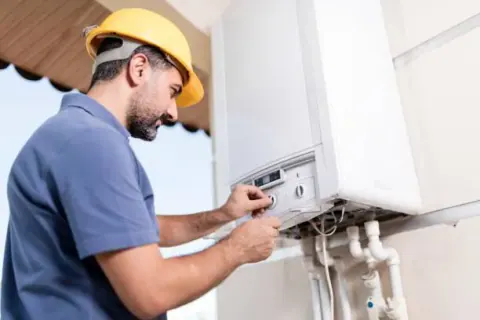
A tank that sat all summer should be full of water before it heats. If the cold inlet was closed, open it and open a hot faucet until a steady stream runs, with no more air bursts. Only then restore power at the breaker, or relight a gas heater following the instructions on the unit. Heating an empty or half-empty tank is how electric elements burn out and how a gas heater can be damaged.
The first hot water may look rusty or smell stale because sediment was stirred up in water that sat warm for months. Run it at a tub for several minutes. If the color and smell clear and stay gone, you flushed idle water. If every new draw looks or smells the same, the tank needs service: sediment, a spent anode rod, or a temperature left at an extreme. Our water heater service covers flushing, anode checks, and repair or replacement of tank and tankless units.
Look at the drain pan and the pipe off the temperature-and-pressure relief valve. A fresh drip is not leftover humidity. The valve or the tank is weeping, and it should be checked before the house is left empty again. Tankless units do not store a tank of stale water, but hard-water scale can settle in the heat exchanger over a long idle stretch, so the first showers may surge between hot and cool. A descale is maintenance. A unit that will not fire at all is often a vent, gas, or power issue after months switched off, and that one needs a technician.
Leaks that show up before the suitcase is unpacked
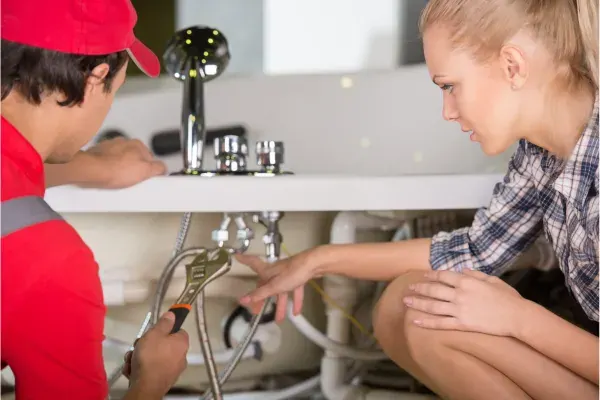
Most return-day leaks are at flexible connectors, not inside a slab. Braided or rubber lines under sinks, behind toilets, at the dishwasher, and on the washer dry out, then get asked to hold pressure. Replace a line that is bulging, cracked, or crusted before you trust it. Washer hoses do the most damage because they sit unseen on a machine that runs unattended.
Listen to the toilets once the house is quiet. A fill valve that will not seal trickles into the bowl all night and is easy to miss until the next bill. If the toilet kicks on every few minutes with nobody using it, the flapper or the fill valve is where to start.
Outdoor hose bibs are next. Open each one, let it run briefly, close it, and look at the handle and the wall behind it. A bib that drips from the stem only when a hose is attached can wait a day. A bib that drips from the wall penetration should be shut off at its indoor valve if it has one.
The next morning, repeat the meter test with every faucet, the ice maker, and irrigation off. Compare the reading with the one you wrote down. Our article on an unexplained high water bill in Bradenton walks through how to read that test. If the leak indicator moves and you cannot find the drip, leak detection is the right next step. Guessing with a drywall saw is how a small weep becomes a repair you can see.
Drains, odors, and a septic tank that rested all summer
A sewer smell on the first afternoon, with nothing backing up, is often a trap that evaporated. Pour water into every fixture, including floor drains, an unused shower, and the guest tub. The trap needs water in it to block sewer gas. If the smell leaves, you are done. If it stays, or if one fixture gurgles while another drains, the vent or the line needs a look. Skip chemical drain openers. They are a poor match for a line that may already be partly blocked, and a bad idea on septic.
Houses on septic, common in parts of Manatee and Sarasota including areas around North Port, spent the summer with almost nothing moving through the tank. Do not mark the return with laundry, a dishwasher, and long showers all on the same evening. Spread that water use over several days and watch the yard over the drain field. Soggy ground or odors after the first real week of living there mean the field needs attention before a house full of guests arrives.
On city sewer, an idle line can still be partly closed by roots or scale, and the first heavy use is when you find out. One slow bathroom sink is usually local. Several fixtures slowing together point at the shared line. A disposal that sat unused may hum without spinning because residue dried inside. Cut power at the breaker, free the impellers with the Allen wrench in the bottom socket, and run cold water once it spins. If it trips again, that is a repair, not a startup chore.
A snowbird plumbing checklist for the first afternoon
Use this as the short version once you have read why each step is there:
- Confirm the main valve moves, and leave it closed until you are ready.
- Read the meter with the house and irrigation off.
- Close washer, ice-maker, and heater inlet valves.
- Open one low cold faucet, then ease the main valve open.
- Walk every cabinet, toilet, and the heater pan while pressure comes back.
- Fill the water heater fully before it heats, then flush hot water.
- Run water into every trap, including floor drains and the guest bath.
- Rinse aerators that spit or spray sideways.
- Listen to toilets after the house is quiet.
- Read the meter again the next morning.
That list is the seasonal home plumbing routine for a house that was closed on purpose. It is not the same job as winterizing a house where pipes freeze. A hard freeze is uncommon here in November. The risk on a return weekend is idle equipment and sudden pressure.
When to call before you unpack the car
Call while you are still in the house if the main valve will not move, if you hear water and cannot see it, if the heater pan has standing water, or if a fixture is overflowing and the local valve will not stop it. Redemption Plumbing, a veteran-owned company at 2908 Florida Blvd in Bradenton, answers (941) 541-7473 around the clock for emergencies. The same number is for a free phone estimate during scheduled hours, with the price approved before any work starts.
If you simply want a once-over after a long vacancy, say so when you call. A planned visit can cover the shutoff, the heater, hidden supply lines, and drainage, which is calmer than a return-day leak. Reopening a closed Florida house on a schedule also leaves time to replace tired hoses before guests arrive. Homes across Sarasota County follow the same sequence. Farther inland, ask whether the property is on septic or a private well. In older Pinellas neighborhoods, the piping itself is often the thing to ask about.