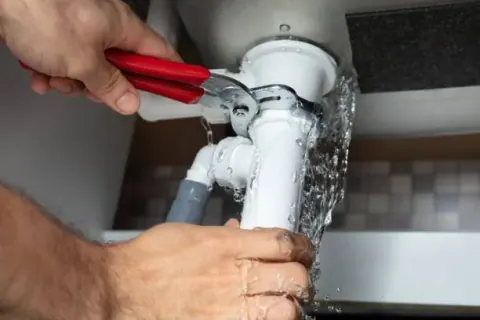

An unexplained high water bill in Bradenton is one of the few early warnings a hidden leak gives you. Nobody added a guest, the lawn schedule is the same, the pool wasn't topped off, and yet the usage line jumped. When the household's habits haven't changed, the water is going somewhere you can't see.
This guide is not a list of every reason a bill might rise. It assumes you've already ruled out the obvious and want to answer one question: is there a hidden leak, and roughly where is it? A few careful checks at the meter can split the problem into three zones, and that tells you who to call and how urgent it is.
First, Make Sure the Bill Is Really About Usage
Before chasing a leak, compare the gallons (or units) used, not just the total charge. Rates, fees and billing-period length can all move the dollar amount. If the usage figure itself is up compared with the same month last year, keep going.
Also look for quiet water users that are easy to forget: an irrigation timer that reset after a power outage, a water softener stuck in regeneration, or a toilet that started running between flushes. Our article on why water bills climb in Bradenton covers those everyday causes in detail. If none of them fit, treat the spike as a probable hidden leak.
The Meter Test: Your Best Free Leak Detector
Your water meter sits in a box near the street. Most have a small triangle, star or dial called a low-flow indicator that spins with even a trickle of water. Here's how to use it:
- Turn off every faucet, appliance, ice maker and the irrigation system. Make sure nobody runs water during the test.
- Open the meter lid (watch for ants and wasps) and note whether the low-flow indicator is moving.
- Write down the full meter reading, wait one to two hours without using water, then read it again.
- If the indicator spins or the reading changed, water is leaving the system somewhere downstream of the meter.
Snap a photo of the meter face at the start and end of the test. A pair of time-stamped photos is far more useful to a plumber than a remembered number, and it helps if you later ask the utility about a leak adjustment.
Split the Leak Into Zones: Yard, House or Slab
Once the meter confirms water loss, the next goal is to figure out which part of the property is responsible. Most Bradenton homes have a main shutoff valve where the line enters the house, often near the hose bib, garage or water heater.
Zone 1: The service line in the yard
Close the main shutoff at the house and watch the meter again. If the indicator still moves, the leak is on the buried line between the meter and the house, or on an irrigation line teed off before the shutoff. Clues include a patch of lawn that stays green or soggy in a dry week, sinking soil, or a spot where sandy ground keeps washing out.
Zone 2: Inside the house, above the slab
If the meter stops when the house valve is closed, the leak is inside. Start with the easy suspects: toilet tanks (add a few drops of food coloring and wait 15 minutes without flushing), the water heater relief valve discharge line, the washer box and the supply lines under every sink.
Zone 3: Under or inside the slab
Many homes here are built slab-on-grade, with supply piping running under or through the concrete. If every fixture checks out but the meter still creeps with the house valve open, a slab leak moves to the top of the list. Warm spots in the floor, the sound of running water with everything off, cracked tile or damp baseboards are classic signs. Our slab leak warning signs guide walks through them.
Why Hidden Leaks Stay Hidden Around Bradenton
Local conditions make it easier for water to disappear without a trace. Sandy soil drains quickly, so a leaking yard line may never puddle on the surface. Water leaking under a slab can soak into the ground below rather than rising through the floor. And hard water scale, along with years of pressure cycles, can wear pinholes into older copper lines and fittings inside walls.
The result is a leak that shows up on the bill long before it shows up on the drywall. That is exactly why the bill is worth taking seriously: by the time you see a stain or smell mustiness, water may have been running for weeks.
What Happens When You Call a Plumber
Share what you found at the meter, including whether the leak continued with the house valve closed. That one detail saves time, because it tells the technician whether to start in the yard or inside.
- Confirm the loss: the plumber repeats the meter check and isolates fixtures to separate an active leak from old staining or condensation.
- Narrow the location: professional leak detection equipment helps pinpoint the source so only a small, targeted opening is needed.
- Explain the options: you'll hear what was found and the repair choices, with the price approved before work starts.
- Repair and recheck: after the fix, the meter is checked again to make sure it no longer moves with everything off.
If the source is under the slab, repair can mean a spot repair through the floor or rerouting the line overhead or through walls. Our slab leak repair team explains both before anything is opened.
How Urgent Is It?
A meter that barely creeps is not usually an emergency, but it still deserves a visit soon, since water under a slab or inside a wall can lead to mold and damage over time. A meter spinning fast, the sound of rushing water, a wet floor or a soggy yard near the foundation calls for faster action. Close the main shutoff and call our 24/7 line at (941) 541-7473.