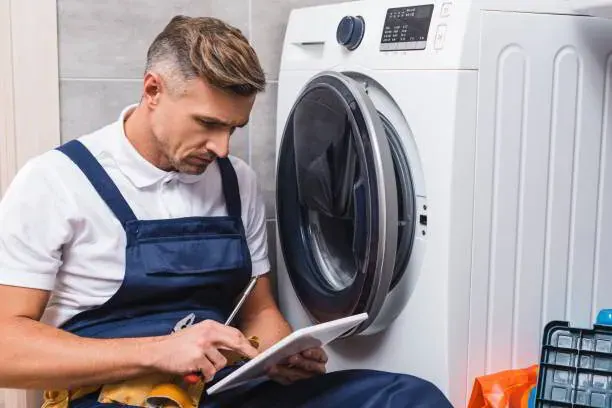
The washer is one of the hardest-working water connections in the house, and it lives in a spot nobody looks at. Behind the machine sit two pressurized supply hoses, a pair of shutoff valves and a drain standpipe that has to swallow a lot of water fast. When any of those fail, the water goes straight onto the floor.
This checklist covers the washing machine plumbing Bradenton homeowners can inspect themselves, what local conditions do to it, and the point at which a licensed plumber is the safer choice. It's written for a guide-and-inspect afternoon, not a repair manual, so you'll know what you're looking at before anything goes wrong.
Check 1: The Supply Hoses
Supply hoses are under constant water pressure whether or not the washer is running. Rubber hoses age from the inside out, and in a warm garage or laundry closet they can stiffen and crack faster than you'd expect.
- Look for bulges, blisters or a soft spot near either end. A bulge means the hose wall is giving way.
- Check the crimped metal ferrules at each end for rust or white mineral crust.
- Feel the floor and wall under the connections for dampness.
- Make sure the hoses aren't kinked against the wall when the washer is pushed back.
Many plumbers recommend braided stainless hoses as an upgrade, and replacing hoses on a regular schedule rather than waiting for a failure. If you don't know how old yours are, that alone is a good reason to replace them.
Check 2: The Shutoff Valves and Outlet Box
Newer homes typically have a recessed outlet box in the wall with hot and cold valves and the drain opening together. Older homes may have exposed valves on copper stubs. Either way, the valves need to actually close when you need them to.
Bradenton's hard water leaves scale inside valves, and valves that sit untouched for years can seize or start weeping at the stem once they're finally turned. Try each one gently. If it won't turn, drips at the handle, or the box shows green or white crust, plan a replacement before an emergency forces the issue.
If you're leaving a seasonal or vacation home for more than a few days, close both washer valves before you go. It takes ten seconds and removes the most common laundry-room flood risk while nobody is there to notice.
Check 3: The Drain Standpipe
Modern washers pump water out quickly, and the standpipe has to accept that surge. Signs of trouble include water spilling from the top of the standpipe during the drain cycle, gurgling from a nearby sink or tub, or a sour smell from the opening.
Common causes are lint and detergent buildup in the trap, a drain hose pushed too far down the pipe, a standpipe that's too short for the machine, or a partial clog further down the branch line. A blockage that keeps coming back can point to a larger problem in the main line, which is where professional drain cleaning comes in.
- The drain hose should hook into the standpipe and be secured, not just dropped in.
- Leave an air gap between the hose and the pipe so water isn't siphoned back.
- A lint trap or mesh filter on the hose end helps keep fibers out of the drain.
Check 4: Leveling, Pan and Floor
A washer that walks during the spin cycle can pull on its hoses and loosen connections. Check that the machine sits level and doesn't rock. On a second floor, inside a condo or over finished space, a drain pan under the machine is worth considering so a slow leak is caught before it reaches the ceiling below.
Also look at the baseboard and flooring next to the machine. Swollen trim, lifting vinyl or a musty smell can indicate a long, slow leak that never pooled enough to notice.
Signs It's Time to Call a Plumber
Some laundry plumbing is a quick DIY swap. Other jobs involve the wall, the drain line or the water supply, and that's where a licensed plumber protects the rest of the house. Call when you notice:
- Valves that won't close, or leak at the stem once turned
- Water inside the wall cavity or a stained outlet box
- Standpipe overflow that returns after you've cleaned the trap
- A move or new laundry location that needs new supply and drain piping
- Gurgling or backups in other fixtures when the washer drains
Our washer hookup and laundry plumbing page explains what's included when we replace valves, rework a standpipe or set up a new laundry area. If the problem looks like a hidden leak in the wall or floor, we can bring leak detection to the visit as well.
If the Washer Floods Right Now
Shut both washer valves first. If they won't close, use the main shutoff for the house. Unplug the machine only if you can reach the outlet without standing in water. Then call (941) 541-7473, our 24/7 emergency line, and see our guide to shutting off water in an emergency so you know where your main valve is before you need it.