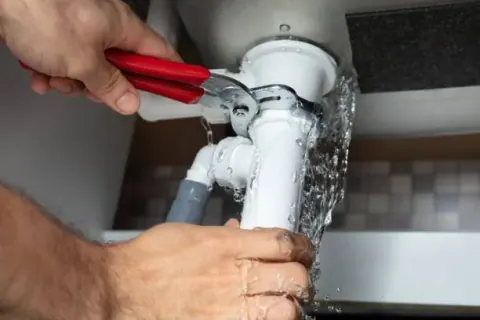

The difference between a small plumbing repair and a major restoration job is usually time. Most concealed leaks announce themselves with subtle clues weeks or months before a ceiling stains or a floor buckles. The trick to spot a hidden water leak early is building a few simple habits that put you in front of those clues regularly.
This article is about routine awareness: what to glance at, how often, and what to notice. If you already suspect a leak and want to confirm it with tests, our companion guide on how to tell if you have a hidden water leak walks through that step by step.
Why Leaks in Our Area Hide So Well
Many local homes sit on concrete slabs, with supply lines running beneath or within them. A leak there can soak into the soil or the slab for a long time with no visible water at all. Walls built with drywall over block hide pipes, and tile floors mask damp subfloors.
Hard water and older fittings add slow, pinhole-type leaks to the mix. These lose a little water constantly rather than a lot at once, which is exactly the kind of leak that goes unnoticed unless you are looking.
Habit 1: Read Your Water Bill Like a Trend
Do not just pay the bill; compare it. Look at your usage against the same month last year and against the last few months. A gradual climb with no change in household routine, no new pool or irrigation schedule and no house guests is one of the earliest signs of a hidden leak.
Seasonal homeowners should pay particular attention to usage while the house is empty. A vacant home should use almost nothing. For a deeper look at reading those numbers, see our article on an unexplained high water bill in Bradenton.
Snap a photo of your water meter reading on the first of each month. Over a year you build a simple record that makes unusual jumps obvious, even between utility bills.
Habit 2: Use Your Senses Around the House
You walk past most early warnings every day. Train yourself to notice:
- A faint sound of running or hissing water when the house is quiet at night
- A musty, earthy odor in one closet, cabinet or corner that keeps coming back
- A patch of tile or floor that feels warm under bare feet, which can point to a hot water line leaking below
- Paint that has started to bubble or wallpaper lifting at a seam
- Grout that stays dark long after the floor was mopped
- Ants or other insects suddenly gathering in one spot, since they are drawn to moisture
None of these proves a leak by itself, but two or three in the same area deserve a closer look.
Habit 3: A Seasonal Walk-Through
Four times a year, ideally when you change your air conditioning filter, spend fifteen minutes on a deliberate walk-through:
- Open every sink cabinet and check the floor with a flashlight and your hand.
- Look behind and around each toilet base for staining or soft flooring.
- Inspect the water heater base, the drain pan and the relief valve discharge line.
- Check the air handler area and condensate line, since a clogged condensate drain is a common source of water that gets blamed on plumbing.
- Walk the exterior. Look for soggy spots, unusually green patches of lawn or water pooling near the foundation when it has not rained.
- Glance at ceilings below bathrooms and under any second-floor laundry.
Keep a simple notebook or phone note of anything you find, with the date. A stain that has not grown in six months is very different from one that doubled in a week, and that history helps a plumber judge how active a leak is.
Pay special attention to rooms that share a wall with a bathroom or kitchen, the floor around the water heater, and any spot where a pipe passes through the slab. These are the places where small leaks most often start, so a few extra seconds there during each walk-through is time well spent.
Habit 4: Let Technology Watch for You
Inexpensive battery-powered water sensors placed by the water heater, washer, dishwasher and under sinks will sound an alarm when they get wet. Some connect to your phone, which is especially useful for seasonal residents and rental owners.
Some households go further with whole-home monitors that watch flow at the main line and flag continuous use. These are helpful tools, but they supplement your own attention rather than replace it, and they cannot tell you exactly where a leak is.
Finally, share the habits with everyone in the house. Children often notice a damp carpet or a strange sound first, and tenants or house sitters are your eyes when you are away. A household where everyone knows to mention a musty smell or a warm floor tile will catch leaks far sooner than one where a single person does all the checking.
What to Do When a Clue Shows Up
When something looks or smells off, act quickly but calmly. Note where and when you noticed it, take photos, and check whether the meter moves with all fixtures off. Then call a professional rather than opening walls on a hunch.
Our leak detection service uses meter testing, fixture isolation and specialized equipment to pinpoint the source with as little disruption as possible. If the evidence points to the slab, our slab leak repair team explains the repair options. The Redemption Family Plan adds an annual plumbing inspection, priority scheduling and repair discounts for $175 a year. Call (941) 541-7473 for a free phone estimate.