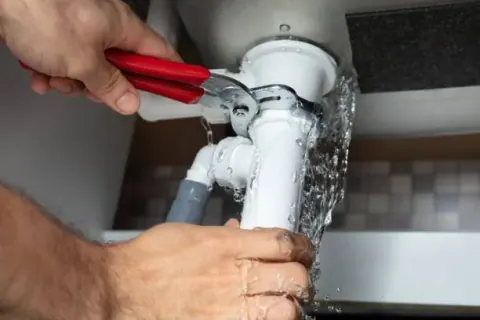

Most leaks that do real damage are the ones nobody can see. A pipe inside a wall, a drain line above a ceiling or a supply line under a slab can seep for weeks while the house looks perfectly normal. The good news is that hidden water almost always leaves clues, and learning the signs of a hidden plumbing leak is mostly a matter of knowing where to look and what each clue tends to mean.
This guide is organized the way you actually live in a house: room by room, then outdoors. For each area we explain the common signs, the pipes most likely involved and how urgent it is. If you would rather walk through formal tests, such as a meter check, our companion piece on how to tell if you have a hidden water leak covers the step-by-step confirmation process.
Kitchen and Laundry: Cabinets, Floors and Appliance Walls
Kitchens and laundry areas pack a lot of connections into a small space: sink supply lines, a dishwasher hose, an ice maker line, a disposal, washing machine hoses and the drains that serve them. Leaks here often hide inside the cabinet base or behind an appliance that never moves.
- A sink cabinet floor that is swollen, soft or delaminating, even if it feels dry today
- Baseboard beside the dishwasher or refrigerator that is darker or pulling away
- Vinyl or laminate planks that lift, cup or feel spongy near an appliance
- A faint sour or musty smell when you open the sink cabinet
Drain leaks in these spots tend to show up only when the fixture runs, so a dishwasher drain fitting may wet the cabinet once a day and dry out in between. Supply leaks are under pressure all the time, so the damage spreads steadily whether anyone is home or not.
Bathrooms: Tile, Grout and the Wall Behind the Shower
Bathrooms hide plumbing in three places that are easy to overlook: the shower valve inside the wall, the drain beneath the tub and the wax seal under the toilet. Each leaves a slightly different trail.
- Loose or cracked floor tile near the toilet, or a toilet that rocks when you sit down
- Grout that stays dark long after showers, or keeps cracking in the same line
- Peeling paint or bubbling drywall on the far side of the shower wall, often in a closet or hallway
- A ceiling stain directly below an upstairs bathroom
To tell a shower valve leak from a splash problem, look at the wall behind the valve from the other room. A valve or supply leak stains even when nobody has showered; a drain or pan leak usually gets worse right after use.
Not every wet bathroom is a plumbing failure. Failed caulk and grout can let shower water into the wall too. A plumber can separate the two by isolating the fixture and checking whether water loss continues with the shower off, which is exactly the kind of evidence a good diagnosis should be built on.
Floors, Slabs and Warm Spots Underfoot
In homes built on a concrete slab, which describes a large share of houses along Florida's Gulf Coast, some supply and drain lines run under or through the slab. When one of those lines fails, the signs come up from below instead of down from a ceiling.
- A warm spot on tile or wood in one area, which can mean a hot water line is leaking beneath it
- Carpet that feels damp along one wall with no obvious source nearby
- New hairline cracks in tile or a section of flooring that feels hollow
- The sound of running water near the floor when every fixture is off
Warm spots and constant running sounds are worth taking seriously because a pressurized line under concrete does not stop on its own. Our slab leak repair team can confirm whether the pipe beneath the floor is the source before anyone talks about opening concrete.
Walls and Ceilings: Reading Stains and Sounds
Stains are useful because their shape and timing hint at the cause. A ring that grows slowly in one place points to a steady drip. A stain that appears after a heavy storm and fades in dry weather may be a roof or window issue rather than plumbing. A stain that darkens every time an upstairs toilet flushes or a tub drains almost always involves a drain line.
Sound helps too. At night, when the house is quiet, stand near interior walls and listen for hissing or trickling. A water hammer bang or a short burst of noise when a fixture shuts off is normal; a continuous whisper with nothing running is not. Note which wall, what time and what else was running so the plumber has a pattern to start from.
Outside the House and on the Water Bill
Some hidden leaks show up outdoors before they show up inside. Walk the perimeter and the path between the meter and the house now and then. Look for a patch of lawn that stays green and soft during dry weeks, sinking soil or pavers, or water pooling near the foundation with no irrigation running.
Your bill and meter are the clues that do not depend on luck. A bill that climbs while your routine stays the same, or a meter dial that creeps with every tap closed, means water is going somewhere. Our article on an unexplained high water bill in Bradenton walks through what that pattern usually means.
When to Call and What Happens Next
Call promptly if you see active dripping, water near electrical outlets or equipment, a warm floor that stays warm, or a stain that grows from day to day. Those are signs of a pressurized or repeating leak, and waiting usually means more drywall, flooring and cabinetry to replace.
- Write down what you noticed: where, when and what was running at the time.
- Shut off the fixture valve if the leak is clearly tied to one fixture, or the main if water is spreading.
- Call (941) 541-7473 for a free phone estimate, or use our emergency line any time of day.
- Let the diagnosis set the scope. Our technicians confirm the leak is active, narrow its location with professional leak detection equipment, repair the cause and then retest.
That order matters. Opening walls on a hunch is how small leaks become big remodels. Confirming the source first keeps access proportionate, and retesting afterward confirms the repair fixed the leak and not just the stain.