When the camera shows a cracked, root-filled or separated sewer line running under your Bradenton yard, the next question is how to fix it. The answer usually comes down to trenchless pipe repair vs traditional repair: rehabilitate the pipe through small access points, or dig it up and replace it in an open trench. Both are legitimate methods, and each one wins in different situations.
This is a local decision guide. It focuses on the features of Bradenton properties that tip the balance, such as mature landscaping, paver driveways, pool decks and slab construction, rather than repeating the general theory covered in our explainer on trenchless repair vs traditional replacement.
The Two Approaches in Brief
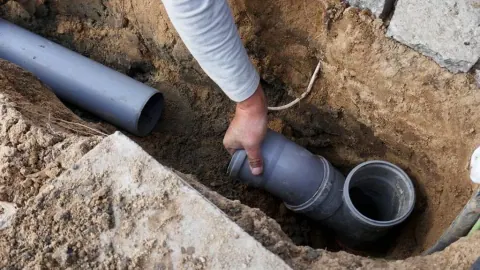
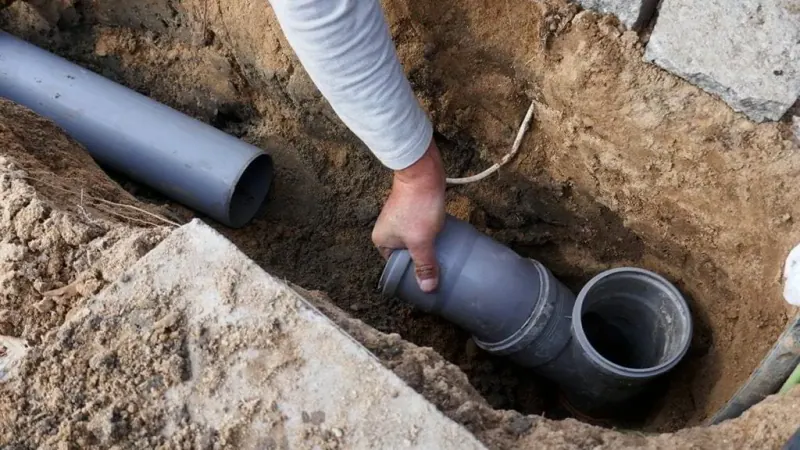
Traditional repair means excavating along the damaged section, removing the old pipe and installing new pipe in the open trench. It lets the plumber see and correct everything directly, including slope and alignment problems.
Trenchless repair uses small access points instead of a long trench. With pipe lining, a resin liner is cured inside the old pipe. With pipe bursting, a new pipe is pulled through as the old one is broken outward. We offer both trenchless methods, and we also perform traditional repairs when they fit better.
What Sits on Top of the Pipe Matters Most
In Bradenton, the most practical question is often what lies above the line between the house and the street. Consider how each of these would be affected by an open trench:
- Mature trees and landscaping: digging near large trees can cut major roots, and replanting established beds takes time
- Paver or concrete driveways: pavers can be lifted and relaid, but concrete has to be cut and patched
- Pool decks, lanais and patios: these are expensive and slow to rebuild
- Sidewalks and the right-of-way: a line that runs under shared space adds coordination
- Irrigation systems: sprinkler lines often cross the sewer route and need repair after excavation
If the damaged section lies under any of these, trenchless repair usually has a strong advantage. If it is under open lawn in a short, shallow run, the gap narrows considerably.
Depth plays a role as well. A shallow line under open lawn can be exposed quickly, while a deeper line, or one that runs alongside a foundation, takes more digging, more shoring and more care to avoid disturbing nearby structures. The deeper and more built-over the line, the more trenchless repair tends to make sense.
What the Pipe's Condition Allows
The ground above is only half the decision. The pipe itself has to be a good trenchless candidate. A sewer camera inspection answers that question by showing:
- Whether the line is intact enough for a liner to hold its shape
- Whether there are sags or bellies that would remain after lining
- How severe root intrusion is, since roots are common where mature trees sit near the line
- Whether joints are offset so badly that the line has to be realigned
A collapsed section, a severe sag or a line with the wrong slope often points toward traditional excavation, at least for that section. Some jobs combine both: a small dig to fix a sag and lining for the rest of the line.
Ask whether the recommended repair covers the whole line or only the worst section. A spot repair can be the right call, but it is worth knowing what condition the rest of the pipe is in before you decide.
Side-by-Side for a Typical Bradenton Property
- Surface disruption: trenchless uses small access pits; traditional opens the full length being replaced.
- Restoration: trenchless needs little; traditional may involve sod, pavers, concrete and irrigation repairs.
- Correcting slope or alignment: traditional can fix it directly; trenchless generally follows the existing path.
- Timeline: trenchless is often completed faster on site; traditional takes longer, especially with restoration.
- Soil and groundwater: sandy soil and a high water table in low areas can complicate open trenches; trenchless reduces how much soil is disturbed.
Understanding the Cost Comparison
It is tempting to compare only the plumbing portion of two quotes. That can be misleading. A traditional quote may look lower until you add the cost of rebuilding the driveway, replanting the yard or repairing the lanai. A trenchless quote may look higher until you realize it includes almost no restoration.
Other factors that move the total for either method include the depth of the line, the length of the damaged section, how many branch connections tie into it, whether a usable cleanout exists and how much cleaning the pipe needs before work can begin. Roots and heavy scale add preparation time no matter which repair you choose. When you collect quotes, ask each contractor to list these assumptions so you can tell whether a price difference reflects a different scope or just a different presentation.
We give free phone estimates and confirm scope after a camera inspection, with an upfront price approved before work starts. For larger sewer projects, financing is available for qualifying jobs; ask about it when you request your quote. Our article on pipe replacement costs in Bradenton breaks down more of the price factors.
Making the Call
If your damaged line runs under hardscape, trees or living space and the camera shows a pipe that is intact enough to line or burst, trenchless is usually the better value. If the line has collapsed, sags badly or sits under open lawn in a short run, traditional repair may be simpler and more reliable.
Either way, the decision should rest on footage you have seen. Call Redemption Plumbing at (941) 541-7473 to schedule an inspection, or read more about our trenchless pipe repair options and main sewer line services.