Bradenton's established neighborhoods have character: mature oaks, solid block construction and homes that have stood for decades. Underground, though, the original drain and sewer piping in those houses has been working the entire time. A sewer camera inspection in older Bradenton homes shows exactly how that pipe has aged, and the picture is often very different from what the drains suggest at the surface.
This article is a field guide to what we tend to find on the monitor, organized by pipe material and defect type, with notes on what each finding usually means for repair.
Pipe Materials You May Find Under an Older Home
Cast iron
Cast iron was a standard drain material for many years and is common under older Florida slabs. It is strong, quiet and long-lived, but it corrodes from the inside. Florida's moist, sandy soil and decades of use take their toll, and hard water adds scale to the rough interior surface.
Vitrified clay
Clay pipe resists chemicals and does not corrode, but it comes in short sections joined every few feet. Those joints are the weak point; they can shift and open, and roots find them easily.
Orangeburg (fiber conduit)
Orangeburg is a pipe made of wood fiber and pitch that was used in some mid-century construction. It was cheap and light but tends to soften, blister and deform under soil pressure with age. If a camera finds Orangeburg, replacement planning usually starts right away.
PVC or ABS repairs
Many older homes have a patchwork: original pipe under the slab and newer plastic sections in the yard where a previous owner already made repairs. Transitions between materials are worth a close look.
Defects the Camera Commonly Reveals
- Channeling in cast iron: the bottom of the pipe erodes into a groove, sometimes all the way through, while the top still looks intact.
- Tuberculation and scale: crusty buildup that narrows the pipe and snags paper and grease.
- Root intrusion at joints: from fine hair roots to masses that fill the pipe.
- Bellies or sags: sections that have settled, holding standing water and solids.
- Offset or separated joints: gaps where pipe sections no longer line up.
- Ovaling or collapse: especially in fiber pipe, the round shape flattens under soil load.
- Cracks and holes: openings that let soil and groundwater in and sewage out.
If your older home has needed the main line cleared more than once, ask for a camera inspection right after the next cleaning. A freshly cleared pipe gives the clearest view of the actual pipe walls instead of the clog.
Why Older Bradenton Homes Are Prone to These Problems
Several local conditions stack up. Many homes sit on slab-on-grade foundations, so drain lines run beneath concrete where they cannot be seen. Sandy soil can shift and settle, contributing to bellies and offset joints. Mature trees, which make these neighborhoods so attractive, send roots toward any moisture source, including a leaking joint. And mineral-rich water leaves scale that gives everything else something to cling to. Our article on hard water pipe damage in Bradenton covers the scale side in more detail.
Reading the Results: Monitor, Repair or Replace
Not every finding calls for major work. We generally sort results into three groups:
- Monitor: light scale, small hair roots or minor wear. Cleaning and a follow-up inspection down the road may be all you need.
- Targeted repair: a single cracked section, one bad joint or a localized belly. A spot repair can often address it.
- Larger rehabilitation: widespread channeling, repeated root intrusion along the run, or any collapsing fiber pipe. These usually call for relining or replacing the line.
The video also guides how the work is done. Where the pipe is still round and continuous, trenchless pipe lining can create a new pipe inside the old one. Where the pipe is collapsed or badly misshapen, pipe bursting or conventional replacement may be needed. Our trenchless pipe repair page explains both methods, and our main sewer line services cover conventional repairs.
How a Camera Inspection Visit Works
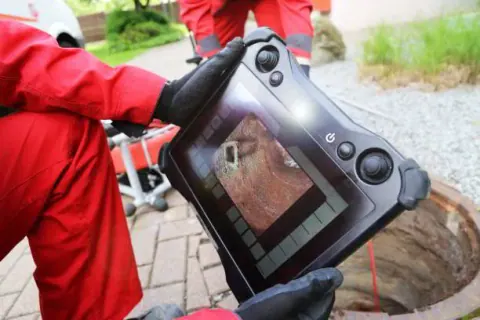
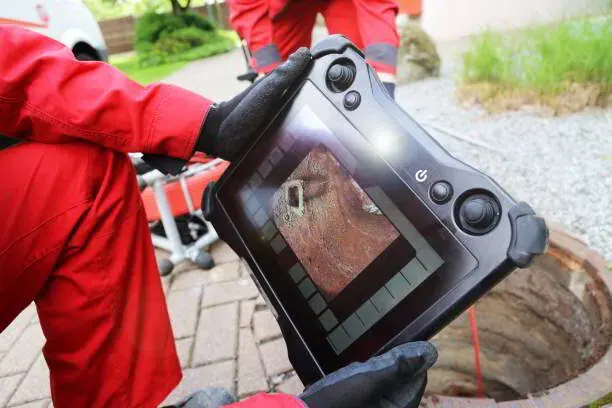
The plumber accesses the line through a cleanout, or sometimes a toilet flange or roof vent if no cleanout is available. A camera head on a flexible push cable travels down the pipe while the operator watches a live feed and records distance. Many systems can also locate the camera head from above ground, which pinpoints exactly where a defect sits under your yard or slab.
Afterward you get a walk-through of what the camera saw and the options that fit. For a deeper look at the technology, see our guide to video inspection for plumbing diagnosis. Buyers looking at an older property should also read about scoping the sewer before you buy.
Schedule an Inspection
Redemption Plumbing provides sewer camera inspection throughout Bradenton and the surrounding area. You get upfront pricing, and any repair scope is approved before work begins. Call (941) 541-7473 for a free phone estimate.